Women's Slippers Guide
Slippers are light footwear made to be put on and off easily and worn indoors, particularly at home — comfort first, with styles from open heels to slipper boots.
Shop Women's Slippers Now
Shop Women's Slippers on Amazon Shop Women's Slippers on eBayThe Amazon and eBay links on this page are affiliate links. If you make a purchase through them, Apparel Search may earn a commission.
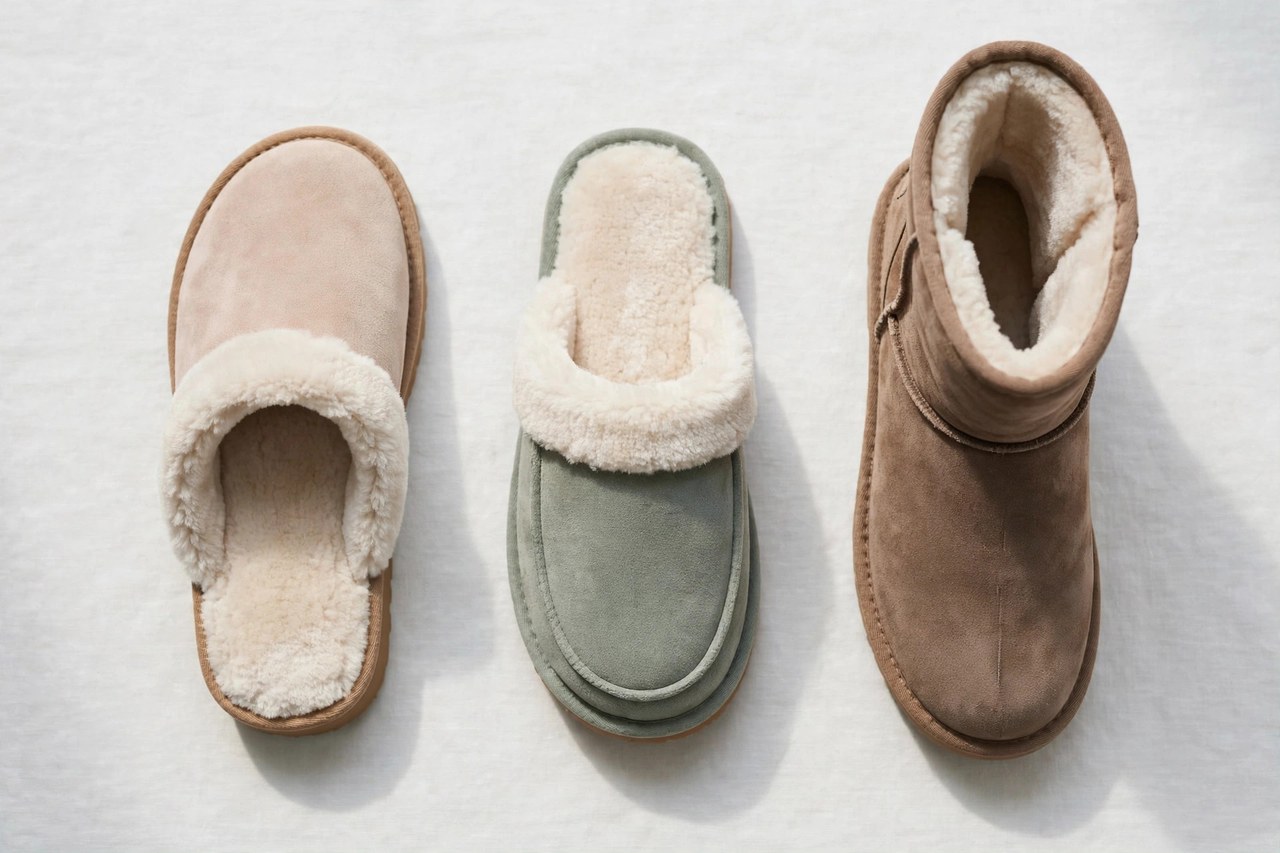
Slippers are light footwear that are easy to put on and off and are intended to be worn indoors, particularly at home. That definition sets the category's priorities in order: ease first, then warmth and softness, with outdoor ability a distant extra. Within it sits a wider variety than most shoppers expect, from a thin open-heel mule for summer mornings to a fleece-lined slipper boot built for a cold house in January.
This guide works through the main styles — open-heel, closed, slipper boots and sandal slippers — plus two famous exceptions, and then covers soles, materials and the two practical questions that decide satisfaction: how warm, and can it be washed. A house shoe is worn more hours than any other footwear you own, so small choices compound here.
The Main Slipper Styles
Open-heel slippers, also called mules, enclose the top of the foot and toes but leave the heel open: the fastest on and off, and the coolest to wear. Closed slippers add a heel guard that prevents the foot from sliding out, better for stairs and for anyone who finds mules slip mid-step. Slipper boots look like boots, typically soft and fleece or faux-fur lined with a light rubber sole, modeled after sheepskin boots, and they are the warm-weather-defying choice that may also step outside briefly.
Sandal slippers are cushioned sandals with soft soles, similar to contoured cork-footbed sandals, for wearers who want air and arch shape rather than enclosure. Beyond the everyday list sit two storybook entries: the velvet evening slipper, also called the Prince Albert slipper, with leather soles and a grosgrain bow, and the ruby and glass slippers of film and fairy tale — best worn mainly by princesses and characters who want to go home.
Soles: House-Only vs Hard Soles
The sole decides where a slipper may go. Soft soles of suede, fabric or thin foam are silent and flexible but strictly indoor: they soak through on a wet step and wear quickly on rough floors. Hard or rubber soles turn a slipper into a house shoe that can take out bins, collect post and cross a patio, at a small cost in weight and quiet. For older wearers and anyone unsteady, a firm rubber sole with tread is a safety feature, not a luxury.
Inside, the footbed matters over a long evening. Memory foam feels luxurious for a week and then compresses flat; firmer foam, wool felt and contoured cork-latex beds keep their support for seasons. If you stand a lot at home — cooking, working at a standing desk — choose a slipper with real arch contour and a stable sole, and treat it with the same seriousness as a work shoe, because for your feet that is what it is.
Materials and Warmth
Warmth comes from the lining more than the upper. Shearling and sheepskin regulate temperature in both directions and wick moisture, which is why they anchor the premium end and the slipper-boot style. Fleece and faux fur are warm, light and usually washable. Wool felt is warm, breathable and naturally odor-resistant. Cotton and terry suit warm climates and summer, and knit uppers stretch kindly over sensitive feet, bunions or swelling that varies through the day.
Match the slipper to the house, not the season in the abstract. A well-heated flat needs a lighter mule than a drafty house with stone floors, where a lined boot earns its bulk. Hot sleepers often prefer an open heel even in winter, since feet regulate whole-body comfort. Two pairs — a light summer pair and a lined winter pair — cover most homes better than one compromise pair worn, and worn out, all year.
Sizing and Care
Slipper sizing is often by range rather than exact shoe size, and linings compress, so a pair that feels snug in fleece will feel right after a week while a pair that feels perfect on day one may turn sloppy. Buy to the snug side in lined styles, exact in unlined ones. Your toes should not press the front when you step, since slippers are worn on stairs where a stubbed, loose front is a trip risk.
Most fabric slippers benefit from washing or at least airing, since an indoor shoe worn barefoot absorbs more moisture than any outdoor shoe. Check the label: many fleece and knit styles machine wash cool and air dry, while shearling wants a brush, a shake and specialist cleaning only occasionally. Replace slippers when the footbed stays compressed or the sole smooths out — at slipper prices, fresh support each year or two is the cheapest foot care there is.
Related Women's Guides
Photos

More to Explore on Apparel Search
- Women's Casual Shoes Guide
- Women's Shearling Slippers
- Women's Shoes
- Women's Footwear
- Women's Shoe Stores
- Women's Footwear Guide
- Women's Shoes
- Slipper Definition
- Footwear Definitions
- ruby slippers
- glass slipper
- slipper factory
- Women's Athletic Shoes
- Women's Boots
- Women's Dress Shoes
- Women's Sandals
- Women's Trend Shoes
Women’s Clothes Guide by Letter: Women's Apparel Directory N · Women's Clothes Directory O · Women's Clothing Directory P · Women's Apparel Directory Q · Women's Fashion Directory R · Women's Clothes Directory T
Looking for Women's Clothing Stores?
This guide helps you choose women's slippers. To browse where to buy, visit our women's clothing store directory, where you can find retailers that carry them.