Women's Plus Size Sleepwear Guide
Plus size sleepwear covers pajama sets, nightgowns, sleep shirts and robes cut with genuine room in 1X and up, soft breathable fabrics and waistbands and straps designed for comfort.
Shop Women's Plus Size Sleepwear Now
Shop Women's Plus Size Sleepwear on Amazon Shop Women's Plus Size Sleepwear on eBayThe Amazon and eBay links on this page are affiliate links. If you make a purchase through them, Apparel Search may earn a commission.
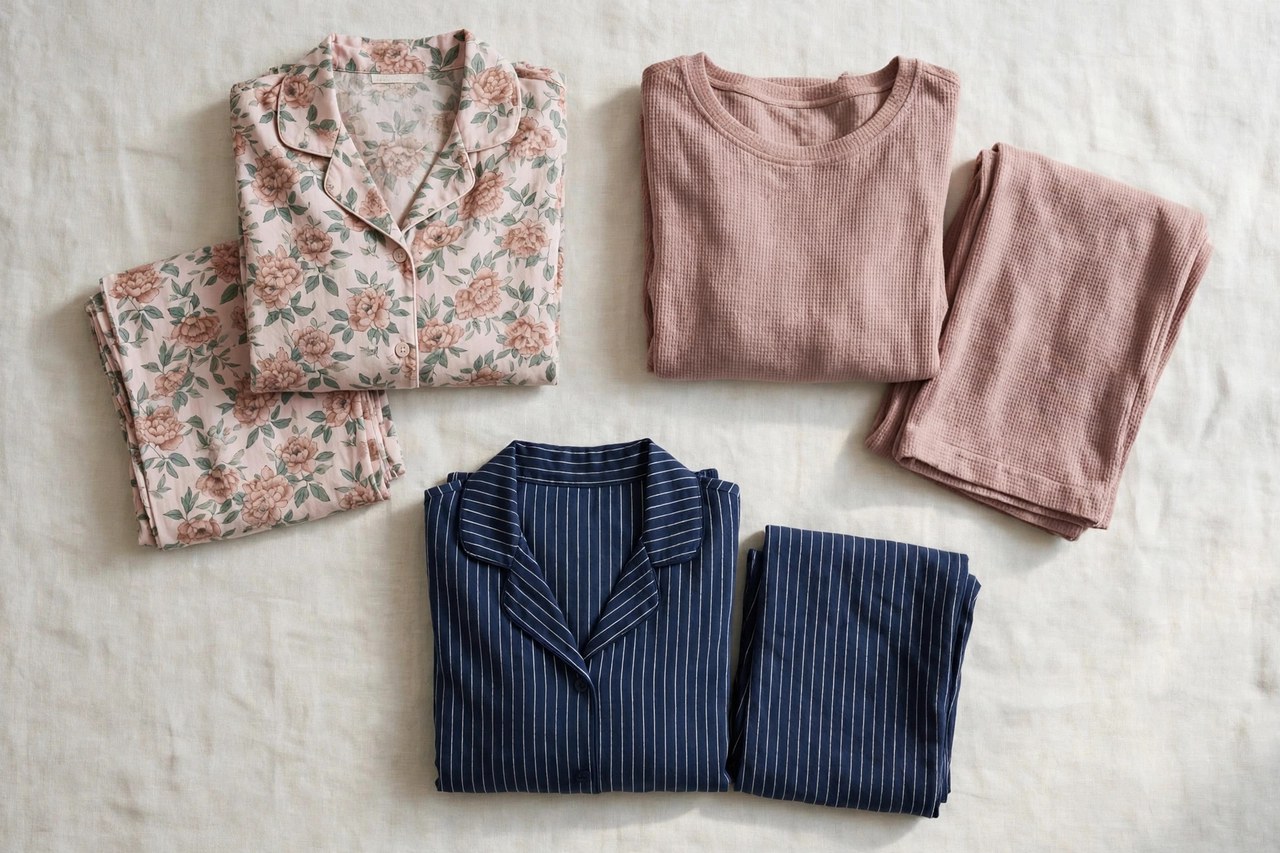
Sleepwear is clothing engineered for one job, staying comfortable through eight hours of turning, cooling and warming, and plus size sleepwear has to do that job with more fabric, wider waistbands and straps and necklines that stay placed on a fuller frame. In 1X and beyond, the difference between a true plus pattern and a scaled-up small one shows by 2 a.m.: the plus pattern's longer rise, deeper armholes and real hip room let the garment move with the sleeper instead of winding around her.
This umbrella guide surveys the whole category in neutral product terms: pajama sets, nightgowns, sleep shirts, robes and separates, how to judge plus room and length in each, and the fabrics that breathe, insulate and wash well. The companion guides go deeper on single pieces such as sleep pants and sleep shirts. Use this overview to decide which sleepwear format suits your nights and your climate, then buy the size that gives the format its intended ease.
The Main Formats: Sets, Gowns, Shirts and Robes
Pajama sets pair a top with pants or shorts and give the most adjustable coverage; plus sets grade both pieces together so the top's length covers the pant waistband and the pants carry the rise and seat room described in the sleep pants guide. Nightgowns remove the waistband entirely and hang from the shoulders or an empire seam; in plus cuts they add bust room and enough sweep that the fabric falls clear of the body rather than outlining it.
Sleep shirts are the one-piece shirt-format option covered in their own guide. Robes layer over everything for mornings, evenings and hospital or guest situations where coverage matters; plus robes add wrap overlap, longer sashes that tie at the waist rather than the hip, and sleeve room through the upper arm. Separates, sleep camisoles, tees, pants and shorts bought individually, let you pair sizes when top and bottom measurements differ, a common and sensible plus strategy.
Judging Room, Length and Details
Sleepwear should be bought for ease, and the checks are consistent across formats. Tops need enough bust room that buttons, if present, lie flat while seated, and armholes deep enough that the garment does not pull when you reach or turn. Gowns need length judged on the body, since bust and seat lift hems; a gown listed as knee length may rest above the knee on a fuller frame, which may be fine, provided it is a choice rather than a surprise on the first night.
Details separate restful sleepwear from garments that merely look soft. Waistbands should be wide and gently elastic or drawstring-adjusted. Straps on camisoles and gowns should be wide enough to distribute weight and adjustable where possible, with sliders that do not dig. Seams should be flat, pockets flat and in-seam, and embellishment kept soft and away from the front of the body where you lie on it. Prints and colors carry no fit consequences, so they are the safe place to indulge pure preference.
Fabrics by Season and Sleep Temperature
Cotton in its many forms, jersey, lawn, voile and flannel, remains the backbone of plus sleepwear: breathable, durable under frequent washing and available at every price. Modal and rayon blends drape cooler and softer and suit warm sleepers, with gentler washing. Silk is the luxury insulator, light yet warm, but needs careful laundering and generous cuts to move safely. Synthetic satins look silky at low cost but breathe poorly, and warm sleepers often find them clammy by midnight despite the appealing first touch.
Match weight to climate honestly: sleeveless or short sets in thin cotton or modal for summer and warm rooms, long midweight jersey sets for the middle seasons, flannel, brushed knits and a proper robe for winter. Sleep temperature varies more between people than between seasons, so a household may need two weights year-round. Breathability matters most at the torso, which is why a cotton or modal top paired with any bottom is the reliable formula for anyone unsure of a new fabric.
Buying, Rotation and Care
Buy sleepwear to your largest relevant measurement and size up rather than down when between sizes; overnight, extra ease is comfort, and shrinkage in cotton makes the first wash decisive, so wash before judging final fit. Sets are convenient, separates are precise, and most plus wardrobes end up with both: two or three warm-weather pieces, two cooler-weather pieces and one robe covers the year with a sensible laundry rhythm and a spare for travel or guests.
Care is frequent and simple: cool or warm machine washing, gentle treatment for modal, silk and lace trims, and tumble or line drying according to the label. Replace pieces when waistband elastic tires, fabric thins at stress points or knit necklines sag, because sleepwear's whole value is in how it feels at hour six. Kept soft, roomy and honestly sized, plus sleepwear does its work invisibly, and the category rewards the shopper who reads measurements rather than marketing.
Related Women's Guides
More to Explore on Apparel Search
- Plus Size Clothing
- Plus Size Clothing Stores
- Shop for Plus Sizes
- Women's sleepwear
- Plus Size Women's Robes
- plus size
- fashion
- trendy
- stylish
- plus size fashion model
- plus size fashion definition
- Clothing Stores
- Fashion Designers
- Popular Brands
- Apparel
- Women's Clothing Stores
- Women's Clothing Wholesalers
- Women's Fashion
Looking for Women's Clothing Stores?
This guide helps you choose women's plus size sleepwear. To browse where to buy, visit our women's clothing store directory, where you can find retailers that carry them.