Women's Plus Size Robes Guide
A product guide to plus size robes in 1X to 5X — wrap overlap and belt placement, shawl and hooded styles, cotton, fleece and satin fabric weights and care.
Shop Women's Plus Size Robes Now
Shop Women's Plus Size Robes on Amazon Shop Women's Plus Size Robes on eBayThe Amazon and eBay links on this page are affiliate links. If you make a purchase through them, Apparel Search may earn a commission.
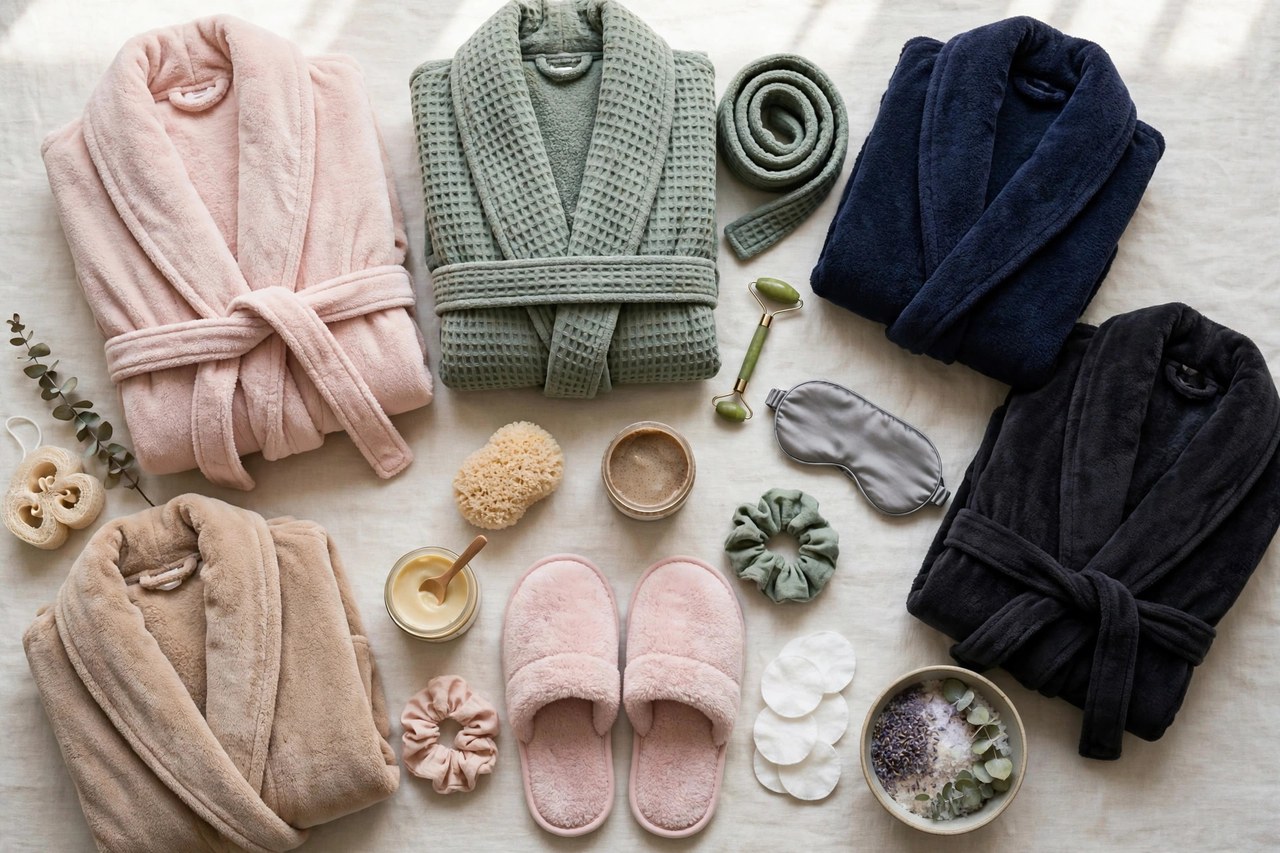
A plus size robe is a wrap garment judged by coverage and closure: whether the front overlaps generously and stays closed, whether the belt ties at a comfortable point and holds, and whether the length and fabric weight suit how and when you wear it. In sizes 1X to 5X, robes cut from a genuine plus pattern provide that overlap as a design feature, while sized-up regular robes often meet only at the belt and gap above and below it — the single most common robe complaint in plus reviews.
This guide treats the robe strictly as a product: styles and collar types, fabric weights from summer waffle cotton to winter fleece, sizing and length selection, and the construction details — belt loops, inner ties, pocket placement — that separate a robe you live in from one that lives on a hook. A robe is worn daily, briefly but constantly, and small design decisions compound into either ease or daily irritation.
Wrap Overlap, Belts and Inner Ties
Coverage starts with the crossover. A well-designed plus robe wraps the front panels far enough that the overlap measures several inches at the bust and hip when belted, so sitting, reaching and bending do not open gaps. Look for an inner tie at the waist inside the wrap — a small ribbon or fabric tie that anchors the under-layer before the belt is tied. That feature transforms robe security, especially in slippery satin.
The belt should be long enough to tie in a proper bow or knot with ends remaining, attached or generously looped so it does not slide to the floor every time the robe is hung. Belt loop placement matters: loops set at the natural waist suit most wearers, while loops set low force the belt to ride and the top to blouse open. Some plus robes offer two loop heights or a sewn-in belt, both thoughtful solutions. Test the robe seated with legs crossed — the position that reveals every overlap and length shortcoming at once.
Styles: Shawl Collar, Kimono, Hooded and Zip Front
The shawl collar robe rolls a wide, soft collar from neck to waist, giving the warmest neck coverage and a classic look that suits plush and terry fabrics. The kimono style has a flat V neckline and wide sleeves, feels lighter and cooler, and packs flattest for travel. Hooded robes add post-shower practicality and warmth, with hood size worth checking in plus ranges so it sits comfortably without pulling the shoulders. Each style should have sleeves that end clear of the wrist for washing and cooking safety, or cuffs that can be pushed up and stay up.
The zip-front robe replaces the wrap entirely with a full zip, giving secure closure with no belt at all — a strong choice for anyone who dislikes tying, for post-surgery or limited-mobility wear, and for a robe that doubles as a housedress layer. Zips should be two-way or stop above the knee so stride is unrestricted. Short robes ending at mid-thigh suit warm climates and pair with pajama shorts, while ankle-length robes maximize warmth and coverage; mid-calf is the versatile middle and the safest length on stairs for most wearers.
Fabrics and Weights by Season
Cotton terry is the absorbent bathrobe classic, worn straight from the shower, but it is heavy when wet and slow to dry — in plus sizes that weight is noticeable on the shoulders, so consider a mid-weight terry or a cotton velour that keeps absorbency with less bulk. Waffle-weave cotton is the light, quick-drying alternative for warm bathrooms and summer, packing small and washing easily. Cotton jersey robes feel like a long soft layer and suit lounging more than post-bath use.
For winter, plush fleece and microfiber robes give the most warmth per weight and dry fast, while wool-blend robes are rare and premium. Satin and charmeuse robes are smooth, light cover-ups that layer over sleepwear for a dressed feeling; their slipperiness makes the inner tie and a generous overlap essential rather than optional, and they provide almost no warmth. Choose by primary use — bath, lounge, warm layer or light cover — because no single fabric wins at all four, and many households sensibly keep a heavy winter robe and a light summer one.
Sizing, Pockets and Care
Size a robe by bust and hip with the overlap in mind: if you fall between sizes, the larger size almost always wears better, because a robe has no tailored points to look sloppy and the extra wrap is pure benefit. Length should be chosen against your height and your stairs — a robe hem that brushes steps is a hazard, so petite-plus wearers should look for shorter length options within plus ranges rather than simply accepting a standard long robe.
Pockets should be patch or in-seam, placed at a natural hand height, and deep enough for a phone without pulling the front open; check pocket position on your body, since graded placement sometimes lands them at the thigh. Care follows fabric: cotton terry and waffle wash warm and tumble dry; fleece washes cold and dries fast; satin robes wash gentle and hang dry. A well-chosen plus robe is a hard-working garment.
Related Women's Guides
More to Explore on Apparel Search
- Plus Size Clothing
- Plus Size Clothing Stores
- Shop for Plus Sizes
- Women's robes
- Women's Kimono Robes
- Women's Fleece Robes
- Women's Silk Robes
- robe definition
- plus size
- fashion
- trendy
- stylish
- plus size fashion model
- plus size fashion definition
- Clothing Stores
- Fashion Designers
- Popular Brands
- Apparel
- Women's Clothing Stores
- Women's Clothing Wholesalers
- Women's Fashion
Looking for Women's Clothing Stores?
This guide helps you choose women's plus size robes. To browse where to buy, visit our women's clothing store directory, where you can find retailers that carry them.