Women's Fleece Robes Guide
The warm layer that starts and ends the day — choosing a fleece robe by length, closure and weight, from bathroom door to sofa.
Shop Women's Fleece Robes Now
Shop Women's Fleece Robes on Amazon Shop Women's Fleece Robes on eBayThe Amazon and eBay links on this page are affiliate links. If you make a purchase through them, Apparel Search may earn a commission.
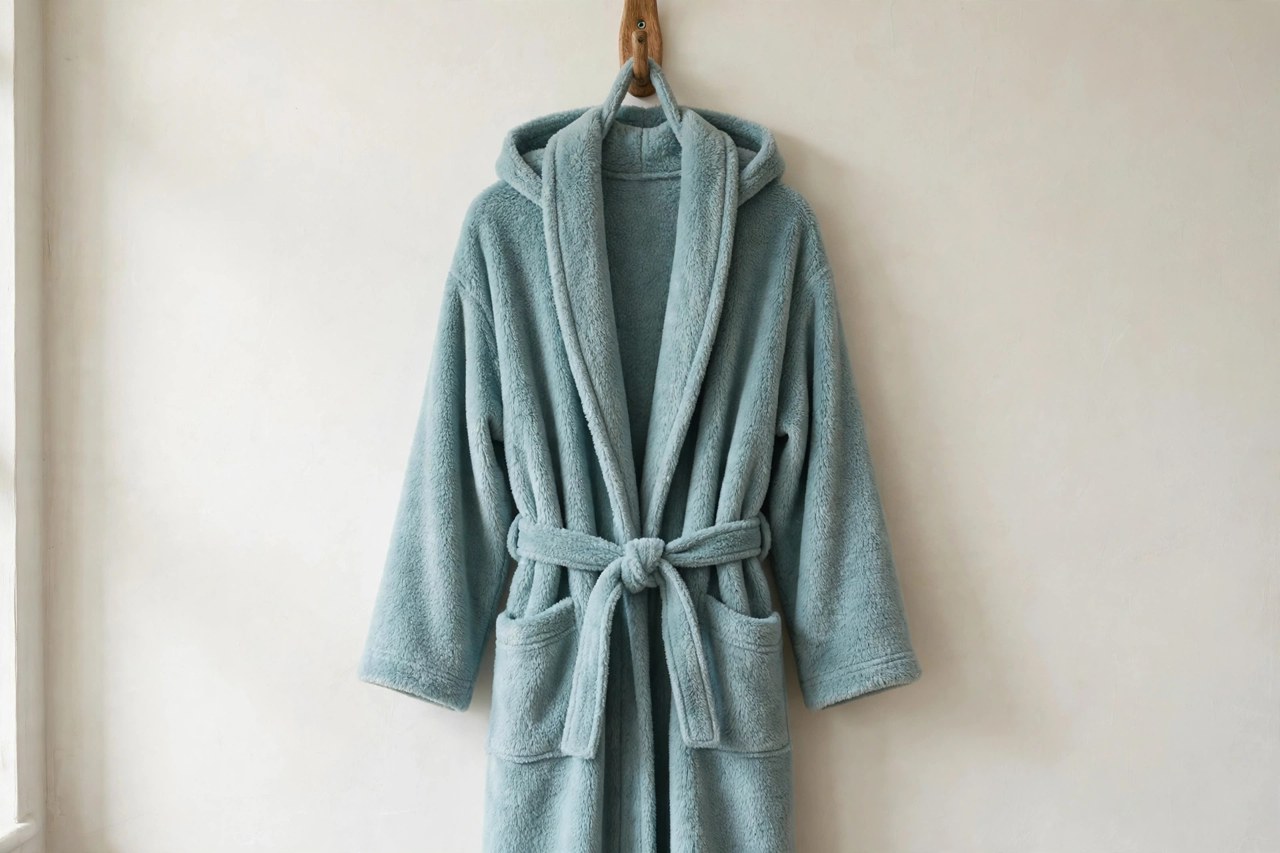
A robe is a long, loose outer garment worn over sleepwear or indoor clothes, and fleece has become one of its most popular fabrics for a simple reason: a fleece robe feels velvety soft the moment it goes on, yet it weighs far less than a towelling or quilted robe of the same warmth. Women's fleece robes vary more than their simple shape suggests, in length, in how they close, in weight and in details like hoods and pockets, and those choices decide whether a robe becomes a daily staple or a hook ornament. This guide works through them in order.
Lengths: Short, Knee, Mid-Calf and Full
Robe length controls both warmth and practicality. Short robes, ending at the thigh or knee, are the lightest and easiest to move in, suiting milder weather, packing for travel and anyone who finds long fabric a nuisance on stairs. Knee-length robes are the balanced default, covering sleepwear properly while leaving the lower leg free. Mid-calf robes add real warmth for cold houses and are the most popular winter choice, since the extra length covers the legs while sitting as well as standing. Full-length robes, reaching the ankle, give the most complete coverage and the strongest sense of being wrapped up, at the cost of more fabric to wash, store and keep clear of the floor.
Closures: Tie Belt, Zip and Buttons
Most fleece robes close with a belt tied at the waist, as robes traditionally have, and a good one has belt loops or a belt that is stitched at the back so it cannot slide free and vanish in the wash. A belted wrap front adjusts to anything worn underneath, from a thin nightdress to a full pajama set, and can be loosened as the house warms up. Zip-front robes close securely in one motion, stay shut while carrying, bending and answering the door, and are a practical choice for anyone who finds knots awkward, though the zip removes the wrap's adjustability and should run smoothly without catching the fleece pile. Button and snap fronts sit between the two, offering set closure points with some adjustment.
Fabrics, Weights and Finishes
Robe fleece ranges from smooth microfleece, which makes a light robe for cool mornings and travel, through midweight fleece for everyday winter use, to plush, high-pile and sherpa-style fleece that behaves almost like a wearable blanket. The standard fleece weight scale applies, with heavier robes insulating more and taking longer to dry. Shawl collars are the classic neckline, folding back in a continuous band that keeps the chest covered, while hooded robes add warmth for wet hair and cold hallways, and simple V-neck wraps without a collar sit flattest under coats in a pinch. Look for generously cut patch pockets that hold a phone and a tissue without gaping, smooth internal seams, and cuffs that can be turned back for washing up or making breakfast.
Wearing a Robe Over Pajamas
A robe is sized to be an outer layer, so buy it by how it feels over your bulkiest pajamas, not over a thin top. The shoulders should sit correctly even with a fleece pajama top underneath, the belt should close with fabric to spare, and the sleeves should end at the wrist without swallowing the hands needed for mugs and door handles. Colour coordination is a small pleasure worth having: a solid robe in a neutral or deep tone works over every printed and plain pajama set you own, while a printed robe is best reserved for mostly plain sleepwear.
Extra: From Bath to Lounge
Fleece robes live a double life between the bathroom and the rest of the house, and it helps to understand the fabric's limits in the first role. Fleece feels warm and comfortable over damp skin and works well as a cover while drying hair or moving between bathroom and bedroom, but it does not absorb water the way cotton terry does, so it is a layering robe rather than a drying towel. Once dry, the same robe settles into its main work: warmth over pajamas for the evening, a respectable layer for deliveries and doorstep conversations, and a comfortable cover for anyone convalescing at home. A midweight robe in a darker solid colour handles this whole range best, hiding the odd splash, washing easily and looking tidy from the first hour of the day to the last.
Fit Checks and Care
Before keeping a robe, run through a short routine: belt it over pajamas, raise both arms, sit down, climb a step and put your hands fully into the pockets. The front should stay overlapped, the hem should clear your feet on the step, and the belt should hold without being retied. For care, wash a fleece robe with similar colours in cool or warm water, fasten zips and untie belts first, and avoid fabric softener so the pile keeps its softness. Fleece robes dry faster than their bulk suggests on a low tumble or a sturdy hook, and they should be fully dry before hanging in a closed wardrobe. Store on a wide hook or padded hanger to protect the shoulders, and a robe bought well and washed gently will keep its warmth and shape for many winters.
Related Women's Fleece Guides
Photos


More to Explore on Apparel Search
Looking for Women's Clothing Stores?
This guide helps you choose women's fleece robes in the length and closure that fit your morning and evening routine. To browse where to buy, visit our women's clothing store directory, where you can find retailers that carry them.