Women's Fleece Pants Guide
Joggers for the trail, straight legs for everyday errands and soft lounge pants for home — choosing the right weight and fit.
Shop Women's Fleece Pants Now
Shop Women's Fleece Pants on Amazon Shop Women's Fleece Pants on eBayThe Amazon and eBay links on this page are affiliate links. If you make a purchase through them, Apparel Search may earn a commission.
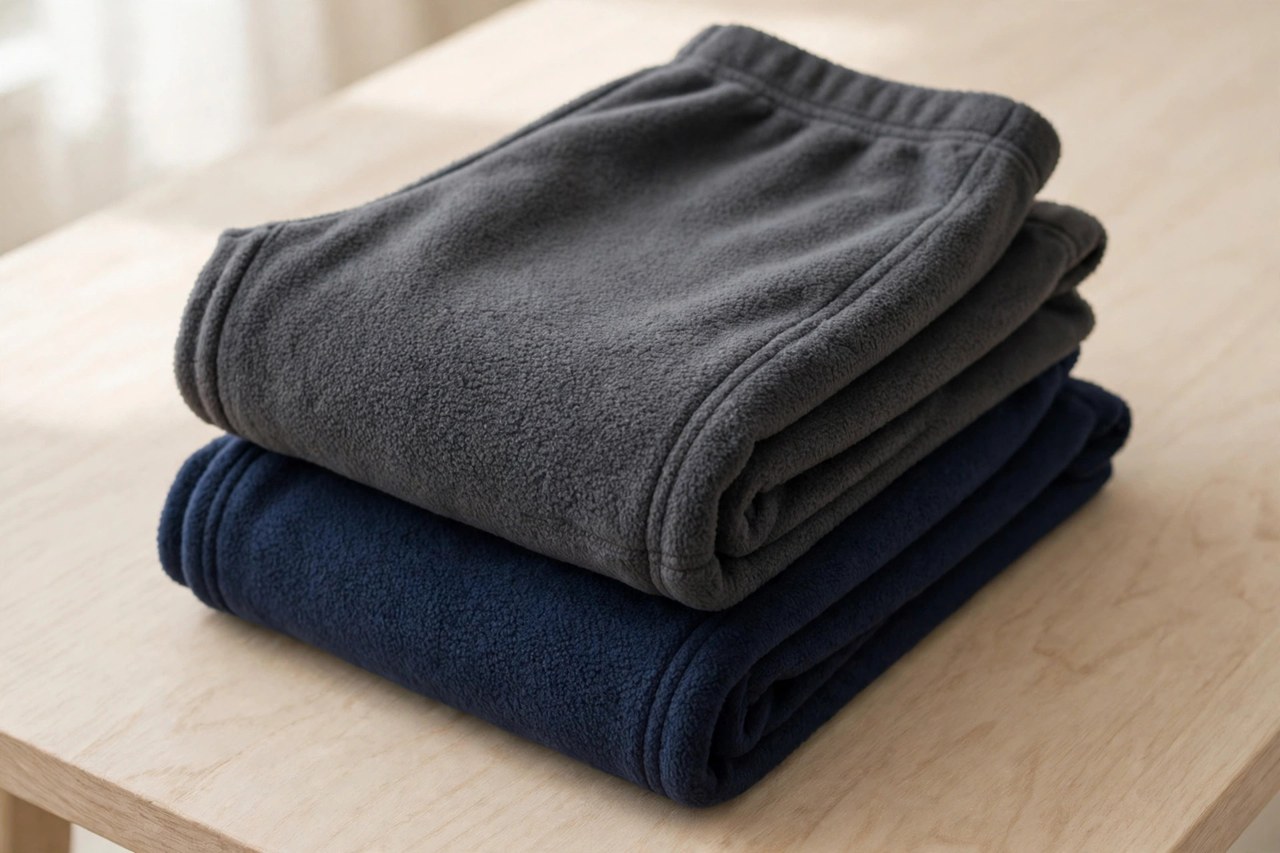
Fleece pants are trousers cut from brushed polyester fleece instead of woven cloth, and that one fabric change gives them a job few other pants can do: they add real warmth without bulk, weight or stiffness. Women's fleece pants cover a wide range, from slim joggers worn on winter walks to relaxed lounge pants that live at home, and from lightweight pairs that slip under ski trousers to heavyweight pairs worn on their own in serious cold. Because fleece is soft against the skin, dries quickly and resists wrinkles, the same basic pant works for travel, camping, school runs and slow weekends alike.
Jogger, Straight-Leg and Lounge Styles
The jogger is the most active cut: a tapered leg ending in a ribbed ankle cuff, an elastic or drawstring waist, and usually side pockets. The cuff keeps hems off wet ground and stops cold air travelling up the leg, which is why joggers suit walking, dog-walking routes and campsite wear. Straight-leg fleece pants read more like ordinary trousers, with an even width from knee to hem and sometimes a flat front, making them the easiest to wear out of the house with boots and a coat. Lounge pants are the relaxed end of the family: a wider, straighter or gently flared leg, a soft wide waistband and minimal hardware, cut for comfort at home rather than for weather.
Fleece Weights and Fabric
Fleece is a synthetic fabric made from polyester, commonly polyethylene terephthalate (PET), and it is not the woolly covering of a sheep, despite the name. It was developed in Massachusetts in 1979 by Malden Mills, now Polartec LLC, working with Patagonia, as a light pile fabric that mimics wool's warmth at a fraction of the weight, and it is still graded the same way. Microfleece and 100-weight pants are thin and smooth, best as a warmth layer or for mild days. 200-weight is the versatile middle, warm enough as a standalone pant in autumn and early winter. 300-weight pants are thick, plush and the least flexible, chosen for very cold, low-activity days.
Fit, Rise and Choosing Your Pair
Start with the inseam: fleece pants that pool over shoes collect mud and wear at the hem, while a jogger cuff should sit at the ankle bone. Check the rise against how you will wear them, since a mid-rise with a drawstring stays secure under a hip belt or coat, while a high rise adds core warmth and pairs well with shorter tops. Waistbands vary from plain elastic to elastic plus an internal drawcord, and the drawcord matters if you carry a phone in the pocket. Look for pockets deep enough to hold a hand fully, a gusset or articulated knee if you bend and climb a lot, and a smooth outer face if the pants will slide under another layer. Between sizes, choose the one that fits the waist without the drawcord pulled to its limit.
Extra: Fleece Pants as a Layering Piece
One of the oldest uses for fleece pants is layering, wearing one pant over or under another. Lightweight fleece has an inner surface that traps warmth and helps move moisture away from the skin, while its smooth outer face slides easily under shell trousers, ski pants or waterproof over-trousers without bunching. That combination is popular for winter sports, ice fishing, cold-weather spectating and any job that keeps you outside standing still. Heavier fleece can also be layered under loose work trousers or worn over close-fitting base-layer leggings when temperatures drop further. The rule is simple: the fleece layer should fit close enough not to fold at the knee, but never so tight that it compresses the loft, because trapped air is what does the insulating.
Styling and Everyday Wearing
Black remains the most popular colour for fleece pants because it behaves like a trouser colour, pairing with almost any top, but charcoal, navy and deep green do the same job with a softer edge. Straight-leg fleece pants look most finished with a tucked or half-tucked knit, a fleece jacket or long coat, and clean trainers or ankle boots. Joggers work best with shorter tops that show the waistband and cuff, and with a sweatshirt or quarter-zip in a similar weight for a coordinated, deliberate outfit rather than a thrown-on one. At home, lounge pants earn their keep with slippers and layered tees. Matching the pant's weight to the top keeps the outfit balanced, so a heavyweight pant does not overwhelm a thin jersey top.
Care for Fleece Pants
Fleece is forgiving to wash, which is part of its appeal. Machine wash in cool or warm water with similar colours, turn printed or dark pairs inside out, and avoid fabric softener, which can coat the fibres and reduce both softness and moisture handling. Tumble dry on low or line dry, since fleece dries quickly and high heat can dull the brushed surface over time. Wash fleece pants inside a closed load rather than with towels or rough denim, which encourages pilling, and remove them promptly so the elastic waistband is not left stretched over a hanger. Store folded rather than hung by the waistband. With that basic routine, a good pair keeps its loft, colour and shape through several winters of regular wear.
Related Women's Fleece Guides
Photos

More to Explore on Apparel Search
Looking for Women's Clothing Stores?
This guide helps you choose women's fleece pants in the weight, leg shape and rise that suit how you actually spend cold days. To browse where to buy, visit our women's clothing store directory, where you can find retailers that carry them.