Women's Fleece Clothing Guide
Soft, light and seriously warm — the complete guide to the fabric that replaced wool in half the wardrobes on earth, and every way women wear it.
Shop Women's Fleece Clothing Now
Shop Women's Fleece Clothing on Amazon Shop Women's Fleece Clothing on eBayThe Amazon and eBay links on this page are affiliate links. If you make a purchase through them, Apparel Search may earn a commission.
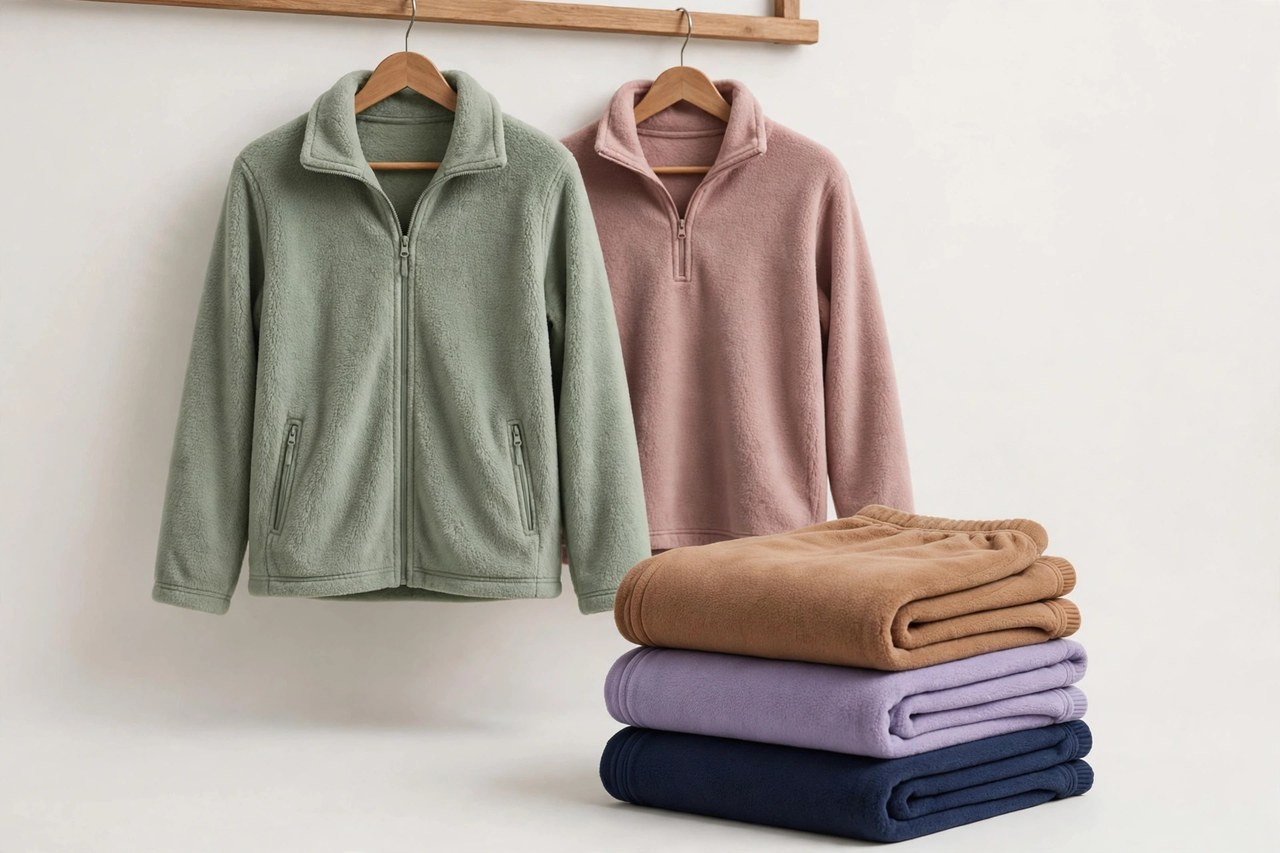
Fleece clothing fabric has nothing to do with a sheep's woolly coat, despite the name. Modern fleece is a synthetic polyester fabric, technically polyethylene terephthalate (PET), knitted and then brushed so that thousands of tiny cut loops stand up as a soft, napped pile. That pile traps still air, and trapped air is what insulates you — which is why fleece delivers so much warmth for so little weight. Polar fleece was developed in Massachusetts in 1979, when Malden Mills (now Polartec LLC) and Patagonia created Synchilla, a synthetic pile meant to mimic wool and in some ways surpass it. CEO Aaron Feuerstein famously declined to patent it, so the fabric spread quickly and cheaply. Fleece keeps some of wool's best qualities — it insulates even when damp and feels soft against skin — at a fraction of the weight of the lightest woolens, and it dries far faster.
Weights, Microfleece and Anti-Pill Grades
Fleece is sold by weight, and the weight decides the job. Microfleece is the lightest grade, smooth and thin enough to wear as a base layer or a cool-evening top. The classic polar fleece scale runs 100, 200 and 300: 100-weight is a light layer for mild cold and active days, 200-weight is the versatile mid-layer most jackets and pullovers use, and 300-weight is the thickest, warmest and least flexible, reserved for serious winter insulation. Brushing on both sides adds loft and softness, while a tighter knit sheds wind a little better. Look for anti-pill grades if a garment will be washed often: pilling is the formation of tiny fiber balls where fabric rubs, and anti-pill fleece is treated or tightly constructed so the surface stays smooth and new-looking far longer.
Recycled Fleece and How It Is Made
Fleece begins as polyester yarn, much of it now spun from recycled plastic bottles. Bottles are cleaned, shredded into flakes, melted and extruded into new PET fiber, which is knitted into fabric, brushed to raise the pile, sheared even, and dyed or printed. Recycled fleece performs essentially identically to virgin fleece — same warmth, same softness, same durability — while giving discarded plastic a second life, and many women's ranges now label the percentage of recycled content on the hangtag. Fleece is also naturally hydrophobic: the polyester fibers themselves absorb almost no water, so a fleece mid-layer keeps insulating in drizzle and dries overnight on a line, a major reason it displaced wool for outdoor wear.
The Full Range of Women's Fleece Clothing
Because the fabric is inexpensive, warm and easy to sew, fleece appears in nearly every women's clothing category. Jackets and pullovers are the heart of the range: full-zip jackets, quarter-zip and half-zip pullovers, lightweight and heavyweight styles, and unlined jackets for layering. Tops include fleece shirts in button-front and pullover cuts, sweatshirts in crewneck and hooded form, and long-sleeved zip sports shirts built for training. Bottoms run from casual fleece pants and solid dress-up-able styles to leggings-weight lounging pants. At home, fleece dominates comfort wear: pajamas, PJ sets and robes use the softest, often printed, grades. Accessories finish the picture, especially fleece hats and ear bands that add outsized warmth for their size. The chip links below open a dedicated guide to each of these categories, so you can go straight to the garment you are shopping for.
Warmth and Layering Logic
Fleece earns its keep inside a layering system. Worn next to the skin or over a thin base layer, the lightest microfleece works as a warm single layer in cool weather and wicks moisture during activity. A midweight 200 fleece is the classic mid-layer: it traps body heat under a coat while still breathing, and it is versatile enough to become the outer layer on dry, calm days. Heavyweight 300 fleece provides thermal insulation for very cold weather, usually under a windproof shell, because fleece alone loses warmth quickly in wind. Women's cuts help here — a shaped, close fit layers smoothly without bunching, while a relaxed fit swallows thicker clothing underneath for the coldest days.
Choosing Well and Caring for Fleece
When choosing fleece clothing, run a hand over the surface: a dense, springy pile will outlast a thin, flat one, and anti-pill fabric is worth prioritizing for everyday pieces. Check that zippers move smoothly, that cuffs and hems are neatly finished, and that the weight suits the job described above. Care is refreshingly easy. Machine wash cold or warm on a gentle cycle, ideally inside out and with similar colors, and avoid fabric softener, which coats the fibers and reduces both wicking and loft. Fleece dries quickly on a line; if you tumble dry, use low heat, since high heat can damage the pile over time. Never iron fleece. Wash printed and dark fleece separately at first, store pieces clean and dry, and remove early pills with a fabric shaver rather than pulling them, which thins the fabric. Looked after this way, a good fleece garment stays soft and warm for years of winters.
Women's Fleece Clothing Guides A to Z
- Women's Fleece Full Zip Jackets
- Women's Fleece Hats
- Women's Fleece Jackets
- Women's Fleece Long Sleeved Zip Sports Shirt
- Women's Fleece Pajamas
- Women's Fleece Pants
- Women's Fleece PJ
- Women's Fleece PJ Sets
- Women's Fleece Quarter Zip Pullover
- Women's Fleece Robes
- Women's Fleece Shirts
- Women's Fleece Sweatshirts
- Women's Fleece Unlined Jacket
- Women's Half Zip Fleece Pullover
- Women's Heavyweight Fleece Quarter Zip Mock
- Women's Lightweight Fleece Full Zip Jacket
- Women's Lightweight Fleece Jackets
- Women's Printed Fleece Clothing
- Women's Solid Fleece Pants
More to Explore on Apparel Search
Looking for Women's Clothing Stores?
This guide helps you choose women's fleece clothing by fabric weight and garment type. To browse where to buy, visit our women's clothing store directory, where you can find retailers that carry them.