Women's Fleece Hats Guide
The smallest garment that makes the biggest difference on a cold day — warm, featherlight fleece headwear that meets the elements head on.
Shop Women's Fleece Hats Now
Shop Women's Fleece Hats on Amazon Shop Women's Fleece Hats on eBayThe Amazon and eBay links on this page are affiliate links. If you make a purchase through them, Apparel Search may earn a commission.
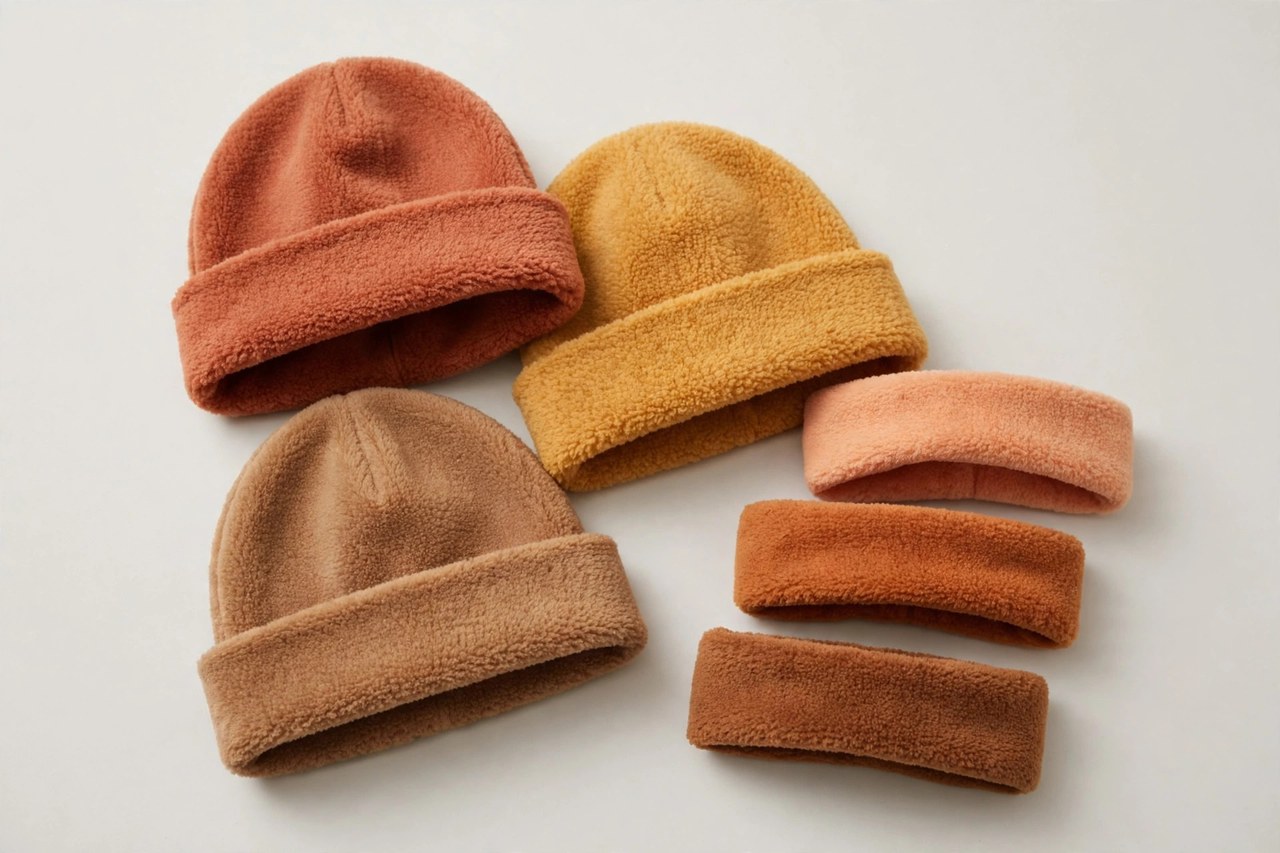
A hat is simply a shaped covering for the head, worn for warmth, as a fashion item, or as part of a uniform — and of all the fabrics a winter hat can be made from, fleece is among the most practical. Your head and ears are where cold bites first and where wind steals heat fastest, yet a fleece hat weighs almost nothing, crushes into a coat pocket without creasing, and goes straight in the wash. The warmth of fleece is exceptionally well suited to headwear because the brushed polyester pile traps air in a thin layer, giving real insulation without the bulk or itch of a heavy wool knit, and because fleece keeps working when it gets damp from snow or effort. This guide covers the main styles, how fleece weight changes the warmth, and how to get a fit that stays put in wind without crushing your hair.
Beanies and Close-Fitting Styles
The beanie is the core fleece hat: a close, rounded cap that covers the crown and ears, sometimes with a turned-up cuff band that doubles the fleece over the ears exactly where extra warmth matters most. Earflap styles extend coverage down over the ears and sometimes the back of the neck, occasionally with ties, and suit stationary cold — watching a game, walking the dog, waiting for a train. Because fleece has gentle stretch, most beanies come in one or two sizes rather than a full size run, but the depth varies: check that the hat reaches fully over your ears rather than perching, since a shallow beanie rides up and leaves the earlobes — the part that hurts first — exposed to the wind.
Ear Bands and Headband Styles
The ear band, or fleece headband, covers the forehead and ears while leaving the crown open, and it solves problems a full hat cannot. It fits under a ponytail or bun without disturbing your hairstyle, works with hair worn up, vents heat from the top of the head during hard exercise, and slips easily under a hood, helmet or hard hat. Contoured ear bands are cut wider and shaped over the ears, narrowing at the back so the band stays anchored instead of sliding up. Runners, hikers and skiers often prefer a band for stop-and-go activity: warm enough at the start of a workout, never sweltering once you are moving.
Fleece Weights and Warmth for Headwear
Fleece hats use the same weight scale as fleece clothing. Microfleece and 100-weight hats are thin, smooth and breathable — right for cool autumn days, high-output running and cycling, and wearing under a hood where bulk matters. 200-weight is the all-purpose winter standard, warm enough for most cold days while still light. 300-weight and double-layer hats are for deep cold and low activity, when you are generating little heat of your own. Wind is the variable the weight number ignores: plain fleece lets air through, so for exposed, windy places look for hats with a windproof panel or membrane sandwiched in the fleece, or wear a thin fleece hat under a shell hood.
Fit, Hair and Everyday Styling
A fleece hat should feel snug but never tight: it should stay on when you shake your head, cover the ears completely, and leave no pressure line across the forehead after a few minutes. If you wear your hair long, try the hat on with your hair styled as you normally wear it out of doors; ponytail-friendly beanies with a small opening at the back exist, and ear bands sidestep the issue entirely. Fleece is one of the least hair-hostile hat fabrics — the smooth pile causes less static and flattening than coarse wool knits, though any hat worn for hours will settle your hairstyle, so a quick brush-out is part of the routine. For styling, coordinate a fleece hat with your jacket, gloves or scarf, and keep a black or charcoal hat as the goes-with-everything spare. Bright colors earn their place for visibility on winter roads and trails.
Care and Keeping Several in Rotation
Fleece hats ask almost nothing in care, which is part of their appeal. Machine wash cold or warm with similar colors and dry on low heat or on a line; they dry so quickly that a hat washed at night is ready by morning. Skip fabric softener, which coats the fibers and dulls the fabric's ability to shed moisture, and wash a new dark hat separately once in case of loose dye. Because fleece hats are inexpensive and tiny, the smartest strategy is rotation: keep one with your everyday coat, one in the car and one for exercise, so a damp hat never has to be worn twice in a row. A hat that still fits well after several winters of washing is a sign of dense, anti-pill fleece — remember the brand, because that quality is exactly what to look for in fleece jackets and layers as well.
Related Women's Fleece Guides
Photos

More to Explore on Apparel Search
Looking for Women's Clothing Stores?
This guide helps you choose women's fleece hats by style, weight and fit. To browse where to buy, visit our women's clothing store directory, where you can find retailers that carry them.