Women's Printed Fleece Clothing Guide
Florals, plaids, novelties and geometrics on the coziest fabric there is — how fleece takes a print, and how to wear one well.
Shop Women's Printed Fleece Clothing Now
Shop Women's Printed Fleece Clothing on Amazon Shop Women's Printed Fleece Clothing on eBayThe Amazon and eBay links on this page are affiliate links. If you make a purchase through them, Apparel Search may earn a commission.
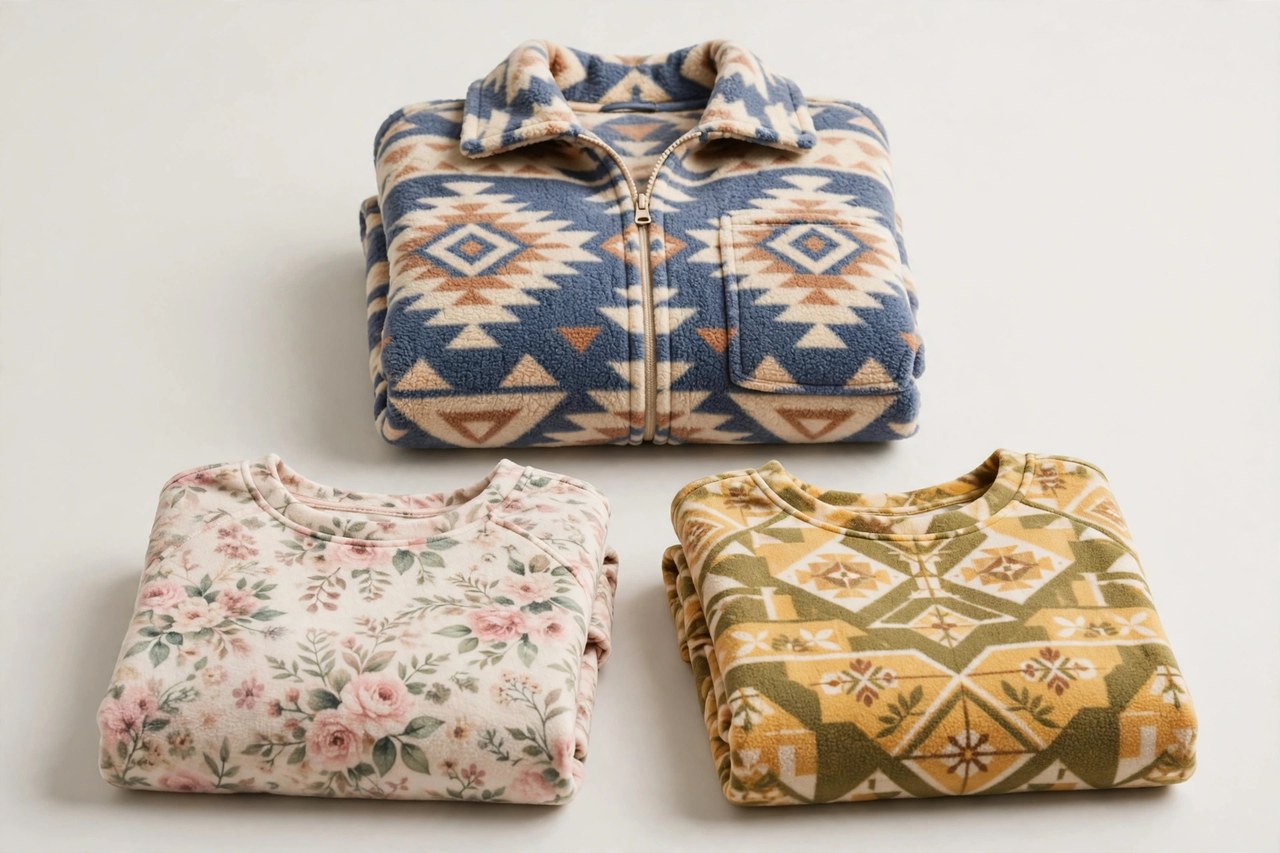
Textile printing is the process of applying color to fabric in definite patterns or designs, with the color bonded to the fiber so it resists washing and friction. It differs from dyeing, where the whole fabric is covered uniformly with a single color: in printing, one or more colors are applied in certain parts only, in sharply defined patterns. Fleece takes printing beautifully, and printed fleece is sewn into nearly every kind of women's clothing — tops, jackets, pants, pajamas and robes. The reason is partly technical, since polyester fleece accepts several printing methods exceptionally well, and partly human: fleece is comfort clothing, and comfort clothing is where women happily wear the cheerful, personal patterns they might skip in tailored pieces. This guide explains how prints get onto fleece, the pattern families you will meet, and how to choose and care for prints so they stay as bright as the day they arrived.
How Fleece Is Printed
Most printed fleece begins as white or pale fabric printed before the garment is cut and sewn. Traditional rotary screen printing pushes dye paste through engraved rotating screens, one per color, at high speed — economical for long runs of repeating patterns. Polyester fleece also suits dye sublimation, where heat turns solid dyes into gas that bonds inside the polyester fibers themselves; the result is an all-over print with no surface film, so it cannot crack, peel or stiffen the fabric, and the colors stay vivid because they are literally part of the fiber. One fleece-specific challenge shapes the result: the brushed pile can blur fine detail, so successful fleece prints favor bold shapes, softened edges and forgiving patterns over hairline precision.
Pattern Families: Florals to Novelty Prints
Printed fleece organizes into recognizable families. Florals and botanicals are the perennial leaders, from small ditsy sprigs on pajamas to large painterly blooms on tops and robes. Plaids, checks and stripes give fleece a classic, outdoorsy order and appear constantly on shirts, pants and loungewear, often in buffalo checks and tartans for cold months. Animal prints — leopard, zebra and snakeskin — turn a simple fleece top into a fashion piece, while actual animal motifs, from woodland creatures to cats, anchor the huge novelty print family: seasonal designs for holidays, food and hobby themes, stars, hearts and polka dots, sold heavily in pajamas, robes and cozy casual tops. Geometrics and abstracts suit pullovers and jackets, and fair-isle and Nordic-inspired patterns are fleece winter staples that read as knit tradition translated into print.
All-Over Prints, Placement Prints and Scale
Beyond the pattern itself, consider its layout and scale. An all-over print repeats across the entire garment, which is how most printed fleece is made and how pajamas, robes, pants and casual tops usually wear it. A placement print puts one designed motif in a chosen spot — the front of a sweatshirt, the chest of a top — leaving the rest solid, which reads more like a graphic garment and pairs more easily with other patterned pieces. Scale changes everything: small, close repeats are calm, forgiving of fit and easy to wear anywhere; large-scale prints are dramatic, can dominate a small frame, and show off best on simple garment shapes with few seams interrupting the art. Check how a repeat lands on the body — a large motif placed awkwardly at the center front or across the seat is the classic printed-garment disappointment, and better makers cut fleece pieces with the pattern's placement in mind.
Styling Printed Fleece
The styling rule for printed fleece is the same as for any strong pattern: let the print be the only loud piece. A printed fleece top wants solid pants or jeans; printed fleece pants and pajama bottoms want a plain top in one of the colors drawn from the print itself, which makes the outfit look chosen rather than assembled. At home, printed pajamas and robes need no styling at all, which is precisely their charm, though matching or coordinating sets look tidier than mixed prints from different families. In public, keep the garment shape simple and the accessories quiet, and let scale follow the setting: small florals and neat plaids travel anywhere, while big novelty prints announce a casual day.
Print Care: Keeping Colors Bright
A print bonded properly to the fiber resists washing and friction well, but fleece prints reward gentle handling. Wash inside out, in cold or warm water, with similar colors — turning the garment protects the printed surface from rubbing against zippers and other garments, which is where prints fade and the pile pills first. Wash a new, strongly colored print separately for the first few washes. Skip chlorine bleach entirely and fabric softener as well, since softener coats the pile and dulls both color and loft. Dry on low heat or on a line away from prolonged direct sun, which fades dyes over a season. Sublimation prints are the hardiest of all and shrug off this routine entirely, but screen-printed fleece keeps its brightness for years under the same simple care — and since fleece itself barely wears out, print care is what decides how long the garment looks new.
Related Women's Fleece Guides
More to Explore on Apparel Search
- Fleece Weights
- Women's Fashion
- Women's Half Zip Fleece Pullover
- Women's Heavyweight Micro-fleece Quarter Zip Mock
- Women's Lightweight Fleece Full Zip Jacket
- Women's Lightweight Fleece Jackets
- Women's Fleece Full Zip Jackets
- Women's Fleece Hats
- Women's Fleece Long Sleeved Zip Sports Shirt
- Women's Fleece PJ
- Women's Fleece Quarter Zip Pullover
- Women's Fleece Unlined Jacket
- breathable fabrics
- apparel industry printing
Looking for Women's Clothing Stores?
This guide helps you choose women's printed fleece clothing by pattern and garment. To browse where to buy, visit our women's clothing store directory, where you can find retailers that carry them.