Women's Fleece Unlined Jacket Guide
No lining, no bulk, no stuffiness — just fleece doing what fleece does best, breathing freely against your clothes.
Shop Women's Fleece Unlined Jackets Now
Shop Women's Fleece Unlined Jackets on Amazon Shop Women's Fleece Unlined Jackets on eBayThe Amazon and eBay links on this page are affiliate links. If you make a purchase through them, Apparel Search may earn a commission.
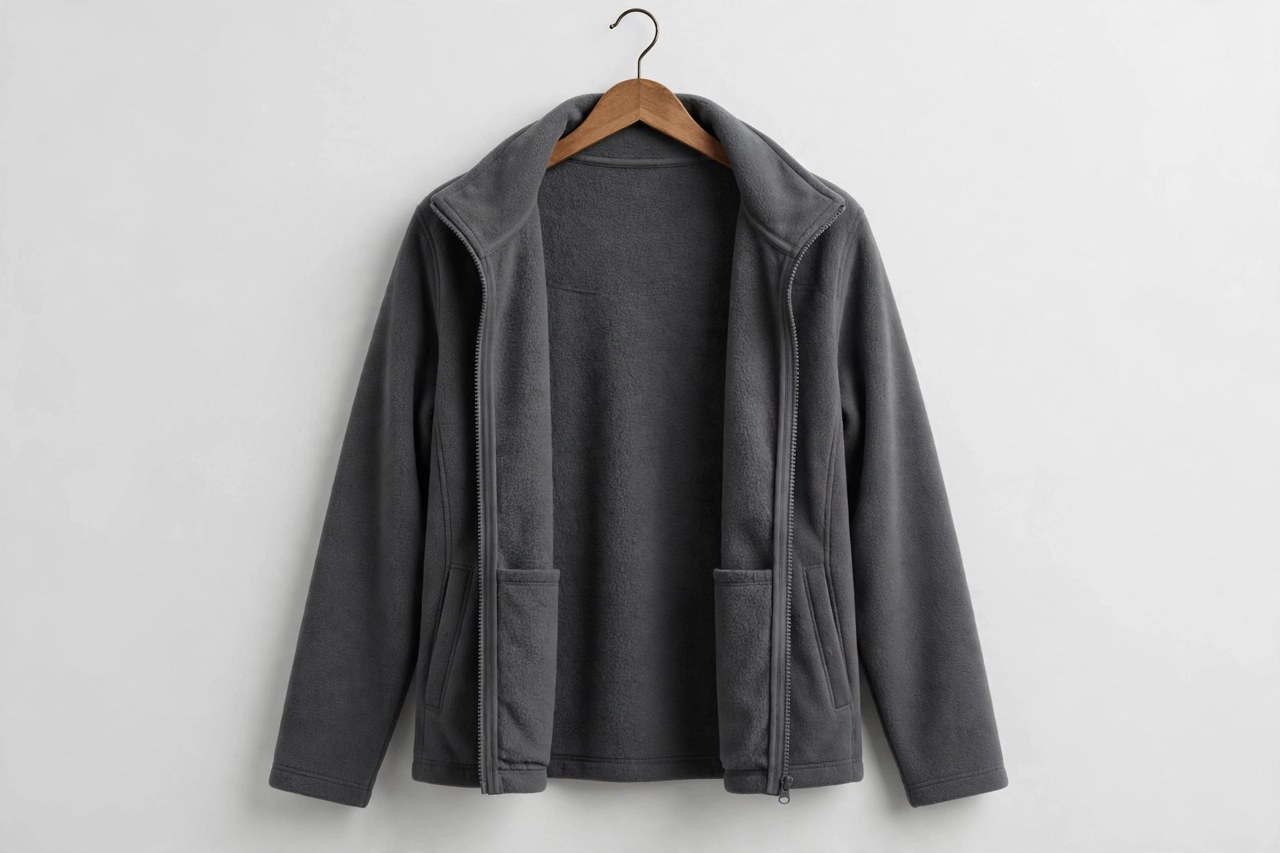
An unlined fleece jacket is simply a jacket with no separate inner lining — the fleece itself forms both the outside and the inside of the garment. A jacket lining is a thinner layer of cloth, often acetate, viscose or silk, that sits between the wearer and the jacket's interior fabric. In a fleece jacket that extra layer is usually unnecessary, and it can work against you, because a lining can limit or prevent the breathability that makes fleece comfortable in the first place. Unlined construction is therefore the norm for fleece, and understanding its advantages helps you judge any fleece jacket — and spot the lined exceptions that genuinely earn their extra layer.
Breathability: The Main Reason to Skip a Lining
Fleece warms you by trapping air in its pile while letting water vapour escape, and that escape route matters. Add a smooth lining and you add a barrier across the whole inside of the jacket: vapour moves more slowly, the microclimate inside gets clammy during activity, and the jacket feels warmer standing still but stuffier the moment you move. An unlined fleece breathes in both directions, so it stays comfortable across a wider range of effort and temperature — the walk to the station, the physical job, the stop-start day. This is why outdoor fleeces, where moisture management is performance, are almost always unlined, and why an unlined jacket often feels fresher at the end of the day than a lined one of the same weight.
A Clean, Simple Interior — and Less to Go Wrong
Turn an unlined fleece inside out and what you see is honest construction: fleece, seams and the back of the zip. That simplicity has practical rewards. There is no lining to tear, sag, twist or peek out at the hem, no second fabric to snag on watches and jewellery, and no trapped layer to slow drying after washing. The soft brushed inside of the fleece feels pleasant directly over a T-shirt or base layer, and the jacket folds and packs without the lining bunching. Repairs are simpler too — a seam or zip can be reached directly. When you shop, run your hand inside: the interior should feel evenly brushed, seams should lie flat, and bindings at the neck and cuffs should be smooth rather than bulky.
When a Lined Fleece Does Make Sense
Unlined is the default, not a rule. A lining earns its place in a few specific designs. A windproof membrane or woven lining transforms a fleece into a much warmer outer jacket for exposed, blustery weather, trading some breathability for real wind protection. A smooth satin-style lining in a smart, town-weight fleece helps it slide over knitwear without grabbing, which matters if you wear it over jumpers daily. And reversible fleeces, with fleece on one side and a woven face on the other, offer two looks in one garment. The honest test is purpose: if the jacket is mainly an active or layering piece, unlined breathes better; if it is mainly a standalone coat for wind and town wear, a purposeful lining can be worth its trade-offs.
Shoulder-Season Wear and Layering Behaviour
Unlined fleece is at its best in the shoulder seasons — those spring and autumn weeks when mornings are cold, afternoons mild and a full coat is too much. It is light enough to carry when the day warms up, warm enough when clouds return, and breathable enough that you do not overheat in between. In a layering system it sits happily in the middle: its brushed inside grips a base layer less than a lined jacket would slide, so check that sleeves do not twist when you pull a shell on over it. Smooth-face unlined fleeces layer most cleanly. Worn alone over a tee, an unlined jacket's soft interior means you can skip a long-sleeve layer entirely on mild days — one less thing to wash and wear.
Styling, Fit and Care
Without a lining, an unlined fleece drapes a little softer and closer than a lined equivalent, which suits its relaxed character: wear it open over tees and shirts, zipped over a dress for evening chill, or as the soft middle of a walking outfit. Choose a fit that allows the layers you actually wear — because there is no slippery lining, allow a touch more ease over chunky knitwear. Care is refreshingly simple: wash cool, inside out, zip closed, no fabric softener, and dry low or on the line. The whole garment dries evenly and quickly since there is no hidden layer holding moisture. Check inside seams and pocket bags when you wash it; with nothing concealed, wear shows early and small repairs stay small.
More Women's Fleece Guides
Looking for Women's Clothing Stores?
This guide helps you choose women's fleece unlined jackets by breathability, weight and fit. To browse where to buy, visit our women's clothing store directory, where you can find retailers that carry them.