Women's Fleece Long Sleeved Zip Sports Shirt Guide
Part warm-up layer, part running top — the zip-front fleece sports shirt built for training days that start cold and finish warm.
Shop Women's Fleece Zip Sports Shirts Now
Shop Women's Fleece Zip Sports Shirts on Amazon Shop Women's Fleece Zip Sports Shirts on eBayThe Amazon and eBay links on this page are affiliate links. If you make a purchase through them, Apparel Search may earn a commission.
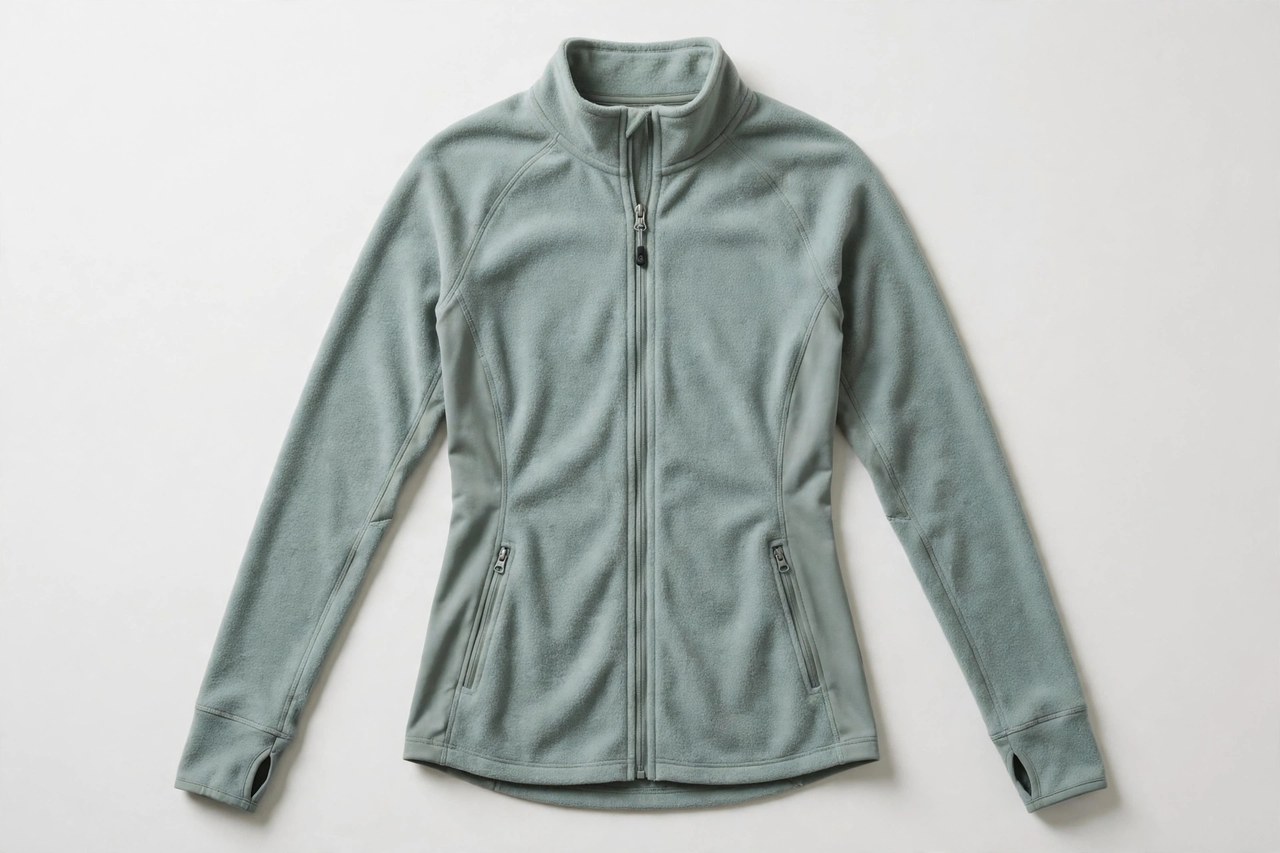
A sports shirt is a casual top designed for sports or informal wear, and the long-sleeved zip sports shirt is its hardest-working cold-weather form: a fleece top with long sleeves and a zip running the full length of the front, cut close for movement and built to manage heat and moisture while you train. It occupies the useful middle ground between a fleece shirt, which is cut for everyday neatness, and a fleece jacket, which is cut to go over other layers. Worn on its own for a run or a training session, over a base layer for a cold hike, or as a warm-up top you strip off once you are moving, it adjusts minute by minute — zip down to vent, zip up to the chin when the wind turns. This guide explains the zip design, the moisture science, and the sport-specific details that separate a true training top from a casual zip-up.
The Full Zip: Temperature Control on the Move
The defining feature is the full-length front zip, and its job is thermoregulation. Training produces heat in waves: cold at the start, warm within ten minutes, chilling again the moment you stop in wind. A full zip lets you dump heat instantly without breaking stride or removing the garment, then close it again for a descent or a cool-down. A stand collar finishes the top, sealing the neck when zipped up and standing away neatly when open, usually with a soft chin guard so the zipper never rubs your throat. If your exercise involves warm-up and cool-down phases outdoors, that convenience is not a luxury — it is the reason the garment exists.
Moisture Management and Fleece Construction
Sport fleece is engineered differently from sofa fleece. Polyester fleece is naturally hydrophobic, absorbing almost no water, and training tops exploit that with constructions that move sweat deliberately. Grid and channel fleeces pair a brushed, lofted inner face with tiny raised squares or grooves: the loft traps warmth while the channels wick perspiration outward and let air circulate, so the top dries while you wear it. Breathability is the other half of the equation — fleece lets vapor escape far better than a coated shell, which is why runners reach for it on cold, dry mornings instead of a rain jacket that would leave them soaked from the inside. Weight follows the same 100 to 300 scale as other fleece, but sports shirts cluster at the light end: microfleece and 100 to 200 weights give warmth without the bulk or overheating that a heavy fleece would cause at training intensity.
Sport Fit and Performance Details
A sports shirt fits close and long: close, so fabric does not flap, catch or bunch under a pack's hip belt; long, so the hem stays put when you reach, bend and twist, with sleeves that cover the wrist at full stretch. Raglan sleeves remove the seam from the top of the shoulder, eliminating the rub point under backpack straps and freeing the arm swing. Flatlock seams, stitched flat against the skin, prevent the chafing that raised seams cause over miles of repetitive motion. Look for thumbholes at the cuffs — they anchor the sleeves, add a half-glove of warmth, and disappear when you do not need them. Subtle reflective details at the cuffs, back or zip appear on running versions for dawn and dusk visibility, and underarm or back mesh panels vent the zones that heat fastest.
Training, Running and Layering in Practice
For running, wear the sports shirt as your outer layer over a moisture-wicking base tee once temperatures drop below comfort; start zipped to the chin and vent progressively rather than stopping to shed a layer. Hikers use it as the active mid-layer: light enough to walk in all day, warm enough for summit stops, and quick to open on climbs. In a layering system it sits between a synthetic or merino base and a wind or rain shell, and because the fleece face is smooth on better models, shells glide over it without grabbing. Choose brightness deliberately for road running, and check that the fit accommodates your base layer without compressing the fleece pile — squashed loft insulates less, so a training top that feels painted on over a tee is a size too small for cold-weather layering.
Choosing Yours and Caring for It
Choose by your coldest regular workout, not your coldest imaginable one: most women are happiest in a lightweight grid or microfleece top for high-output training and a 200-weight version for slower, colder activities like hiking and spectating between matches. Care is simple but specific. Wash cold or warm, inside out, with similar synthetics, and skip fabric softener and bleach: softener films the fibers and kills the wicking you paid for. Tumble low or line dry — fleece dries fast either way. Wash after sweaty sessions rather than letting salt sit in the fabric, and mend a snagged zip early, since the front zip is the garment's whole mechanism. Cared for properly, a zip sports shirt survives hundreds of training days with its fit and warmth intact.
Related Women's Fleece Guides
Photos

Looking for Women's Clothing Stores?
This guide helps you choose women's fleece zip sports shirts for training and running. To browse where to buy, visit our women's clothing store directory, where you can find retailers that carry them.