Women's Sleep Pants Guide
Sleep pants are soft trousers made for sleeping and lounging — no zippers, no rivets, just an easy waist and comfortable fabric over both legs.
Shop Women's Sleep Pants Now
Shop Women's Sleep Pants on Amazon Shop Women's Sleep Pants on eBayThe Amazon and eBay links on this page are affiliate links. If you make a purchase through them, Apparel Search may earn a commission.
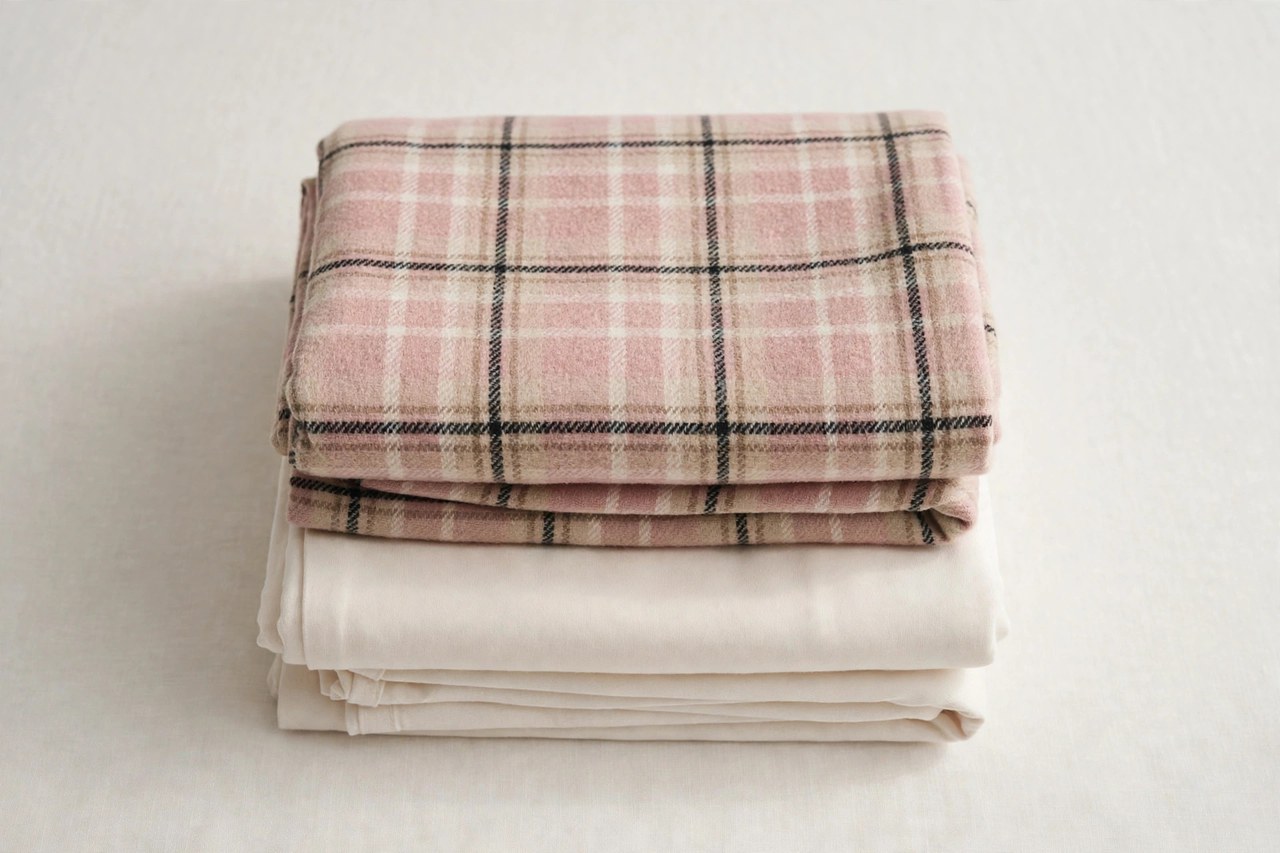
Sleep pants are one silhouette within the sleepwear category: like other pants, they are a garment covering both legs separately, with the defining difference that they are intended for wearing to bed, for sleeping. Their construction signature is plain: they are made without zippers and rivets, for the purpose of comfort. Everything about the garment follows from the job — an elastic or drawstring waist, soft fabric, a loose or gently relaxed leg, and no hardware anywhere that could press into a sleeper.
This page covers sleep pants as a garment: the fabrics ranked by warmth and feel, full-length and capri versions, how they differ from a pajama set's bottom half, and how to size a pant whose waistband must stay comfortable all night. The umbrella category lives on the sleepwear page, and sleep shirts have their own guide; here the focus stays below the waist.
Fabrics: Flannel, Cotton, Knits and Silk
Fabrics organize the whole category, and one hierarchy holds: flannel sleep pants are clearly very popular. Cotton flannel is brushed for softness, warm without weight, and printed in the plaids that have become the style's visual signature. Plain cotton — poplin, lawn and jersey — covers the middle seasons in solids, stripes and prints, breathable and easy to wash. Knit fabrics — cotton jersey, modal blends, brushed microfiber — add natural stretch and drape, moving with a sleeper instead of twisting around the legs.
At the lighter end, silk and satin-weave sleep pants feel cool and smooth and belong to warmer rooms and dressier sets; at the warmest end, fleece pants serve genuinely cold houses. Fibers are commonly cotton, silk and blends, in knit constructions for stretch and woven ones for the crisp flannel and poplin hand. Choose by your room and your thermostat, not by season name: a flannel pant in a heated apartment is a July garment nowhere, and a silk pant in a drafty farmhouse is its own punishment. Two weights in rotation cover most sleepers most of the year.
Lengths, Waists and Details
Length runs in two main forms. Full-length sleep pants end at the ankle and are the cold-weather and classic choice, in straight or gently tapered legs. Capri sleep pants — women's flannel capri sleep pants are their own subcategory — end at mid-calf, the warm-weather and warm-sleeper answer that keeps the pant's ease without the full coverage. Shorts-length sleep bottoms exist at the category's edge but belong more properly to pajama shorts and sets. Leg width matters for sleep: a very wide leg twists and bunches; a slight taper or a narrower straight leg stays where it was put.
The waist is the engineering that matters most. Full elastic waists are simplest and hold through the night; drawstring waists, ideally with elastic as well, adjust precisely and loosen for lounging; flat-front styles with elastic backs split the difference. Details worth checking: side-seam pockets, rare in cheap sleep pants and genuinely useful in good ones; a soft, flat waistband seam that will not print into skin; and cuffs or plain hems — cuffed and jogger-style sleep pants keep hems off the floor and out from under heels, a small safety feature on dark stairs.
Sleep Pants, Pajama Pants and Lounge Pants
Names in this corner of the wardrobe overlap: this type of pant may also be referenced as a pajama pant, but pajamas are typically sold as a top-and-bottom set. A sleep pant sold on its own is bought to pair with whatever tops you already sleep in — tees, tanks, sleep shirts — which is the format's freedom. A pajama set's bottom is designed to match its top in fabric and print. Lounge pants are the same silhouette cut and styled for waking hours at home, often in heavier knits; the boundary is marketing more than construction, and many wearers use the words interchangeably.
One common question: what is the difference between women's sleep pants and men's sleep pants? The difference is who is wearing them — the cut details differ slightly in rise and print, but the garment, its fabrics and its purpose are the same. Buy on fabric, length and waist construction rather than department, and the category simplifies. What matters is that the pant is soft, hardware-free, and forgotten the moment you are horizontal in it.
Sizing and Care
Size sleep pants for the night, not the mirror: a relaxed fit through the seat and thigh, a waistband that holds without a constant drawstring tug, and length that does not pool at the heel. Between sizes, sleepwear almost always wants the larger. Hot sleepers should weigh fabric weight honestly; a midweight cotton knit outperforms a heavy flannel pulled off by midnight, however cozy it felt in the store.
Care is the gentlest in the wardrobe: machine wash warm or cold with like colors — flannel plaids shed dye early — and tumble or line dry, knowing cotton flannel softens further with every wash, which in this category is improvement, not wear. Replace sleep pants when the waist elastic gives out; the fabric's softness is the product. Whatever you wear to sleep or lounge is in fashion — comfort is the entire dress code here.
Related Women's Guides
Looking for Women's Clothing Stores?
This guide helps you choose women's sleep pants. To browse where to buy, visit our women's clothing store directory, where you can find retailers that carry them.