What Is the Difference Between Sleepwear and Loungewear?
Designed for bed versus designed for relaxing — a distinction that matters most on children's labels.
The short answer is intended use. Sleepwear is clothing designed and marketed for sleeping, while loungewear is comfort clothing designed for relaxing around the home. The terms are often used interchangeably in everyday shopping, but there is a distinct difference between them in trade and regulation: the Harmonized Tariff Schedule and the United States customs agency distinguish sleepwear from loungewear, and for children's garments the safety rules treat the two as effectively the same.
That regulatory point is the one with real consequences. In the 1990s, a category of products called loungewear was introduced into the children's market, and the Consumer Product Safety Commission (CPSC) staff view is that children's loungewear, or similar garments marketed as comfort wear, are garments worn primarily for sleep-related activities — so loungewear must comply with the children's sleepwear standards, including their flammability requirements.
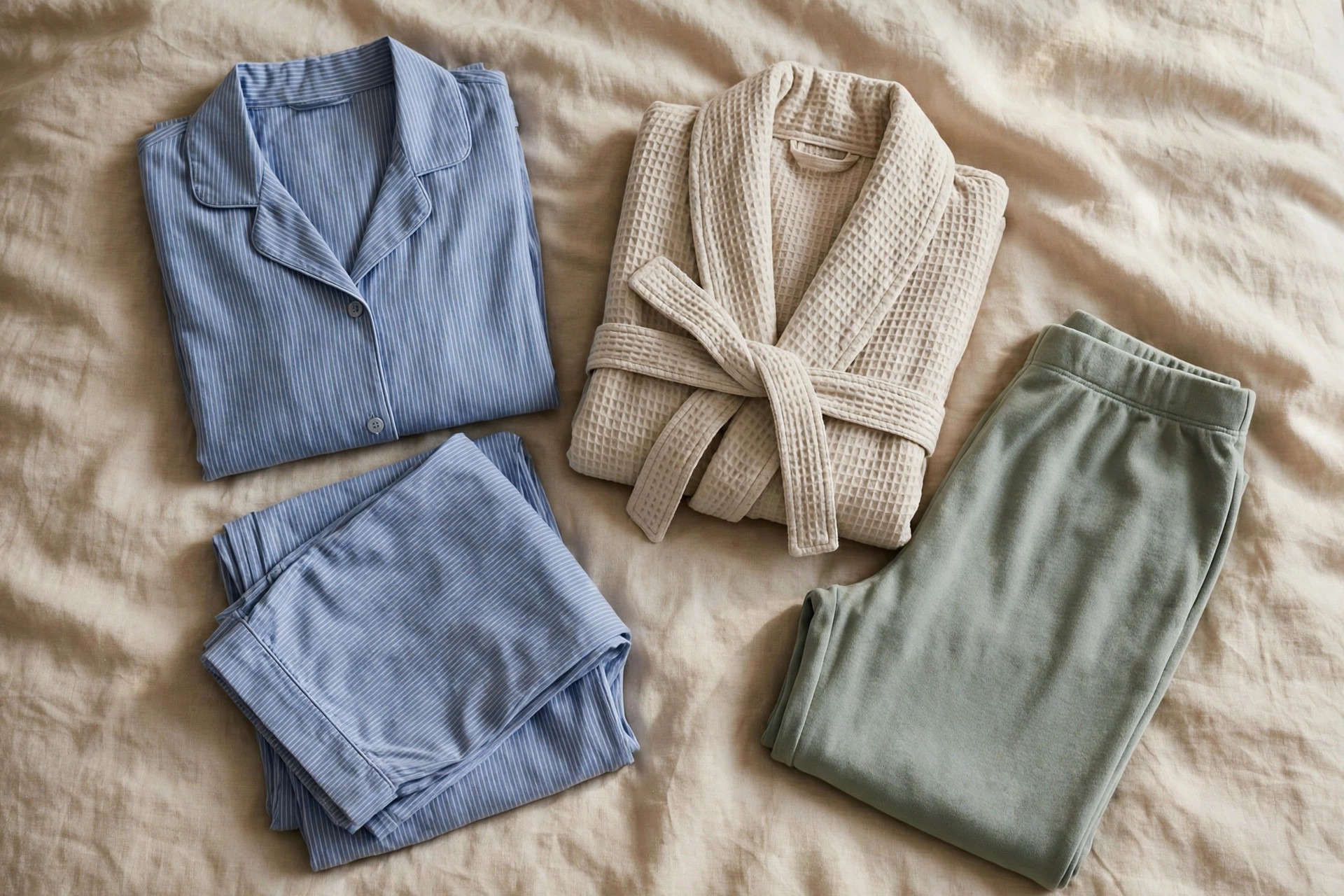
Sleepwear & Loungewear Guides
Sleepwear: Made for Sleeping
Sleepwear is the older and more clearly defined category: garments designed, sized, and sold to be worn to bed. Pajama sets, nightgowns, and similar garments fall here, typically made in soft, breathable fabrics chosen for comfort during sleep, with fits that allow movement through the night. Product descriptions, packaging, and display all present these garments as sleep clothing, and that presentation is part of how the category is recognized.
For children, sleepwear carries an additional layer of rules. Children's sleepwear is subject to federal flammability standards, which is why genuine children's sleepwear is typically either snug fitting — so the fabric stays close to the body and away from ignition sources — or made from fabrics that meet the applicable flammability requirements. The fit and fabric notes on a children's sleepwear label are therefore functional product information, not styling details.
Loungewear: Made for Relaxing
Loungewear is comfort clothing for awake hours at home: soft pants, relaxed shirts, and coordinated sets designed for relaxing rather than sleeping. Lounge pants and lounge shirts are typical examples — garments with easy fits and soft fabrics that a wearer puts on to unwind, read, or spend a quiet evening, and that may be changed out of before bed. The styling often borrows from sleepwear's softness while aiming at a slightly more put-together appearance.
In adult ranges, the sleepwear-loungewear line is mostly a merchandising distinction: how a brand designs, names, and displays a garment. Fabric and fit overlap heavily between the two categories, and many garments could honestly serve either purpose. What keeps the categories separate on paper is intended and marketed use — the purpose the product is designed and presented for — rather than any single fabric or construction feature.
Why Children's Loungewear Is Treated as Sleepwear
The distinction becomes a safety matter in children's clothing. CPSC staff views children's loungewear, or other similar garments marketed as comfort wear, as garments worn primarily for sleep-related activities. Therefore, loungewear must comply with the children's sleepwear standards. The reasoning is practical: children may fall asleep in comfort wear, so a relaxed-fit garment sold for children cannot be allowed to sidestep flammability rules simply by being labeled loungewear.
For makers and sellers of children's products, the practical result is that fabric choice, fit, labeling, and marketing all need to be considered together. A loose, flowing children's garment presented as comfort wear will be evaluated against the sleepwear standards, and snug-fitting designs and compliant fabrics are the established routes to meeting them. The CPSC news release linked in the references below sets out the enforcement policy in the agency's own words.
The Customs and Tariff View
Trade law draws its own version of the same line. The customs agency in the United States distinguishes sleepwear and loungewear as different categories under the Harmonized Tariff Schedule, and in ruling HQ H140735, dated December 29, 2015, U.S. Customs and Border Protection (CBP) added definition to each term. Classification affects how imported garments are categorized and dutied, so importers pay close attention to design features and marketing when deciding which heading a garment belongs under.
Other customs rulings, including HQ 960797 and HQ 961936, also address the boundary, and rulings can be searched and read on the CBP customs rulings website. Keep in mind that rulings get revised and that multiple rulings may be relevant to any given product. Anyone classifying a real product should consult an expert and conduct their own full research rather than relying on a summary page — the distinction is factual, but applying it to a specific garment is specialist work.
Common Questions
Can children wear loungewear to sleep in?
Children often do, which is exactly why regulators treat children's loungewear as sleepwear. CPSC staff view children's loungewear and similar comfort wear as garments worn primarily for sleep-related activities, so those garments must comply with children's sleepwear standards, including flammability requirements. When buying, check the label for the sleepwear fit and fabric information.
What fabrics and fits are typical of sleepwear and loungewear?
Both categories favor soft, comfortable fabrics and easy fits. Children's sleepwear is typically either snug fitting or made from fabrics meeting the applicable flammability standards, and that fit-or-fabric choice appears on the product label. Adult loungewear such as lounge pants and lounge shirts uses similarly soft fabrics, styled for relaxing at home rather than for bed.
Why does the customs agency care about the difference?
Because sleepwear and loungewear are distinguished under the Harmonized Tariff Schedule, and classification determines how an imported garment is categorized. U.S. Customs and Border Protection added definitions for each term in ruling HQ H140735 in 2015, and related rulings can be read on the CBP rulings site. Importers should consult an expert for a specific product.
References & Further Reading
If You Have More Questions About Fashion
You may want to try these sections here on Apparel Search: