Women's Sleep Shirts Guide
Sleep shirts are tops worn for sleeping — from the classic long nightshirt to pajama tops, chemises and jersey tees — chosen on one criterion: comfort.
Shop Women's Sleep Shirts Now
Shop Women's Sleep Shirts on Amazon Shop Women's Sleep Shirts on eBayThe Amazon and eBay links on this page are affiliate links. If you make a purchase through them, Apparel Search may earn a commission.
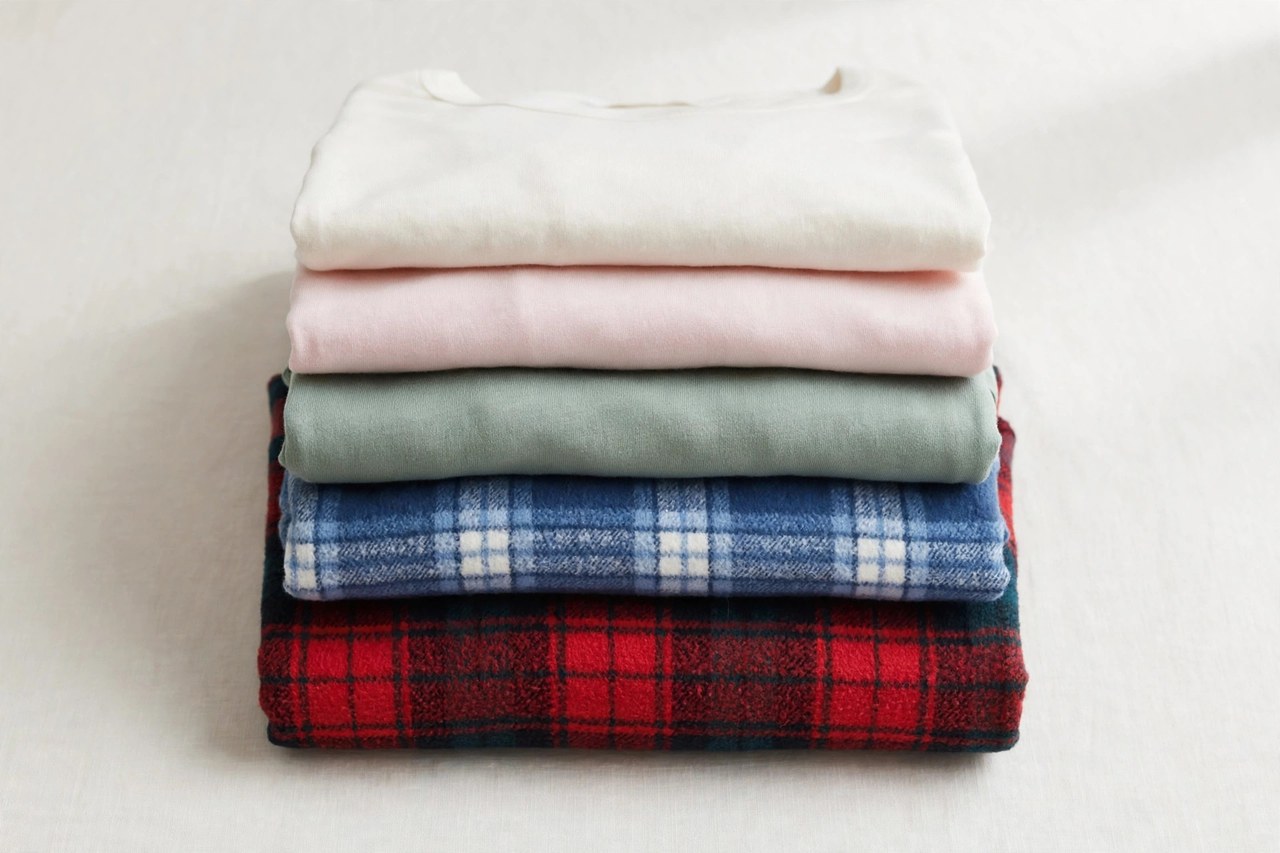
Sleep shirts are tops worn to sleep — one half of the sleepwear category, exactly as sleep pants are the other. The family is wide: silk chemises, classic cotton pajama tops, tank tops and stretchy jersey sleep shirts can all fit into the category of a women's sleep shirt. What unifies them is intention rather than silhouette: the garment is made to be slept in, cut loose enough to move in, and finished without anything that presses, scratches or binds between dusk and morning.
This page covers the top half of sleepwear as its own subject: the nightshirt's particular definition, the forms a sleep top takes, the fabrics from flannel to silk, and how to choose length and fit for actual sleep. The full category is mapped on the sleepwear page, and sleep pants — the separate bottom most sleep shirts are paired with — have their own guide.
The Nightshirt: The Defining Form
The nightshirt is the category's anchor garment, and its definition is precise: a garment intended for wear while sleeping, longer than most regular shirts, reaching down to the thighs or below the knees, leaving some of the legs uncovered, and generally loose-fitting to avoid restricting the wearer's movement while sleeping. It is, in effect, a one-piece sleep outfit — top and coverage in a single garment, needing no bottom at all — descended from the shirts men and women slept in for centuries before pajama sets existed.
Modern nightshirts vary along three axes. Length runs from thigh to mid-calf, with knee-length the common middle. Closure runs from pullover styles to full button fronts borrowed from the pajama top, which double as nursing-friendly and easy-on designs. Sleeves run from sleeveless and short to the full long sleeve of flannel winter versions. The nightshirt's enduring appeal is simplicity: one soft garment, no waistband anywhere, nothing to match. For sleepers who dislike anything at the waist, it is not one option among many — it is the answer.
Other Sleep Top Forms
The pajama top is the set-matched form: a button-front, collared shirt in cotton, flannel or silk, sold with its matching bottom but frequently worn and replaced separately. Sleep tees and jersey sleep shirts are the casual form — essentially a long, soft t-shirt, often with a chest pocket or print, in cotton or modal knit. The chemise is the lightest form, a sleeveless, slip-shaped top in silk, satin or fine cotton, ending at the hip or thigh depending on whether it pairs with bottoms or stands alone. Tank and camisole sleep tops cover the warm-weather minimum and usually belong to sets.
Choosing among them is choosing a sleep style. Button-front tops suit sleepers who run warm and want adjustment through the night; pullovers suit simplicity; chemises and tanks suit hot rooms and hot sleepers; long nightshirts suit anyone who wants one garment to solve the whole question. Prints and solids follow the sleepwear palette the whole category shares — cotton, cotton flannel and silk versions are catalogued separately, plus flannel sleep shirts as a named subcategory, which tells you where the demand concentrates: soft naturals, in layers of warmth.
Fabrics and Warmth
Cotton is the category's workhorse, in woven poplin for pajama tops, jersey for sleep tees and flannel — brushed cotton — for the warmest shirts and nightshirts, the winter standard. Silk is the luxury pole: thermoregulating, smooth against skin, and requiring the gentlest care. Modal and cotton-modal knits are the modern middle, softer and more drapeable than plain cotton jersey, holding their shape better across washes. Satin-weave synthetics imitate silk's surface at lower cost and warmth. As with sleep pants, match fabric to the room you actually sleep in, not the season on the calendar.
Construction details for sleep are small and specific. Buttons should be smooth and flat; seams should be soft or flat-finished at the shoulder and side; labels should be printed or placed where they cannot itch; and prints should be water-based soft or woven in rather than stiff plastisol on woven styles, which can crackle and cling. Sleeve cuffs on flannel nightshirts often button or rib so sleeves stay out of the way. None of these details appears in a product title, and all of them are felt by the second night.
Fit and Care
When selecting a garment to wear to bed, one rule is the whole sizing doctrine: keep comfort as the deciding factor — a good night's sleep is very important. In practice that means a sleep shirt loose through the body without being so oversized it twists around you, sleeves that do not bind the arm raised, a length you can get out of bed in without thinking, and a neckline that neither chokes nor slides off a shoulder all night. Between sizes, this category, like sleep pants, takes the larger. A sleep shirt should be forgotten within a minute of lying down in it.
Care is easy and mostly about softness preservation: wash with like colors at moderate temperatures, and use gentle detergent on silk and modal. Cotton flannel improves with washing; silk wants hand or delicate washing and shade drying. Replace a sleep shirt when its seams go scratchy or its fabric thins — comfort is the specification, and when it is gone, the garment is done.
Related Women's Guides
Looking for Women's Clothing Stores?
This guide helps you choose women's sleep shirts. To browse where to buy, visit our women's clothing store directory, where you can find retailers that carry them.