Women's Cotton Flannel Sleep Shirts Guide
One long, warm layer — the flannel nightshirt covers like a shirt, sleeps like a gown, and buttons like a classic.
Shop Women's Cotton Flannel Sleep Shirts Now
Shop Women's Cotton Flannel Sleep Shirts on Amazon Shop Women's Cotton Flannel Sleep Shirts on eBayThe Amazon and eBay links on this page are affiliate links. If you make a purchase through them, Apparel Search may earn a commission.

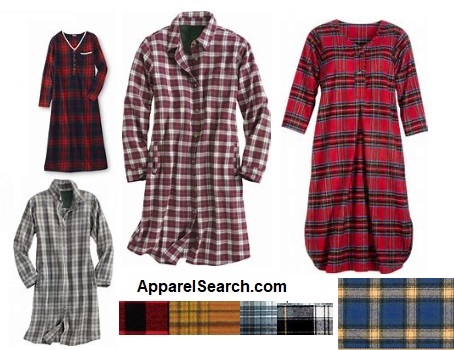
A flannel sleep shirt is a long shirt worn for sleeping: typically a button-front or partial-placket top in brushed cotton flannel, cut to fall somewhere between mid-thigh and the knee, and worn on its own as a nightshirt rather than tucked into pants. It is the one-piece alternative within the flannel sleepwear family, for sleepers who dislike a waistband at night, want coverage without the full commitment of a long nightgown, or simply like the borrowed-from-the-classics look of an oversized shirt made for bed. Because there is no matching bottom to coordinate, the sleep shirt lives or dies on its cloth and cut: the flannel must be warm enough to serve as the only layer, and the length, placket, and hem must stay comfortable and settled through a night of turning. This guide explains how to judge all three before you buy.
Anatomy of the Flannel Nightshirt
Most flannel sleep shirts borrow their details from the classic pajama top and the men's dress shirt in equal measure. A button front running the full length makes the shirt easy to put on and lets you adjust ventilation; a shorter Henley-style placket keeps the silhouette simpler and warmer across the chest. Collars range from a soft notched pajama collar to a small band or a plain V where the placket ends. A chest pocket is customary. Long sleeves, usually with a simple button or plain cuff, are standard because the whole point of flannel is coverage. The hem is where styles divide: a straight hem with side vents moves cleanly, a shirttail curve gives a classic look and a little extra length at the back, and some nightshirts add a gentle A-line swing so the fabric falls away from the hips.
Brushed Flannel as a Single Layer
A sleep shirt has to do the work of an entire outfit, so its flannel tends to be a touch more substantial than the cloth in a pajama top that shares duties with a pant. Double-brushed midweight flannel gives warmth across the torso and arms while the open bottom keeps legs cooler, a balance many sleepers find ideal: covered where the blankets slip, free where they bunch. Cotton flannel also drapes more softly after several washes, which matters in a garment whose hem swings and settles all night. Plaids dominate for the usual practical reason that they hide softening and faint fading well, and because a bold check reads clearly as sleepwear rather than as a day shirt worn by mistake.
Length, Fit, and Moving in Bed
Length is the defining fit decision. Mid-thigh styles feel light and suit warm sleepers and shorter frames, but they ride up most during the night. Knee-length shirts stay settled, cover reliably when you sit up or get up, and are the safest choice for a first purchase. Anything much longer begins to behave like a nightgown, which is fine if that is what you want, but it tangles more readily around the legs. Through the body, the cut should be relaxed without being a tent: enough ease to reach and turn, with shoulder seams that do not slide halfway down the arm. Side sleepers should check that the placket buttons do not press uncomfortably; styles with flat buttons or a placket that sits slightly off the body's most compressed line are kinder. Sleeves should reach the wrist and stay there, since a flannel sleeve bunched at the elbow defeats the garment's whole warm purpose.
Shrinkage and Care for a Long Cotton Shirt
A sleep shirt shrinks in length like all cotton flannel, and because length is its key measurement, wash before you decide whether the hem is right. A shirt bought at the knee may settle just above it, which most wearers accept happily; a shirt bought at mid-thigh may end up shorter than intended. Warm wash, medium tumble dry, and a prompt removal from the dryer keep the brushed surface soft and the placket flat. Button the top button or two before washing to help the collar and placket hold their shape, and wash with similar colors while the plaid is new and still releasing a little dye and lint. Ironing is optional and usually unnecessary, though a light press on the placket and collar makes the shirt look tailored for guests or travel. Stored folded rather than on a thin hanger, a flannel nightshirt keeps its shoulder shape and is ready each winter without fuss.
Who the Sleep Shirt Suits Best
Choose a flannel sleep shirt if you dislike elastic at your waist overnight, sleep warm in the legs but cool across the shoulders, or want one garment to pack instead of a set. If you are a restless sleeper who tangles in anything loose, a two-piece pajama set may serve you better, and if you sleep truly cold, flannel pajamas or a long flannel gown will cover more. Many shoppers end up owning both formats and rotating by weather and mood. Within this guide's flannel family, think of the sleep shirt as the independent piece: no matching required, no waistband to consider, just one long, brushed, buttoned layer that has been helping people sleep warm for a very long time.
Related Women's Cotton Guides
More to Explore on Apparel Search
Photos
Looking for Women's Clothing Stores?
This guide helps you choose women's cotton flannel sleep shirts and long nightshirts. To browse where to buy, visit our women's clothing store directory, where you can find retailers that carry them.