Women's Cotton Flannel Shirts Guide
Brushed, plaid, and made for daylight — the classic flannel shirt as an everyday workhorse, not a pajama.
Shop Women's Cotton Flannel Shirts Now
Shop Women's Cotton Flannel Shirts on Amazon Shop Women's Cotton Flannel Shirts on eBayThe Amazon and eBay links on this page are affiliate links. If you make a purchase through them, Apparel Search may earn a commission.
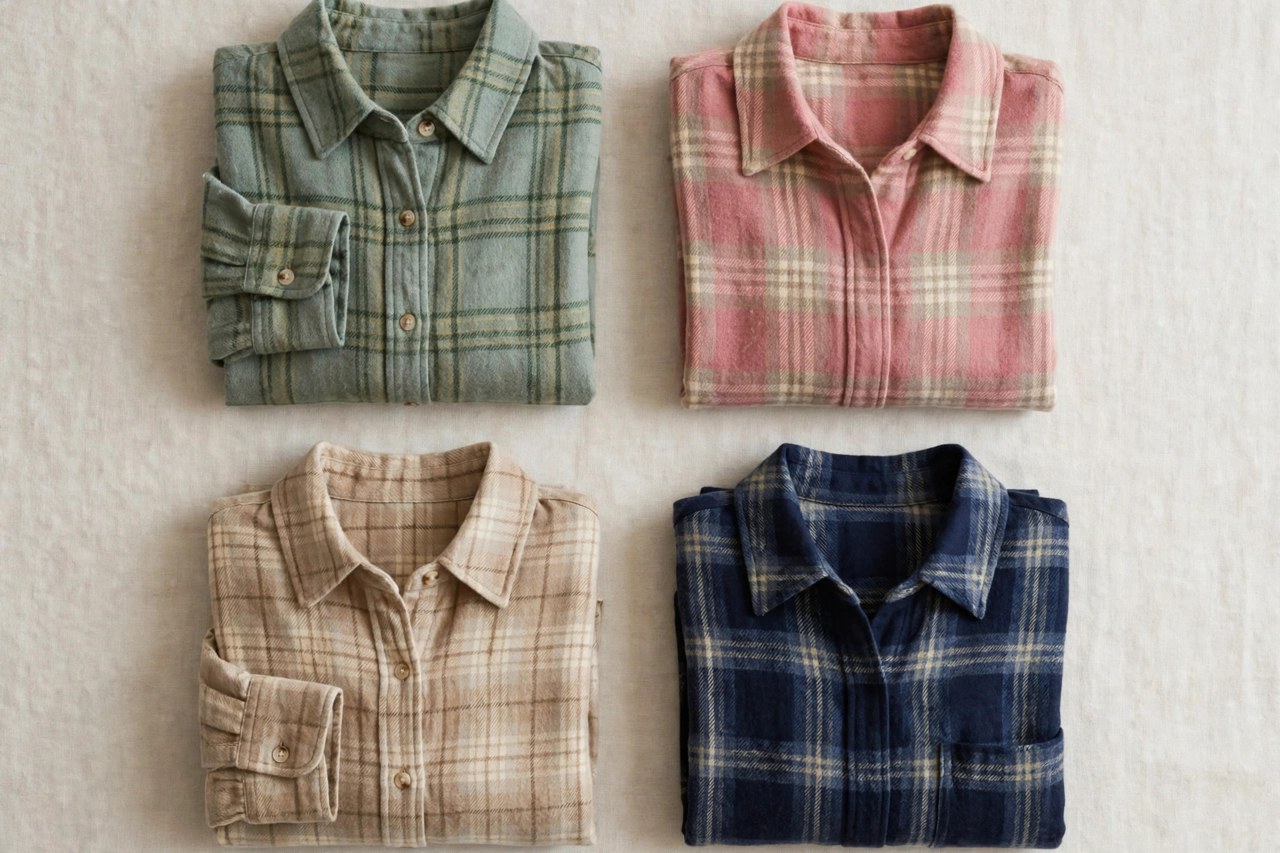
A cotton flannel shirt meant for daytime is a button-front shirt cut from flannel that has been brushed on one or both sides to raise a soft nap. That brushing traps air, which is why a midweight flannel feels warmer than a plain poplin shirt of the same thickness, and it gives the fabric its slightly fuzzy, matte surface. Day flannels are tailored more closely than lounge versions, with a shaped waist or a straight but tidy body, a proper collar, buttoned cuffs, and often a chest pocket. Plaids are the tradition, woven into the cloth rather than printed on it, so the pattern shows on both sides and does not crack or fade unevenly. Solids and small checks offer a quieter version of the same warmth.
Weights, Brushing, and How Flannel Is Made
Flannel starts as a plain or twill weave in yarn-dyed cotton, then passes under rotating brushes that lift fine fibers from the yarns. Lightweight flannel around 120 to 150 grams per square metre works as a three-season shirt and layers easily under a jacket. Midweight cloth near 160 to 190 GSM is the classic shirt weight, warm over a tee and sturdy enough for regular wear. Heavy flannels above that range feel almost jacket-like and suit cold-weather layering. Brushing on both faces makes the softest, warmest shirts but can pill faster; a single-brushed face with a smoother inside often balances comfort and durability. Look for yarn-dyed plaids with matched patterns at pockets and side seams, a small sign the maker cut the cloth with care.
Fit and Daytime Styling
A day flannel should skim the shoulders with the seam sitting at the shoulder edge, allow a tee underneath without pulling across the buttons, and end near mid-hip so it can be worn tucked, half-tucked, or loose. Relaxed and boyfriend cuts add room through the body for layering over thin sweaters, while fitted cuts pair cleanly with trousers and skirts. Wear one open over a plain cotton tee with jeans for an easy weekend outfit, button it fully and tuck it into twill pants for casual workplaces, or tie the hem over a simple dress. Roll the cuffs once to show the contrasting inside of many plaids. Because flannel has a matte, textured surface, it softens sharper outfits and adds visual weight that balances slim bottoms nicely.
Plaids, Checks, and Solid Options
Classic plaids combine two or three colors in bands of different widths, and the scale matters: large, high-contrast plaids read bold and casual, while small, low-contrast checks look almost solid from a distance and dress up more easily. Buffalo-style large checks are strongly associated with outdoor wear, tattersall-style small checks feel more polished, and windowpane patterns on a solid ground are the most office-friendly. Yarn-dyed cloth keeps colors rich after many washes, though dark plaids will soften gradually, which many wearers consider part of flannel's charm. If plaid is not your style, brushed solid flannels in deep green, burgundy, navy, or charcoal deliver the same warmth with a cleaner look and pair more flexibly with patterned scarves, skirts, and jackets already in your wardrobe.
Shrinkage, Pilling, and Care
Cotton flannel shrinks noticeably, especially in length, because the loose weave and raised fibers relax in hot water and dryer heat. Most shirts are cut with some allowance, but washing cold and drying on low or line-drying keeps the fit closest to what you tried on. Turn shirts inside out to protect the brushed face, wash with similar colors since flannel can release lint in early washes, and avoid washing with towels or fleece that add more lint. Some pilling in high-friction spots such as underarms and where a bag strap crosses is normal for brushed cotton; a fabric shaver restores a smoother surface. Iron on medium with steam if you like a crisper collar, though many wearers simply smooth the shirt by hand and hang it, keeping the soft, relaxed finish.
Choosing a Shirt That Lasts
Check the details before buying: buttons sewn with a small shank and spare button included, buttonholes stitched densely without fraying, and a back yoke that helps the shirt sit evenly across the shoulders. A slightly curved hem looks intentional untucked, while a straight hem with side vents suits tucking. Thicker flannel holds its collar better; very soft lightweight versions may need the collar worn open. Consider owning two weights if your climate swings, a lighter shirt for autumn and spring and a heavier one for winter layering. A well-made cotton flannel shirt is one of the longest-serving casual pieces you can buy, softening with each wash while keeping its structure, and it moves easily between workdays, weekends, and travel without ever looking like sleepwear.
Related Women's Cotton Guides
More to Explore on Apparel Search
Looking for Women's Clothing Stores?
This guide helps you choose women's cotton flannel shirts by weight, plaid, and fit. To browse where to buy, visit our women's clothing store directory, where you can find retailers that carry them.