Women's Cotton Flannel Pants Guide
Brushed cotton flannel, cut as real day trousers — the warmth of flannel with the polish of a wool-look pant.
Shop Women's Cotton Flannel Pants Now
Shop Women's Cotton Flannel Pants on Amazon Shop Women's Cotton Flannel Pants on eBayThe Amazon and eBay links on this page are affiliate links. If you make a purchase through them, Apparel Search may earn a commission.
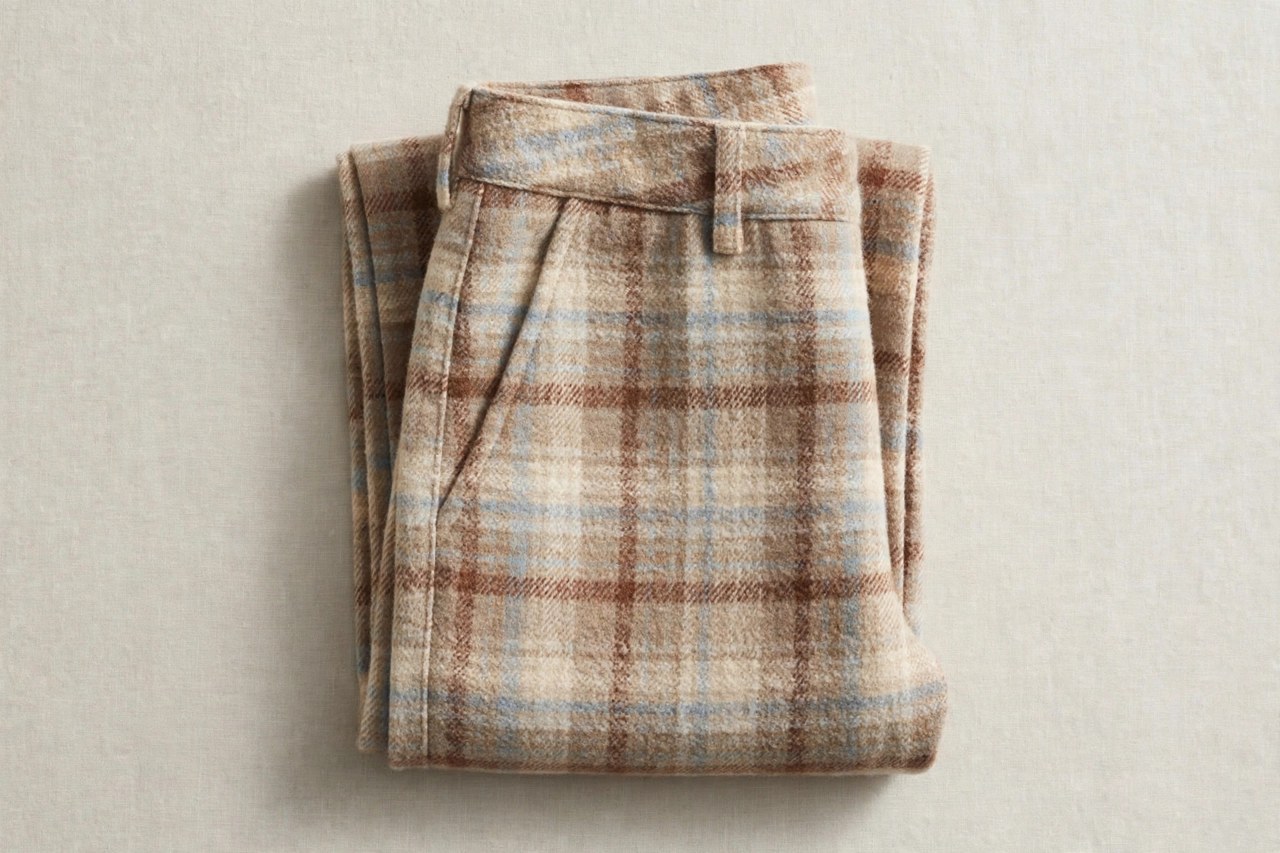
Flannel pants in this guide are day trousers, not sleep pants — a distinction worth stating plainly, because cotton flannel serves both wardrobes and the two garments are built differently. Daywear flannel pants are cut like trousers, with a proper waistband, fly or structured pull-on waist, finished pockets and hems, in brushed cotton flannel woven firmly enough to hold a shape in public. The brushing is the magic: after weaving, the cloth passes over fine wire rollers that lift a soft nap of fiber ends from the surface, trapping air and giving flannel its famous warmth and matte, almost woolly hand. Cotton flannel trousers borrow the look of classic grey wool flannel — the backbone of winter tailoring — while staying machine-washable, soft from the first wear, and free of wool's itch and moth worries. If you run cold, they may be the most comfortable dressed-up pants you own.
Brushing, Weights and the Wool Look
Flannel for trousers is woven at roughly 170 to 240 GSM, then brushed on one or both faces. Single-sided brushing keeps the outside nap soft while the inside stays smoother against the skin; double-brushed cloth is warmer and plusher but pills faster and reads more casual. Yarn-dyed flannels, where the pattern is woven in before brushing, keep plaids and herringbones soft-edged and durable; printed flannels show pattern only on the surface and fade sooner. The classic daywear colors mimic wool suiting: heathered greys, charcoal, navy and subtle windowpane or glen-style checks, whose blurred edges are a feature of the nap rather than a fault. Hold a pair to the light and rub the surface gently: good trouser flannel has an even nap with no thin patches, and the base weave still feels firm underneath. Cotton flannel insulates by trapped air rather than by fiber crimp as wool does, so it is warm but a step less lofty than wool flannel of the same weight — in practice, plenty for centrally heated offices and ordinary winter days.
How Day Flannel Pants Differ From Sleep Pants
Construction tells the story at a glance. Day trousers have a set waistband that sits at a defined rise, a zip or button closure (or a carefully faced pull-on waist), belt loops on many styles, slant or welt pockets, and hems finished to a chosen length. Sleep and lounge flannel pants, by contrast, use a gathered elastic or drawstring waist, looser all-over ease, and lighter, softer cloth chosen for bed rather than for holding a crease. Fabric weight overlaps, which is why the categories blur in shops, but a day pant's flannel is woven tighter and brushed with restraint so it can take a press. If a listing shows a pair styled with a blouse, blazer and shoes, it is almost certainly the daywear garment; if it is shown with slippers or as part of a pajama set, it belongs to the sleepwear family covered elsewhere in this guide series. When in doubt, check the waistband in the product photos — it never lies.
Fits and Cold-Weather Styling
Straight-leg and gently tapered cuts suit flannel best: the soft cloth drapes rather than clings, and a clean leg line keeps the wool-look convincing. Wide-leg flannel trousers in heathered grey are a strong winter look with a fitted knit tucked in, the drape reading as deliberate rather than sloppy. High rises pair naturally with flannel's classic character and keep the waistband comfortable over thermal layers on the coldest days, though a word of honesty belongs here: cotton is a poor base-layer fiber outdoors because it holds moisture, so flannel trousers shine in dry cold and indoor life rather than in snow sports. Style them as you would wool flannels — with turtlenecks, crew knits, corduroy or tweed jackets, and boots or loafers. The nap's matte surface flatters textured knitwear and absorbs light softly in photographs. Darker, heathered shades hide the lint that brushed surfaces inevitably collect, and a lint brush kept in the coat closet is standard equipment for flannel owners.
Pilling, Shrinkage and Nap Care
Brushed cotton has two predictable behaviors: it shrinks and it pills a little. Expect around three percent shrinkage in length from the first warm wash, slightly more than crisp weaves because the looser surface relaxes; buy hems with that in mind and wash cold to control it. Pilling appears where the nap rubs — inner thighs, seat, under bag straps — because brushing deliberately loosens fiber ends, and those ends tangle into pills. A fabric shaver or sweater comb restores the surface in minutes, and higher-quality, longer-staple cotton flannel pills noticeably less. Wash flannel pants inside out on a gentle cycle, avoid washing with towels or hook-and-loop fastenings that tear at the nap, and skip tumble-dryer heat, which both shrinks and roughens the surface; line drying keeps the brush soft. Press from the inside with a warm iron, or steam lightly, so the nap is not flattened into shine. Fold or hang by the waistband, and rotate pairs in heavy winter use. With that routine, a good pair of flannel trousers keeps its soft face and tailored shape for several winters.
More to Explore on Apparel Search
Photos

Looking for Women's Clothing Stores?
This guide helps you choose women's cotton flannel pants as tailored daywear. To browse where to buy, visit our women's clothing store directory, where you can find retailers that carry them.