Women's Organic Cotton Pants Guide
Everyday pants in certified organic twill, canvas and jersey — what the certification covers, what it costs, and how long organic pants really last.
Shop Women's Organic Cotton Pants Now
Shop Women's Organic Cotton Pants on Amazon Shop Women's Organic Cotton Pants on eBayThe Amazon and eBay links on this page are affiliate links. If you make a purchase through them, Apparel Search may earn a commission.
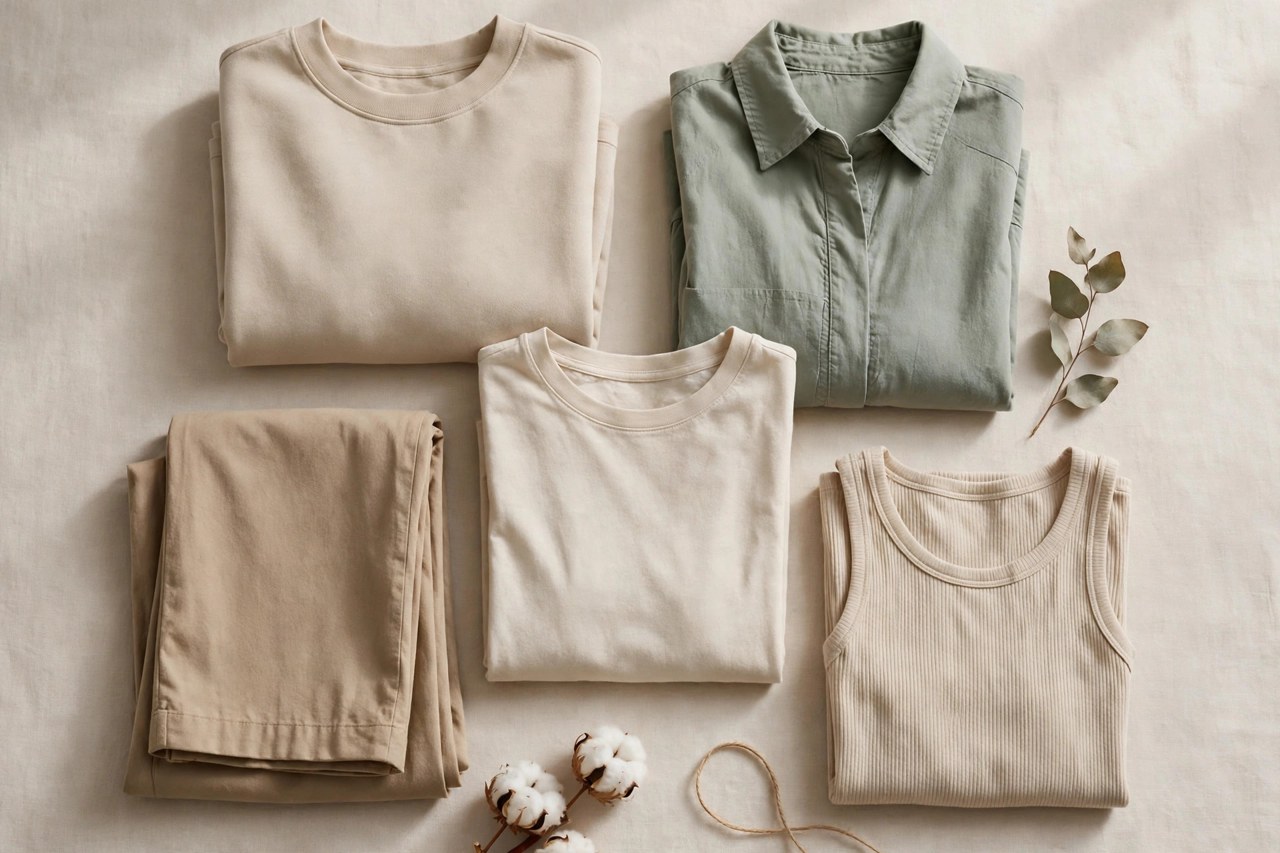
Organic cotton pants are a certified staple: the trousers, chinos, pull-on pants and soft jersey bottoms you reach for daily, made from cotton grown without synthetic pesticides or genetically modified seed. Because pants are a high-wear, high-wash garment, they test the organic proposition honestly — certification must deliver real fabric quality, not just a feel-good label, if the extra cost is to make sense. Most organic pants use familiar cotton cloths: diagonal twill for chinos and five-pocket styles, canvas for utility cuts, poplin for light summer trousers, and jersey or French terry for pull-on comfort styles. The organic difference sits upstream, in how the fiber was farmed and how the cloth was dyed and finished under standards such as GOTS. This guide covers reading those labels, the elastane caveat almost every fitted pant carries, realistic durability, and the environmental accounting that helps you decide where organic pants fit your budget.
Reading Certification on a Pair of Pants
Look for a GOTS scope certificate and license number attached to the specific style, since brands often certify part of a range rather than all of it. GOTS-certified organic means at least 95 percent organic fiber with regulated dyeing and finishing; a made-with-organic claim permits a lower share and should be priced accordingly. Pants complicate the picture because hardware and trims — metal buttons, zippers, pocketing, waistband elastic — sit outside the fiber percentage, which is normal and not a deception. What should be stated clearly is the shell fabric composition. Also note the dye story: GOTS-approved dyes exclude the most problematic chemistry, and garment-dyed organic twill in earthy, slightly muted tones is common because those palettes suit approved dye systems well.
The Elastane Caveat, Explained Plainly
Very few fitted organic pants are 100 percent cotton, and understanding why prevents disappointment. One to three percent elastane in a twill gives knee and seat recovery, so pants hold their shape through a day of sitting and standing instead of bagging by evening. GOTS rules allow a small share of additional fibers, so a 98 percent organic cotton, 2 percent elastane pant can still carry strong certification — the organic claim describes the cotton, regulated as a whole garment, not a promise of absolute purity. Rigid all-cotton styles exist, particularly in relaxed, wide-leg and drawstring cuts, and some shoppers prefer them for a fully natural composition; they simply soften and ease with wear more noticeably. Whichever you choose, wash cool and dry low, because heat is elastane's main enemy and the first cause of a waistband or knee giving up early.
Durability: Does Organic Cotton Wear as Well?
Yes, when the cloth is comparable. Durability is governed by yarn quality, weave density and garment construction far more than by the farming method printed on the label. Long, even organic fibers spin into strong yarn, and a dense twill at a midweight will outlast a flimsy conventional canvas every time. The honest differences are at the margins: organic lines often skip resin-based wrinkle and stain finishes, so organic pants may crease a little more readily and ask for a touch more ironing, and untreated cloth can show abrasion fading at pockets and hems sooner. Judge a pair by evidence — fabric weight in hand, tight even weaving, reinforced pocket corners, bar-tacked stress points, and a waistband that does not twist. A well-made organic pant should give the same years of service as its conventional counterpart.
Why Organic Pants Cost More, and Where It Shows
The premium starts in the field: organic yields tend to run lower, approved inputs and certification cost money, and the fiber must be kept separate from conventional cotton at every handling stage, which adds cost through spinning, weaving and dyeing. Trousers use more fabric than most tops, so a per-metre premium multiplies across a pair, and GOTS-approved dyeing plus audited factories add further legitimate expense. Shoppers reasonably ask what they receive for it: verified absence of synthetic pesticides in cultivation, restricted processing chemistry against skin, traceability that conventional supply chains rarely offer, and usually — though not automatically — better overall garment making, because brands investing in certification tend to invest in construction too. Longevity remains the deciding factor, so buy the fit and cloth you will genuinely wear weekly rather than a worthy pair that stays in the closet.
Fit, Styles and Simple Care
Organic ranges cover the standard pant wardrobe well. Twill chinos and straight-leg trousers handle work and polished casual wear; relaxed drawstring and wide-leg styles in poplin or double gauze suit summer; jersey and terry pull-ons bridge home and errands. Fit advice mirrors conventional pants with one organic footnote: because resin-free cloth relaxes a little more, a neat-but-not-tight fit on day one usually settles into the intended shape after a wash, while a painted-on fit will strain seams in any cotton. Rise and inseam matter more than size labels, which vary widely between eco-focused brands, so compare garment measurements where offered. Care is straightforward: wash inside out in cool water to protect color and pocket edges, skip chlorine bleach, tumble low or line dry, and touch up with a warm iron if you like a crease.
More to Explore on Apparel Search
- Clothes
- Cotton
- Cotton Definition
- Cotton News
- Organic Clothing
- Organic Cotton
- Women's Cotton Clothing
- Women's Cotton Dress Pants
- Women's Cotton Shorts
- Women's Organic Cotton Activewear
- Women's Organic Cotton Apparel
- Women's Organic Cotton Athleticwear
- Women's Organic Cotton Fashion
- Women's Organic Cotton Loungewear
- Women's Organic Cotton Pajamas
- Women's Organic Cotton Sleepwear
- Women's Organic Cotton Sportswear
- Women's Organic Cotton T-shirts
- Women's Organic Cotton Tees
- Women's Organic Cotton Underwear
- Women's Organic Cotton Womenswear
- Women's Organic Fashion
- Women's Pants
Photos

Looking for Women's Clothing Stores?
This guide helps you choose women's organic cotton pants as certified everyday staples. To browse where to buy, visit our women's clothing store directory, where you can find retailers that carry them.