Women's Organic Cotton Clothes Guide
The wardrobe view — which organic swaps to make first, which to skip, and how a certified cotton wardrobe comes together piece by piece.
Shop Women's Organic Cotton Clothes Now
Shop Women's Organic Cotton Clothes on Amazon Shop Women's Organic Cotton Clothes on eBayThe Amazon and eBay links on this page are affiliate links. If you make a purchase through them, Apparel Search may earn a commission.
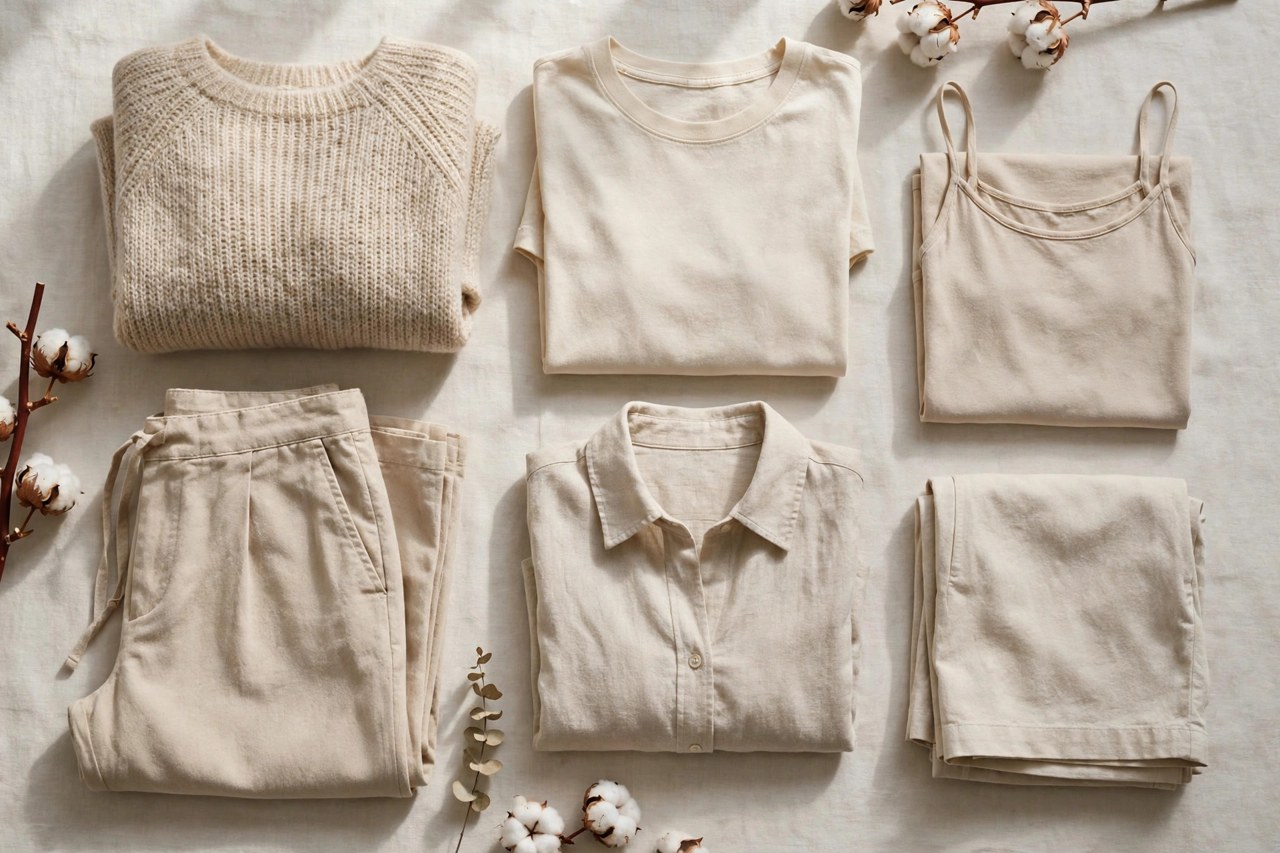
Organic cotton clothes, in this guide, means the wardrobe itself: the actual tees in the drawer, shirts on the rail, pants, dresses, and layers you wear every week, rebuilt gradually in certified organic cotton. That wardrobe view is what separates this page from its companion, the Organic Cotton Clothing guide, which looks at garments from the certification side — how GOTS garment-level rules, dyes, and finishes work. Here the questions are practical and personal. Which swaps give the most benefit per dollar? Which everyday pieces justify the organic premium and which barely matter? And how do you convert a wardrobe without throwing away perfectly good clothes, which would defeat the entire environmental purpose? The answer is a patient, ordered set of swaps, made as pieces genuinely wear out.
Swap One: The Skin-Contact Layer
Start where clothing touches skin longest. Underwear, basic tees, camisoles, and sleepwear in organic cotton are worn for eight to twenty-four hours at a stretch, washed constantly, and replaced most often, so both the skin-comfort case and the cost-per-wear case are strongest here. Certified organic versions restrict the harsh finishing chemicals and many dye substances that conventional garments may carry, which is one reason people with reactive or sensitive skin often find them noticeably more comfortable. Organic tees are also the easiest swap to judge: hold the jersey, check that it is dense and even rather than thin and streaky, and confirm the certification claim on the label. A handful of excellent organic basics, rotated properly, does more for a wardrobe than a closet of certified occasion pieces worn twice a year.
Swap Two: Everyday Tops and Shirts
Next come the tops you live in. Organic cotton poplin and oxford shirts, jersey tops, and fine-gauge knit layers replace their conventional counterparts piece by piece as collars fray and colors tire. Shirts reward the upgrade particularly well because good organic shirting is usually made from longer-staple cotton, which presses crisply, pills less, and keeps an even color through years of washing — qualities that matter in a garment expected to look presentable weekly. Keep expectations honest, though: organic describes the farming, not the tailoring, so judge collar construction, seam finishing, and fit exactly as you would in any shirt. Buy one, wash it five times, and only then commit to more from the same maker. That slow audition process is the difference between a wardrobe conversion that sticks and a drawer of expensive experiments.
Swap Three: Pants, Dresses, and Layers
Bottoms and dresses come third, because they cost the most and wear the slowest. Organic cotton twill pants and jeans behave like their conventional counterparts — same diagonal weave, same gradual fading, same need to allow for a little shrinkage — so swap them in when a pair is truly finished rather than duplicating what still serves. Dresses in organic lawn, poplin, or jersey are a summer pleasure, with the un-dyed and low-impact-dye versions offering the softest, most natural hand. Sweaters and sweat layers in organic fleece and yarn belong in this stage too, handled in detail in the Organic Cotton Sweaters guide. The sequencing principle is the environmental point: the greenest garment is the one already in your closet, worn until it is done. Organic swaps earn their footprint by replacing, not by adding.
What to Skip, and What to Buy Conventionally
A credible wardrobe guide names the swaps that do not pay. Rarely worn occasion pieces in organic cotton deliver little benefit relative to their price, because the premium buys farming standards whose value scales with use. Heavy-duty rain and performance gear should be chosen on function first; organic cotton is not the right fiber there at any certification level. Very cheap organic multipacks deserve suspicion — when the price seems too low for segregated, audited supply chains, check whether the claim is certified or merely the word organic printed on a card. And blending is not betrayal: a garment with a small elastane share that fits, lasts, and gets worn for years serves you and the planet better than a pure but unworn alternative in the back of the drawer. Spend organic money on frequency, skin contact, and longevity, in that order.
Cost Planning and Care for the Long Haul
Budget the conversion as a standing replacement line rather than a single shopping event: a few certified pieces per season, bought as old ones retire, spreads the premium painlessly and keeps standards high because each purchase gets real scrutiny. Care then protects the investment. Wash organic cotton in cool water with a mild detergent, skip heavy softeners that coat the fibers, air dry knitwear and elastane blends, and store folded pieces with room to breathe. Organic cotton rewards this treatment with a long, softening life — jersey grows more supple, twill relaxes into comfort, and colors from low-impact dyes age gently rather than cracking or peeling. Kept this way, the wardrobe you build swap by swap should need replacing more slowly each year, which is the real arithmetic behind organic clothes: fewer, better, certified pieces, worn for a long time.
Looking for Women's Clothing Stores?
This guide helps you choose women's organic cotton clothes by wardrobe swap and category. To browse where to buy, visit our women's clothing store directory, where you can find retailers that carry them.