Women's Cotton Dress Shirts Guide
The sharp end of cotton shirting — structured collars, clean cuffs, and broadcloth and poplin woven to hold a press all day.
Shop Women's Cotton Dress Shirts Now
Shop Women's Cotton Dress Shirts on Amazon Shop Women's Cotton Dress Shirts on eBayThe Amazon and eBay links on this page are affiliate links. If you make a purchase through them, Apparel Search may earn a commission.
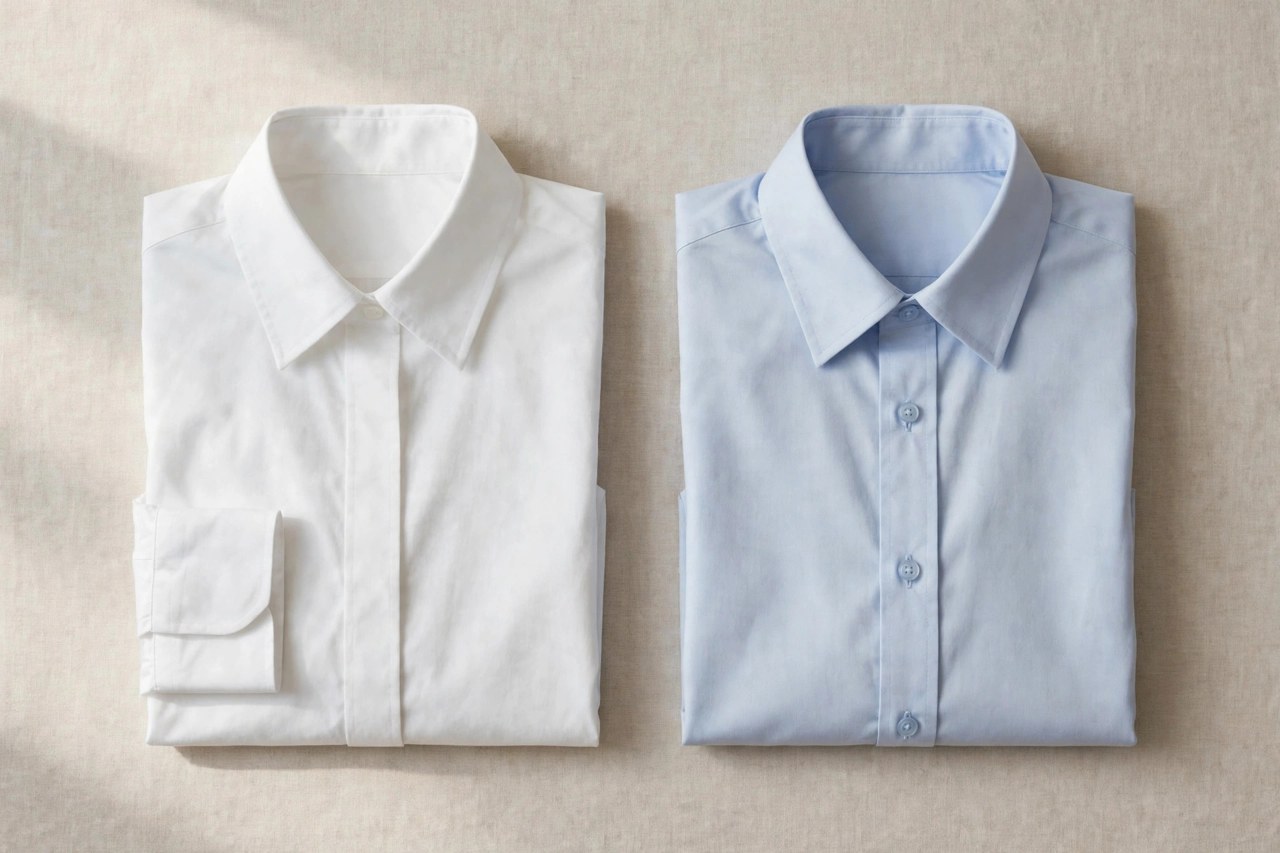
A women's cotton dress shirt is professional tailoring applied to a shirt: a structured collar that stands and frames the face, a clean button placket, shaped seams or darts that follow the torso, cuffs that finish the sleeve precisely, and fabric woven fine and tight enough to look smooth under a blazer at four in the afternoon. It differs from a casual cotton shirt in intent — this is the shirt for interviews, presentations, client meetings, and every setting where polish is part of the job. Cotton is the traditional and still the best fiber for the role because fine cotton weaves press crisply, breathe through a long day, and accept the smooth finishes that separate a dress shirt from a work shirt. This guide covers the cloth, the collar, and the care in detail.
Poplin, Broadcloth, and Other Dress Shirt Cloths
Poplin and broadcloth are close cousins — both plain weaves with a smooth face — and either makes a proper dress shirt. Broadcloth is the smoother and finer of the two, woven with a very even surface that reads dressiest and shows the least texture. Poplin carries a faint crosswise rib from slightly heavier weft yarns, giving it a touch more body and wrinkle resistance, and it is the workhorse of women's professional shirting. Pinpoint oxford weaves a finer, dressier version of oxford cloth and sits one step down in formality, useful for business-casual offices. End-on-end cloth weaves colored and white yarns together for a heathered, subtly textured surface that hides minor wrinkling gracefully. Thread count and yarn quality matter more than weave name: fine two-ply yarns feel smoother, resist pilling, and press to a cleaner edge. Whatever the cloth, a dress shirt should be opaque enough to wear without a camisole in white — hold it to the light before buying.
Collars, Cuffs, and the Details of Tailoring
The collar is the dress shirt's signature. Classic point and spread collars frame suits and ties of fabric such as scarves; a spread collar suits a blazer worn open, while a narrower point is versatile with or without a jacket. Banded and mandarin collars remove the fold for a cleaner, modern neckline that works in less formal professions. Interfacing inside the collar decides whether it stands crisply or collapses by lunch — press a thumb into the collar points; they should feel firm, even, and identical. Cuffs divide into button cuffs, the everyday standard cut with a tailored curve and one or two buttons, and French or double cuffs folded back for cufflinks, reserved for the most formal business dressing. Well-made shirts add single-needle stitching, pattern-matched pockets if any, a split yoke at the back for fit across the shoulders, and buttons sewn with shank wrapping that resists popping.
Fit: Tailored Without Being Tight
A dress shirt earns its name in the fit. The collar should close comfortably with room for one finger. The shoulder seam should sit at the shoulder edge, the sleeve should end at the wrist with a hint of cuff showing beyond a blazer sleeve, and the body should follow the torso through darts or princess seams without pulling across the bust — horizontal stress lines at the buttons mean the size or the cut is wrong, full stop. Better women's dress shirts use shaped button spacing or a discreet extra button at the bust to prevent gaping. Length must allow a secure tuck that survives sitting and reaching. If you wear the shirt untucked, choose a style cut for it, shorter with a shaped hem, rather than letting a long tailored tail hang. Non-iron and wrinkle-resistant finishes, applied to cotton at the fabric or garment stage, genuinely reduce morning effort; they slightly stiffen the hand at first and soften over washes.
Building a Professional Shirt Wardrobe
Build in order of usefulness. A white dress shirt in poplin or broadcloth comes first — it partners every suit, skirt, and trouser in the closet. Pale blue follows, softer against most skin tones than white and equally professional. Then add one fine stripe, which adds interest under plain jackets while remaining boardroom safe, and one additional color or subtle check suited to your workplace's dress code. Fit consistency across those shirts simplifies mornings enormously, so when a cut works, buying it in several colors is strategy, not laziness. Rotate shirts rather than wearing a favorite twice in a row; cotton fibers recover and collars rest between pressings.
Ironing, Shrinkage, and Professional Care
Cotton dress shirts shrink a little, mainly in length and collar, across their first few hot washes; quality makers cut collars and sleeves with an allowance for it. Protect that allowance by washing cool to warm, never hot, and removing shirts promptly to hang. Ironing is where dress shirts are made: press the collar flat from the points inward, then the yoke, cuffs opened flat, sleeves with a crease aligned to the seam, and the body panels last, using a hot cotton setting with steam. Non-iron shirts need only a light touch-up and smooth out further if hung in a steamy bathroom. Button the top button on the hanger so the collar keeps its roll. Send shirts out only to a laundry that presses rather than crushes collars — a flattened, broken collar cannot be revived.
More to Explore on Apparel Search
- benefits of cotton
- Clothes
- Clothing Retail Stores
- Cotton
- Cotton Definition
- Cotton News
- difference between made-to-measure and bespoke clothing
- dress shirt fabrics
- Fashion
- Fashion Designers
- Organic Cotton
- Popular Brands
- Women's Clothing Stores
- Women's Clothing Wholesalers
- Women's Cotton Clothing
- Women's Dress Shirts
- Women's Fashion
- Women's Shirts
Photos

Looking for Women's Clothing Stores?
This guide helps you choose women's cotton dress shirts by collar, cloth and fit. To browse where to buy, visit our women's clothing store directory, where you can find retailers that carry them.