Women's Cotton Blouses Guide
The softer, more fluid side of cotton shirting — woven blouses in poplin, lawn, and voile that move between office polish and weekend ease.
Shop Women's Cotton Blouses Now
Shop Women's Cotton Blouses on Amazon Shop Women's Cotton Blouses on eBayThe Amazon and eBay links on this page are affiliate links. If you make a purchase through them, Apparel Search may earn a commission.
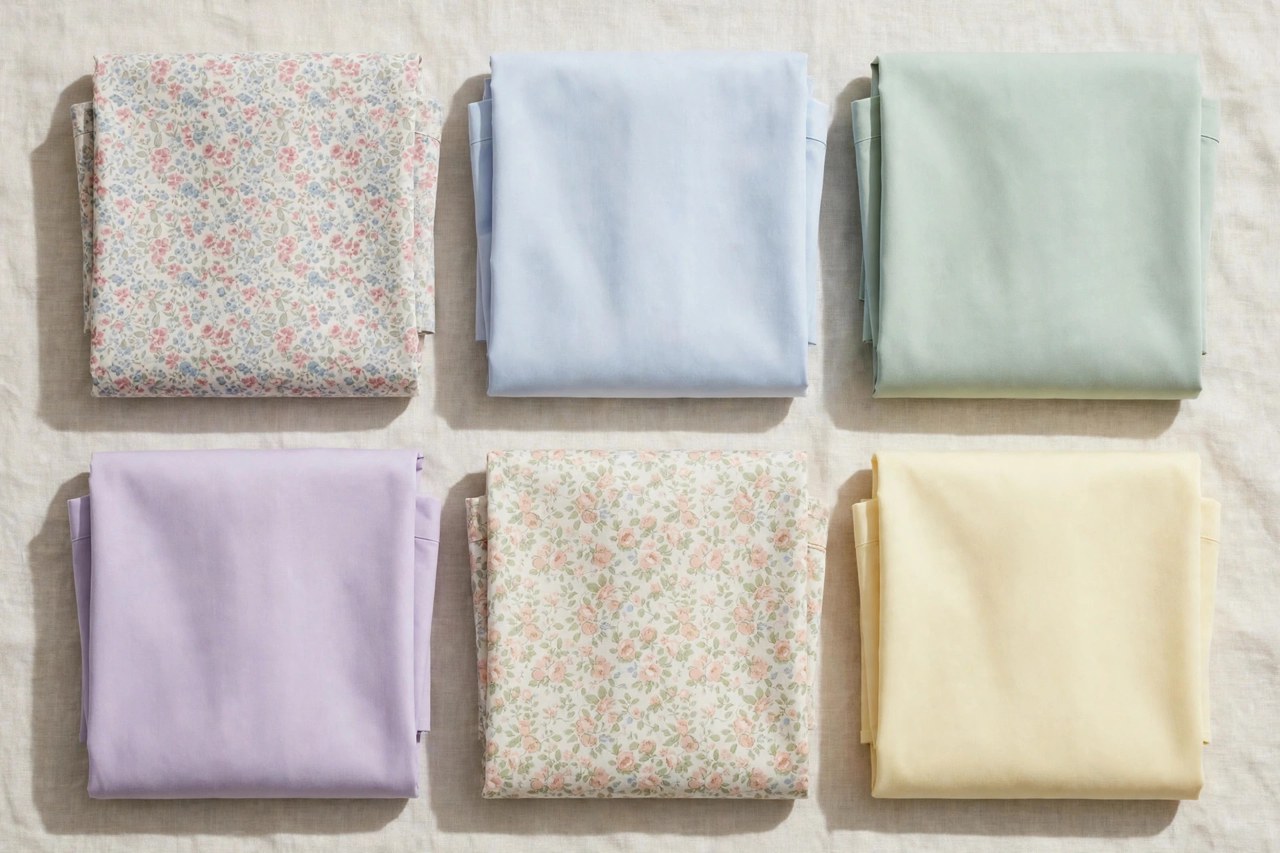
A cotton blouse is a woven top, and the word blouse signals something a shirt is not: softer construction, more fluid drape, and details — gathers, ties, ruffles, pintucks, embroidery — that a tailored shirt would never carry. Where a cotton dress shirt is built around a collar, placket, and cuffs, a blouse may have no collar at all, may pull on or wrap rather than button, and is cut to move with the wearer. Cotton suits the category beautifully because its woven fabrics span a wide range. Crisp poplin gives a blouse light structure, fine lawn gives it a smooth, cool hand, and voile gives it airiness that borders on sheer.
The Fabrics: Poplin, Lawn, Voile, and Friends
Poplin is a plain weave with a fine rib and a smooth, slightly crisp finish; in blouse weight it holds soft structure, takes prints cleanly, and irons to a neat surface. Lawn is finer and smoother still, woven from combed yarns into a feather-light cloth with a cool hand and a gentle sheen — the classic fabric for quality summer blouses and the base of many printed designs. Voile is the lightest of the three, a soft, slightly transparent plain weave that needs a camisole beneath and rewards it with unmatched airiness in heat. Around these three sit seersucker with its puckered cooling stripes, cotton gauze for relaxed bohemian blouses, dobby weaves with woven-in dots and stripes, and cotton sateen with a dressy luster. Heavier is not better here: a blouse fabric should move. Hold it up — if it falls in folds rather than standing stiff, it will wear like a blouse.
Tailored Blouses Versus Soft Blouses
Tailored cotton blouses borrow the shirt's bones — a collar or banded neck, button front, shaped seams, sometimes darts — but soften them with blouse fabrics, feminine prints, and details like covered buttons or a curved hem. They are the workhorses of a professional wardrobe, tucking cleanly into trousers and skirts and layering under blazers without bulk. Soft blouses abandon structure: peasant and gathered-neck styles, tie-neck blouses with their bows at the throat, wrap blouses, tunic blouses worn untucked over slim pants, and sleeveless shells. These rely on fabric drape and volume rather than fit, and they carry the prints, embroidery, and trims of the blouse tradition. Most women use both kinds. The practical test is the calendar: tailored blouses for meetings and structure, soft blouses for creative workplaces, weekends, travel, and any day when a shirt would feel like a uniform.
Details That Change a Blouse
Small details swing a blouse from plain to memorable. Neckline ties and bows add a focal point that replaces a necklace, but choose soft lawn or voile so the bow drapes rather than sticks out. Pintucks down the front add texture and a little shaping without darts. Gathered or elasticated cuffs push up the forearm gracefully, while bell, flutter, and puff sleeves create the volume that is the current blouse signature — balance them with a slimmer bottom. Embroidery and broderie anglaise, the whitework with cut-out eyelets, are cotton's home ground and age gracefully. Print scale deserves care: small ditsy prints read soft and vintage, bold botanicals read modern, and stripes in poplin read tailored. Check pattern matching at side seams and button fronts; aligned prints cost more to make and show quality instantly, while careless mismatching is the fastest tell of a cheap blouse.
Fit, Tucking, and Work Styling
A blouse should allow a full reach without pulling across the back or gaping at the buttons; if you button up, sit down in the fitting room, because blouses reveal their fit seated. Sleeveless and cap-sleeve blouses should sit close at the armhole without cutting in. Length decides tucking: tailored blouses need enough length to stay tucked through a day, while tunic and soft blouses are cut to wear out and should end at a flattering point on the hip or thigh, never mid-pocket. For work, pair a tailored poplin or lawn blouse with straight trousers or a pencil skirt and let the blouse be the softness in the outfit. A printed soft blouse under a plain suit calms the suit's formality.
Washing, Ironing, and Keeping Blouses Fresh
Cotton blouses wash well with a little respect for their details. Turn printed and embroidered blouses inside out, wash cool on gentle with like colors, and be cautious with voile and lawn, which are fine enough to snag on zippers in the same load — a mesh bag solves it. Most cotton blouse fabrics shrink only slightly, but heat is the enemy of a crisp finish, so remove blouses while faintly damp and iron on a medium cotton setting, ironing gathers and ties flat then re-shaping them by hand. Poplin rewards a press; lawn needs only a light one; voile often needs none if hung promptly. Hang blouses on shaped hangers buttoned at the top button to hold the neckline, and give prints a rest from direct sunlight in storage. Treat collar and underarm marks early with a gentle soak, since woven cotton releases soil readily when it is fresh.
More to Explore on Apparel Search
Photos

Looking for Women's Clothing Stores?
This guide helps you choose women's cotton blouses by fabric, print and style. To browse where to buy, visit our women's clothing store directory, where you can find retailers that carry them.