Women's Dress Shirts
The polished button-down and its blouse sisters — formal, tucked and office-ready, and on this page dressy by design, not designer by label.
Shop Women's Dress Shirts Now
Shop Women's Dress Shirts on Amazon Shop Women's Dress Shirts on eBayThe Amazon and eBay links on this page are affiliate links. If you make a purchase through them, Apparel Search may earn a commission.
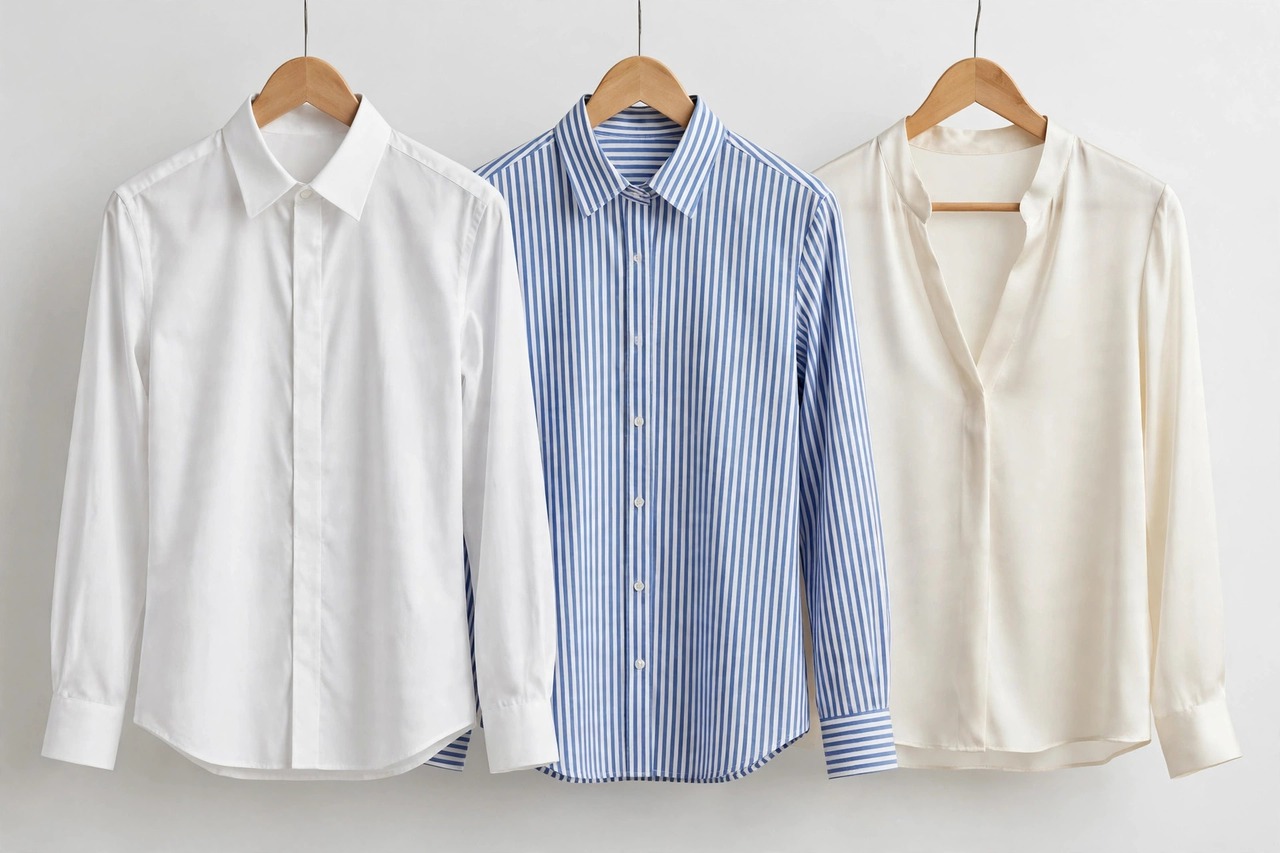
The dress shirt is the most disciplined top in a woman's wardrobe: a real collar, a buttoned front, shaped cuffs and a fabric smooth enough to sit calmly under a blazer or stand alone with tailored trousers. Its blouse relatives soften the formula with drapier fabrics and fewer buttons, but the family resemblance is polish. A note on naming before we go further: dress here means formal and work-appropriate, not designer or luxury. The perfect white shirt is a triumph of cut and cloth that many labels, at many prices, have achieved — what matters is how it fits your shoulders and behaves by three in the afternoon.
Few garments repay a careful purchase so reliably. A dress shirt anchors suits, civilizes a pencil skirt, sharpens dress pants and even elevates dark denim for a smart-casual Friday. Because it sits next to the face, its collar, color and condition quietly signal competence before you say a word.
Collar Types and Shirt Styles
The classic point collar is the workhorse: its points frame the face, sit neatly under a jacket lapel and accept anything from no jewelry to a fine necklace in the open V. Spread and cutaway collars open wider, feel more contemporary and give statement earrings and shorter necklaces room, though they can look empty without a jacket on some frames. Button-down collars — the soft, unconstructed kind borrowed from menswear — read a touch more relaxed and suit business-casual offices, while band and mandarin collars remove the collar entirely for a clean, modern line under blazers.
Beyond the collar, style lives in the details. A standard placket keeps buttons visible and traditional; a hidden-placket front is sleeker and more formal. French cuffs, worn with links, are the dressiest choice for evening and ceremonial wear, while a simple barrel cuff with one or two buttons suits every day. Longer tunic shirts with a curved hem blur into blouse territory and wear well half-tucked, and a proper fitted shirt will usually carry shaping seams or darts rather than a straight, boxy body.
Silk vs Cotton and Other Fabrics
Cotton is the benchmark shirting for structure and breathability. Fine weaves such as poplin are smooth and crisp, pinpoint oxford is a hair more textured and forgiving of wrinkles, and twill adds a subtle diagonal and a softer hand. Look for long-staple cotton and a little elastane if you like a close fit that still lets you reach a high shelf. Cotton's trade-offs are honest ones: it creases where you bend, and a truly crisp finish asks for an iron, though modern easy-care treatments have narrowed that chore considerably.
Silk is cotton's glamorous opposite: fluid, lustrous and naturally temperature-regulating, it turns a shirt into a blouse and a workday outfit into an evening one. Silk charmeuse and crepe de chine drape beautifully under tailoring but show water spots, ask for gentle washing or dry cleaning and cost more to replace. Between the poles sit excellent compromises — silk-cotton blends, matte viscose and high-quality polyester crepes that mimic silk's fall with easier care. For most wardrobes, cotton for structure days and one silk or silk-look blouse for polish days is the balanced answer.
Fit Through Shoulders and Bust, and Tucking
Fit a dress shirt from the shoulders down. The shoulder seam should sit at the edge of your shoulder bone; seams that droop inward make even fine cloth look borrowed. Across the bust, buttons must close with no horizontal pulling and no gap opening between them when you sit or raise your arms — gaping is the single most common dress-shirt failure, and solutions include a size up with tailoring at the waist, styles with a hidden extra button at the bust point, or a discreet snap added by a tailor. Sleeves should end at the wrist bone, showing a sliver beyond a jacket cuff.
Tucking is a skill, not an afterthought. A full tuck into dress pants or a skirt gives the sharpest waist definition and is the professional default; anchor it by tucking the shirt into undergarments' waistband edge or choosing shirts with a longer, curved shirttail made to stay put. The popular half-tuck — front tucked, back loose — suits tunic and blouse styles with casual trousers, not a formal suit. If a tucked shirt billows above the waistband, the body is too full: a tailor's darts or a slimmer cut will fix the parachute effect for good.
Ironing, Care and Building a Rotation
A dress shirt's reputation is made at the ironing board. Iron in order — collar from the points inward, yoke, cuffs, sleeves, then the body — using the heat the fabric allows: high with steam for sturdy cotton, low and dry for silk, ideally through a press cloth. Hang shirts immediately on proper hangers with the top button fastened so the collar keeps its roll. Between wears, a bathroom-steam refresh during a shower can release light creasing and buy one more wearing before the wash.
Wash white cotton shirts separately and treat collar and cuff soil first, since body oils collect there and yellow over time. Unbutton shirts before washing to spare the buttons, and never leave a silk blouse soaking. A sensible rotation — classic white, pale blue or a fine stripe, and one silk or soft blouse in a flattering color — covers nearly every office week and formal occasion. Replace a shirt when the collar edge frays or the white goes grey; no styling trick outruns a tired shirt at close range.
Related Women's Guides
Photos


Looking for Women's Clothing Stores?
This guide helps you choose women's dress shirts by collar, fabric and fit. To browse where to buy, visit our women's clothing store directory, where you can find retailers that carry them.