Women's Business Shirts Guide
A crisp button shirt anchors the working wardrobe — here is how to pick the collar, fabric and fit that carry you through the longest boardroom day.
Shop Women's Business Shirts Now
Shop Women's Business Shirts on Amazon Shop Women's Business Shirts on eBayThe Amazon and eBay links on this page are affiliate links. If you make a purchase through them, Apparel Search may earn a commission.
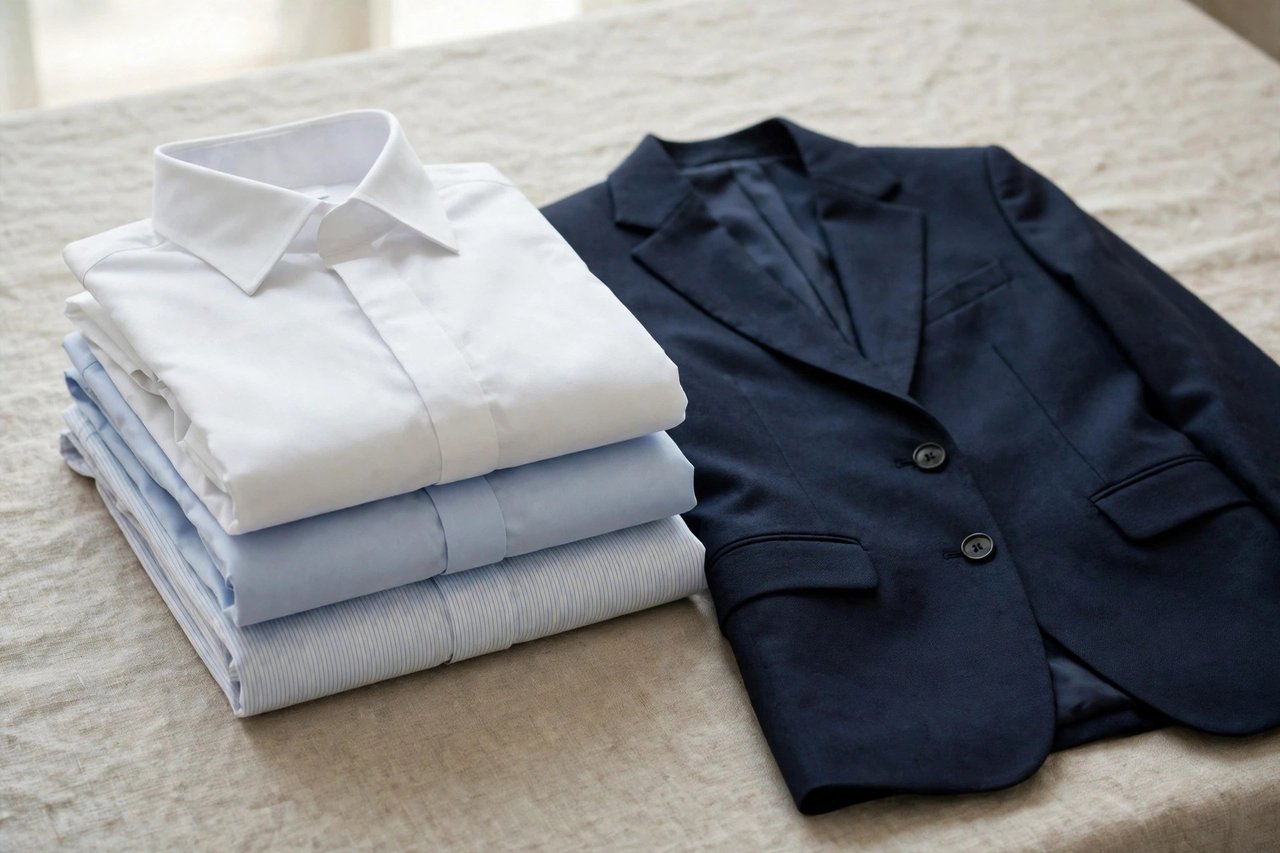
A business shirt is the hardest-working top in a professional wardrobe. Unlike a casual blouse, it is cut to sit cleanly under a jacket, hold a tidy collar through a full day of meetings, and tuck without bunching at the waistband. The classic version buttons from hem to collar with a structured point or spread collar, long sleeves finished with a proper cuff, and a hem shaped to stay put. Modern versions borrow that polish while softening the details — a hidden placket, a slightly relaxed body, or a touch of stretch that lets you reach for a high shelf without the shirttails escaping. If you build presentations, meet clients, or simply prefer a sharp silhouette, a small rotation of well-chosen business shirts solves the weekday what-to-wear problem in seconds.
Think of the business shirt as a layering tool as much as a top. Worn alone with tailored trousers it reads formal and finished. Under a sweater or blazer, only the collar and cuffs show, so those details earn their keep. Tucked into a pencil skirt it creates the long, unbroken line that photographs well and feels authoritative. Because the style changes so little from year to year, quality matters more than quantity here — three excellent shirts will outserve eight mediocre ones.
Collar Types and Shirt Styles
The point collar is the enduring standard: its tips angle downward and sit neatly with or without a tie, suiting most face shapes and jacket lapels. A spread collar opens wider between the tips and feels more contemporary, framing necklaces and scarves beautifully. The band or mandarin collar skips the fold entirely for a clean, minimal neckline that works in creative offices. Camp collars and soft convertible collars lean relaxed, better for business-casual settings than formal ones.
Beyond collars, consider the body styles. The classic button-front is the most versatile. Wrap-front shirts define the waist and soften the buttoned look. Tunic-length shirts extend past the hip for wearing over slim trousers or leggings on casual Fridays. Popover styles pull on with a partial placket, trading a little formality for comfort. Sleeve options matter too — full cuffs for jacket wear, three-quarter sleeves for transitional weather, and short sleeves only where your office culture truly allows them.
Fabrics and Wrinkle Resistance
Cotton poplin remains the benchmark fabric: breathable, crisp, and able to take a sharp press. Higher thread counts feel smoother against the skin, and a small percentage of elastane — usually 1–3 percent — adds give without changing the tailored look. Cotton-polyester blends sacrifice a little breathability for durability and lower prices, and they emerge from the wash noticeably smoother.
Wrinkle-resistant and non-iron finishes are the busy professional's best friend. These treated cottons resist creasing through a commute and a seated workday, needing only a quick steam or a few minutes in a warm dryer. Performance fabrics go further, adding moisture management for presenters who run warm. Silk and silk-blend business shirts exist at the luxury end; they drape elegantly but demand gentler care and read more like blouses. For travel, pack non-iron poplin or a cotton-stretch twill — both recover overnight on a hanger after a light steam from the shower.
Fit, Tucking and Sizing
Fit decides whether a business shirt looks expensive or borrowed. The shoulder seam should sit at the edge of your shoulder, the collar should admit one finger when buttoned, and the body should skim rather than cling — if the buttons gap at the bust, size up and have the waist taken in, or choose a style cut with extra bust room. Sleeve length is correct when the cuff meets the wrist bone with your arm relaxed.
Tucking technique transforms the finish. A full tuck gives the most formal line; smooth the fabric flat over the waistband and add a belt to anchor it. The front tuck suits high-rise trousers in relaxed offices. Shirts with shaped, shorter hems are designed to wear untucked but keep the hem at mid-hip so the proportion stays intentional. Petite frames benefit from narrower collars and shorter bodies, while tall frames should hunt for extra-length ranges so cuffs and tails stay where they belong. When between sizes, remember a tailor can nip a waist for less than the cost of a replacement shirt.
Styling for the Office and Beyond
For the most formal settings, pair a white or pale blue shirt with a navy or charcoal suit, closed-toe pumps, and minimal jewelry — the shirt's job is to provide the crisp frame, not compete. Stripes and fine checks add quiet interest under solid jackets. For business casual, try a soft striped shirt half-tucked into wide-leg trousers, or layer an open shirt over a fine knit shell with loafers.
Business shirts also moonlight after hours. Untucked over dark denim with the sleeves rolled, a poplin shirt becomes a polished weekend layer. A satin-finish evening version under a tuxedo-style blazer handles dinners and events. Keep a spare shirt at the office if your days involve coffee, commutes, and client lunches — a fresh collar at 3 p.m. resets the whole outfit.
Care and a Smart Buying Checklist
Most cotton business shirts machine wash well in cool water on a gentle cycle. Fasten the top button, turn the shirt inside out, and remove it promptly; hang it on a sturdy hanger and smooth the collar and placket by hand while damp. Non-iron shirts should skip fabric softener, which coats the finish and dulls its performance. Iron other shirts on the cotton setting, working the collar from the tips inward to avoid creases, then the cuffs, sleeves, and body.
Before buying, run this checklist: hold the fabric to the light to check opacity (a nude-tone underlayer solves most show-through), tug the buttons, inspect the stitching density along the placket, and sit down in the fitting room to test for gaping and riding. Buying two of a perfect white shirt is not excess — it is wardrobe insurance, since white shows wear first and a matching backup keeps your rotation seamless.
Related Women's Guides
More to Explore
Photos

Looking for Women's Clothing Stores?
This guide helps you choose women's business shirts by collar, fabric and fit. To browse where to buy, visit our women's clothing store directory, where you can find retailers that carry them.