Women's Business Shoes Guide
The right work shoe finishes the outfit and protects your feet — heel heights, comfort engineering and styles for every office dress code.
Shop Women's Business Shoes Now
Shop Women's Business Shoes on Amazon Shop Women's Business Shoes on eBayThe Amazon and eBay links on this page are affiliate links. If you make a purchase through them, Apparel Search may earn a commission.
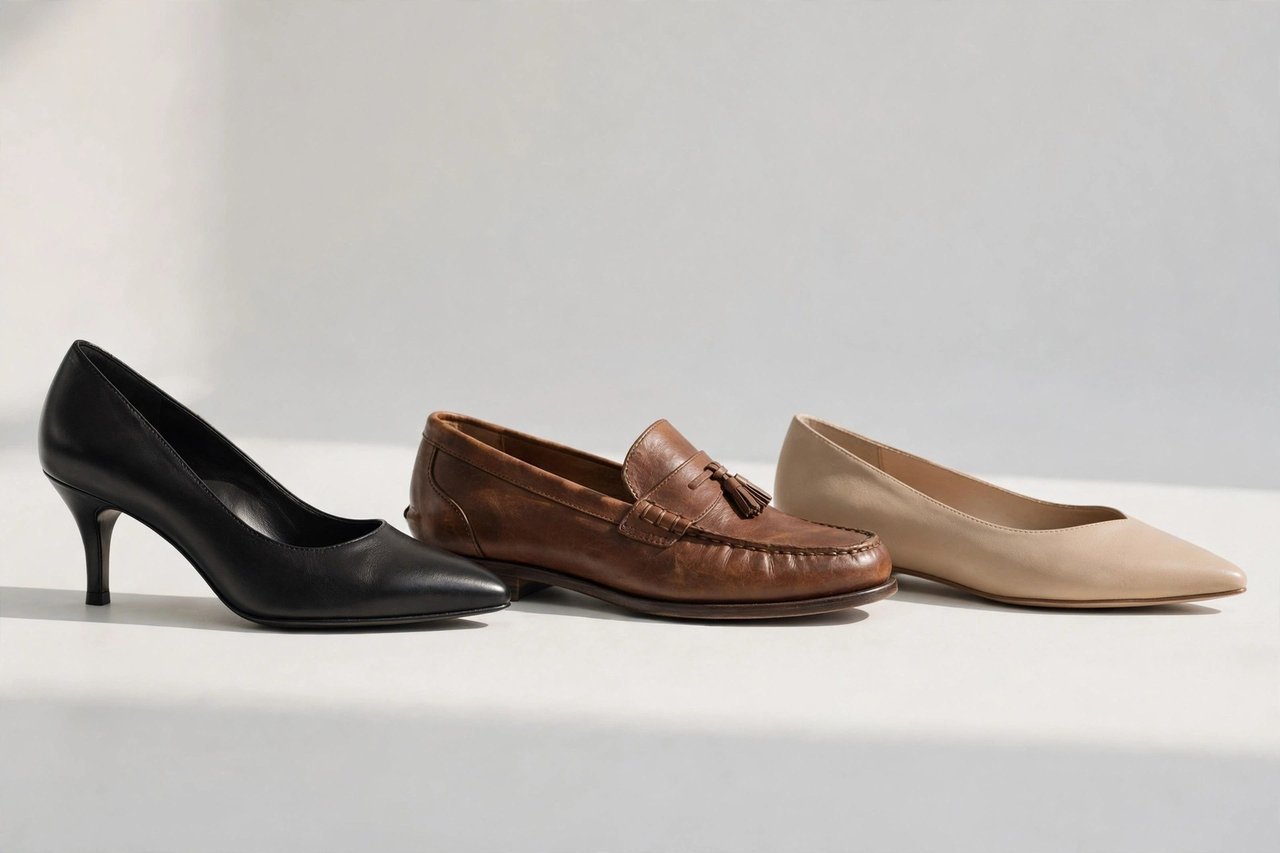
Business shoes carry a double burden: they must look polished enough for the client meeting and feel kind enough for the commute, the standing presentation, and the dash to catch a train. The category covers classic pumps, loafers, ballet and pointed flats, oxfords, and low-heeled ankle boots that pass in professional settings. What unites them is a refined silhouette, quality materials, and construction that respects the realities of an eight-to-ten-hour day on your feet.
Dress codes have relaxed, but footwear is where an outfit still signals its intent. A sleek loafer instantly formalizes trousers that a sneaker would casualize; a well-kept pump elevates a simple dress into boardroom attire. Investing in two or three versatile pairs in black, a warm neutral, and perhaps navy or burgundy covers nearly every working scenario and spares your feet the damage of one pair worn daily without rest.
The Core Styles
The pump is the definitive business shoe: a closed toe, a defined heel, and a clean vamp. Pointed toes lengthen the leg line with trousers and skirts, while almond and rounded toes offer more room and a softer look. Loafers have moved firmly into the professional mainstream — penny, tassel, and horsebit versions in leather read as tailored as any heel, with the bonus of easy walking. Lug-sole loafers trend younger and suit creative offices.
Flats earn their place through pointed-toe and d'Orsay cuts that look deliberate rather than default. Ballet flats with a slight heel and structured sole travel best between office and evening. Oxfords and derby shoes in polished leather bring a menswear edge to suits and wide-leg pants. Low block-heeled ankle boots extend the business wardrobe through winter, provided the shaft is slim enough to sit cleanly under trouser hems. Kitten-heel slingbacks deserve a mention for warm-weather polish with minimal elevation.
Heel Heights for All-Day Wear
Heel height is a comfort decision disguised as a style one. Most podiatry guidance for daily wear converges on 1–2 inches (about 2.5–5 cm) as the sustainable zone: enough elevation to look dressed, not so much that weight pitches onto the forefoot. Block and stacked heels distribute pressure far better than stilettos of the same height, and a slight platform under the toe reduces the effective pitch of a taller shoe.
Save 3-inch and higher heels for short-duration events, and be honest about your day — a conference with corridor miles demands a different shoe than a seated board meeting. Slingbacks and ankle straps help secure higher styles, but no strap compensates for a last that does not match your foot. If you love the look of a tall pump, wear commuter shoes to the office and change on arrival; your feet and the shoe's heel tips both last longer.
Comfort Features That Matter
Marketing language aside, a few features genuinely change how a shoe feels at hour eight. Look for a cushioned insole with arch contouring, a padded collar that spares the Achilles, and a breathable lining — leather or modern moisture-wicking textiles. A flexible forefoot with a stable heel counter gives natural stride without sloppiness. Rubber-injected or textured outsoles add grip on polished floors, a real safety consideration in lobbies and transit stations.
Fit details matter as much as features. Shop late in the day when feet are at their largest, allow a thumb's width beyond your longest toe in closed styles, and check that the widest part of your foot matches the shoe's widest part. Width options and half sizes are worth seeking out; a correctly sized mid-range shoe outperforms a luxury shoe in the wrong size every time. Removable insoles let you substitute your own orthotics without upsizing the whole shoe.
Styling and Building a Work Rotation
Match formality first: patent leather reads dressiest, smooth calf next, suede softest and best kept for business-casual days. Black pairs with black, charcoal, and navy tailoring; a warm tan or cognac warms up navy and cream beautifully; burgundy and deep green act as quiet neutrals with autumn palettes. Keep toe shapes consistent with trouser width — pointed toes under wide legs, loafers under tapered and cropped cuts.
Rotate at least two pairs so each rests a full day between wearings; leather needs that time to release moisture and recover its shape. Cedar shoe trees maintain the last and reduce odor. For travel, one pump or loafer plus one flat that folds into your tote covers meetings and the flight home, and a nude-tone pump is the single most suitcase-friendly choice because it disappears against the leg and matches everything.
Care to Keep Them Professional
Scuffed toes and worn heel tips quietly undermine an otherwise flawless outfit, so maintenance is part of the professional package. Wipe leather smooth-side shoes after wear, condition monthly, and polish to cover scuffs before they deepen. Replace rubber heel lifts when they wear thin — a cobbler does it cheaply and it prevents damage to the heel breast itself. Suede wants a protective spray and a brush, never water.
Store shoes with trees or tissue, away from direct heat that cracks leather. Salt-stained winter shoes should be rinsed with a damp cloth and dried at room temperature. Keep a small emergency kit at your desk: adhesive bandages for friction points, a mini polish cloth, and spare heel grips. Treated this way, a quality pair of business shoes easily serves several years, and resoling extends fine leather soles almost indefinitely.
Related Women's Guides
Looking for Women's Clothing Stores?
This guide helps you choose women's business shoes by style, heel height and comfort. To browse where to buy, visit our women's clothing store directory, where you can find retailers that carry them.