Women's Boat Shoes Guide
Siped soles, rawhide laces and salt-water sense — the deck shoe explained, from breaking in to dressing it up on land.
Shop Women's Boat Shoes Now
Shop Women's Boat Shoes on Amazon Shop Women's Boat Shoes on eBayThe Amazon and eBay links on this page are affiliate links. If you make a purchase through them, Apparel Search may earn a commission.
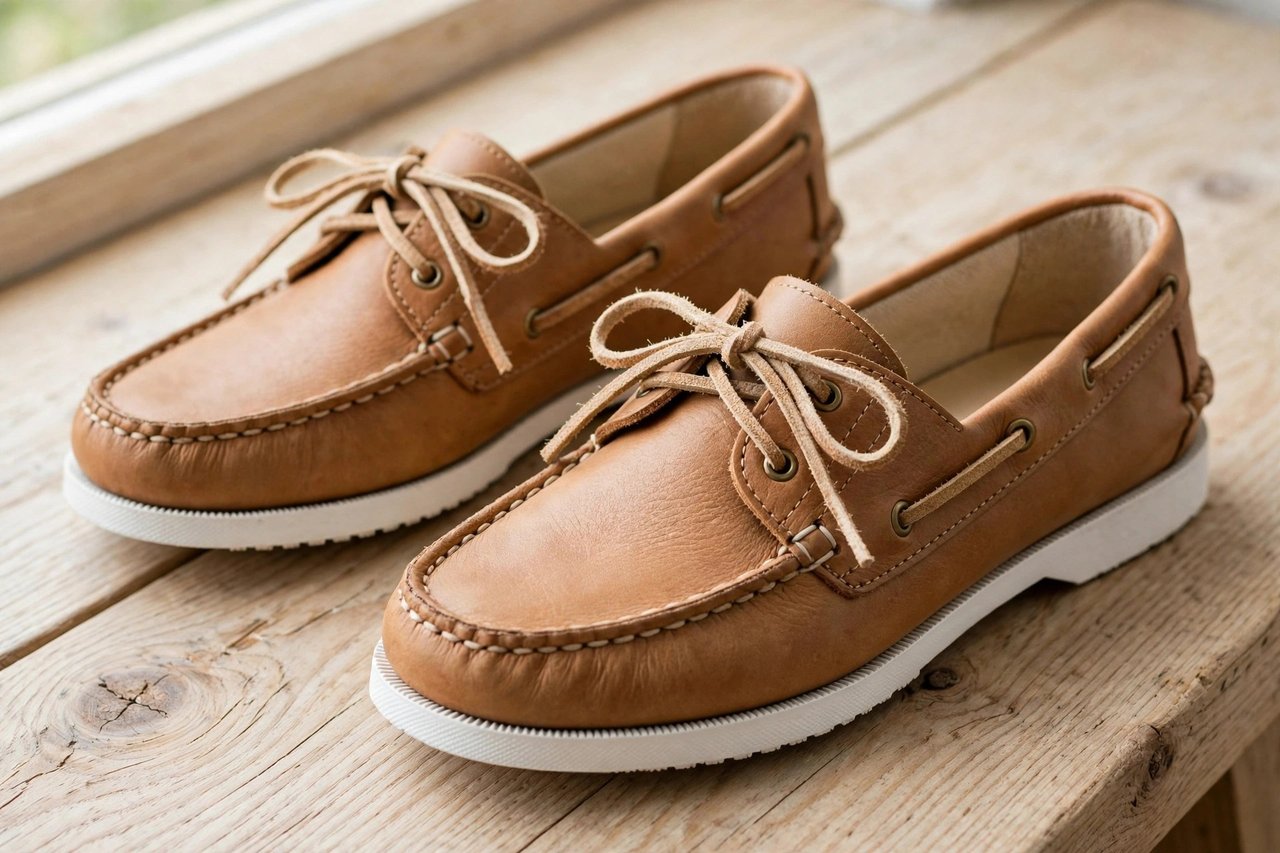
Boat shoes were invented for a slippery problem: how to stay upright on a wet boat deck without marking its surface. The answer, perfected in the 1930s, was a low leather shoe with a razor-cut sole that grips like a tire tread and laces that run all the way around the heel to keep the shoe on in motion. That functional design became a summer icon far beyond the marina, worn with shorts, sundresses and chinos in every coastal town and plenty of landlocked ones. This guide explains the features that make a boat shoe genuine, how to break one in without blisters, and how to care for leather that is expected to meet salt water and survive the meeting.
On land, the appeal is ease. A boat shoe is more polished than a sneaker, cooler than a loafer in July, and designed to be worn without socks, which makes it the shoe summer outfits reach for when sandals feel too bare. Modern versions add colors, fabrics and slight heels, but the classic two or three eyelet leather deck shoe in tan, brown or navy remains the standard against which all of them are judged.
Anatomy: Siped Soles and 360-Degree Lacing
The sole is the technology. Siping means thin slits cut across the rubber outsole; as your weight presses down, the slits open into tiny edges that channel water away and bite into a wet surface, the same principle as the tread on a car tire. A true boat sole is also non-marking, usually white or gum colored, so it will not streak a deck — or your kitchen floor. The sole is intentionally thin and flexible, which is wonderful for feeling the ground on a boat and for casual walking, but it means classic boat shoes offer little arch support or cushioning for all-day city touring.
Above the sole, the signature is 360-degree lacing: a single rawhide lace threaded through eyelets around the entire collar of the shoe, tying at the front. That lace is functional, cinching the heel so the shoe stays secure when wet, and it explains the barrel knot you see on the front of most pairs. Uppers are traditionally oiled leather treated to resist water, with rust-proof metal eyelets that will not stain the leather after a soaking. Canvas and fabric versions trade the water-friendly leather for lightness and color, while padded collars and cushioned insoles on modern styles trade a little authenticity for comfort.
Leather, Canvas and Choosing Your Pair
Full-grain oiled leather is the classic upper for a reason: it tolerates getting wet, resists salt and sun better than ordinary shoe leather, and molds to your foot into a personal fit that improves for years. Nubuck and suede boat shoes look softer and dressier but dislike soaking, so they are shore shoes rather than deck shoes. Canvas versions are vegan-friendly, inexpensive and cheerful in colors and stripes, with the trade-off of slower drying and a shorter life. Whatever the upper, check that the insole is leather or a quality cushioned material and that stitching around the apron toe — the raised moccasin seam on top — is even and tight.
Fit a boat shoe snugly at first, especially in leather. They are worn barefoot or with no-show socks, and leather stretches as it warms and molds, so a pair that feels merely comfortable in the shop can become sloppy by August. Your toes should have a little room to splay, but the heel should not lift freely when you walk. Width matters: many classic styles run narrow, and wide fittings exist for a reason. If you plan to use them around actual water, choose the leather, siped, non-marking original design; if they are purely a summer fashion shoe, let color and comfort lead and the technical details can relax.
Breaking In Without the Blisters
New leather boat shoes have one famous flaw: the stiff heel counter and rawhide lace can rub blisters into bare heels during the first wears. The traditional fix is patience — short outings first, gradually lengthening, while the leather softens and takes your shape. No-show socks or low liner socks for the first week protect skin without changing the sockless look. Some sailors swear by deliberately wetting the shoes and walking them dry so they mold exactly, a method that works with genuine oiled leather but risks stiffening lesser materials, so treat it as an enthusiast technique rather than a requirement.
A few small helps speed the peace. Soften the heel edge by gently flexing it with your thumbs before wearing. Use the 360-degree lace properly: snug it around the collar so the shoe moves with your foot instead of sawing at your heel with every step. If one spot persistently rubs, a cobbler can stretch that precise area. After two or three weeks of regular wear, a good pair should feel like slippers you can wear to lunch — that transformation is precisely why people keep the same beloved, salt-faded boat shoes for a decade.
Styling the Nautical Classic on Land
Boat shoes carry a preppy, coastal code that pairs predictably and pleasantly: Bermuda shorts and a striped tee, white jeans and a navy sweater, a shirt dress or sundress, chinos rolled once at the ankle. They finish summer outfits that want to look neat without trying, and they bridge the gap between sneakers and loafers in smart-casual settings. Keep socks invisible; a flash of athletic white sock undoes the entire effect. Tan and brown leather are the most versatile, navy is the classic alternative, and bright colors or metallics should be treated as the outfit's single playful note.
Know the limits as well as the strengths. Boat shoes do not dress up beyond smart casual, and pairing them with tailored suits or evening wear confuses both. Their thin soles tire feet on long sightseeing days of hard pavement, where a cushioned walking shoe serves better. Within their territory — warm weather, relaxed settings, water nearby or merely wished for — few shoes look as right. Worn with confidence and a little sun-faded wear, they signal that the wearer values classics that earn their keep, which never goes out of style.
Salt Water, Care and Long Life
Boat shoes are among the few leather shoes you are allowed to get wet, but aftercare decides whether they thrive on it. After salt-water exposure, rinse the shoes in fresh water to remove salt that would otherwise dry the leather and corrode the eyelets, then air-dry them slowly away from direct heat and sun, stuffed loosely with newspaper if they are soaked. Once dry, a light coat of leather conditioner or mink oil restores the oils the water carried away and keeps the leather supple rather than board-stiff. Canvas pairs simply rinse, wash gently if needed and dry the same slow way.
One care note specific to this shoe: the rawhide laces eventually stiffen, darken or snap, usually long before the shoe itself gives up, and replacements are inexpensive and easy to thread with a simple lacing tool. Replacing laces and conditioning the upper can make a five-year-old pair look ready for a new season in an afternoon. Store boat shoes with their shape supported rather than crushed under heavier footwear, and rotate them with other summer shoes so the insoles dry fully between wears. Treated this way, the classic leather deck shoe is not a seasonal purchase but a long relationship — the pair that comes out every May already feeling like yours.
Related Women's Guides
Looking for Women's Clothing Stores?
This guide helps you choose women's boat shoes by material and use. To browse where to buy, visit our women's clothing store directory, where you can find retailers that carry them.