Start Here
Building Outfits by Formula, Not by Guesswork
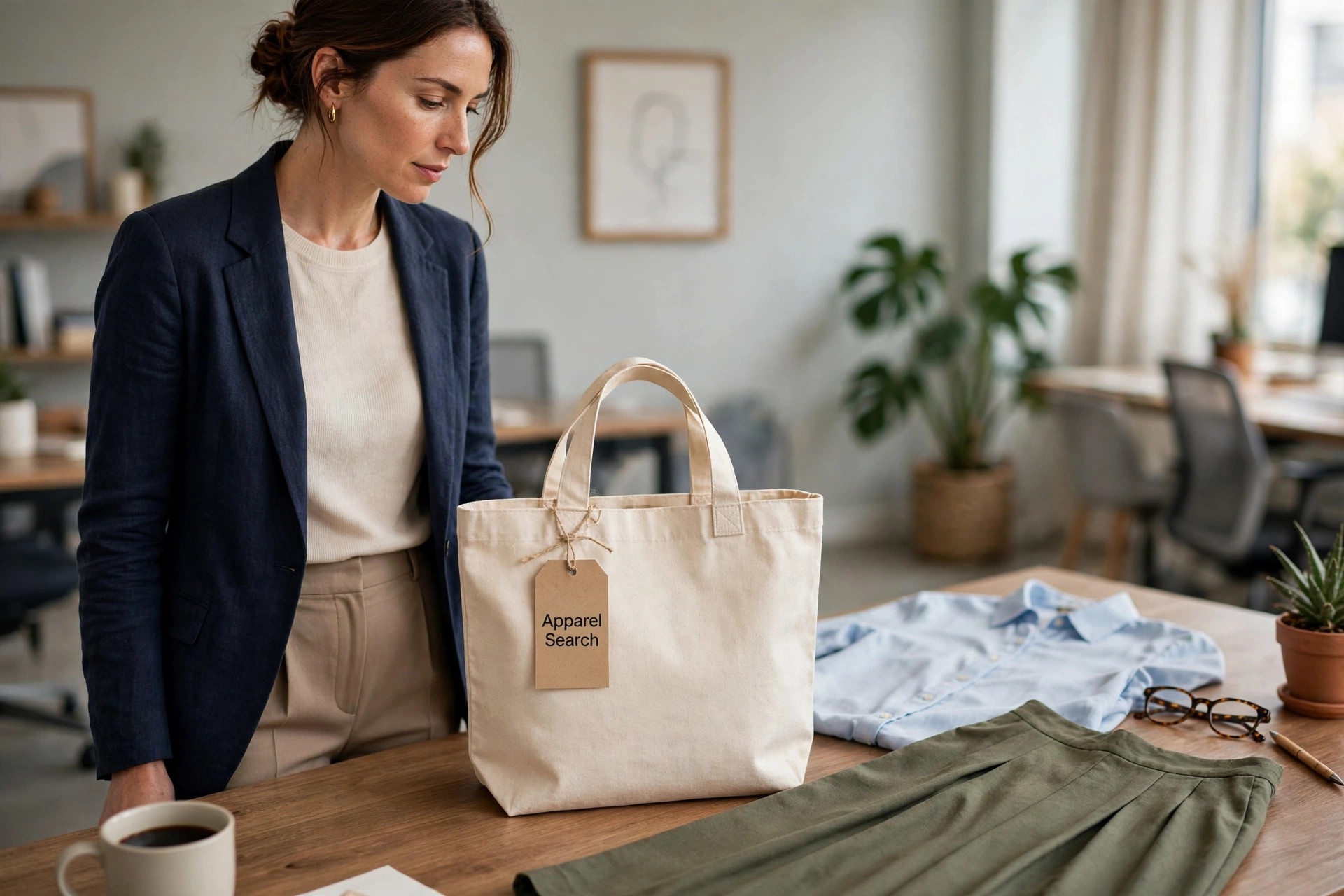
The easiest way to dress business casual well is to stop inventing an outfit every morning and start using formulas: a bottom, a top, an optional third piece and a shoe, each chosen from a small set of proven categories. Once five or six formulas work, the wardrobe rotates itself — and everything in it earns its place.
The foundation categories are tailored trousers, knee-length or midi skirts, simple dresses, knitwear and soft blazers. The detailed trouser reference is the women’s business casual pants guide; dresses and skirts get their own deep guide in Business Casual Dresses & Skirts. This page is the mixing layer — how the pieces combine across a week, a season and a range of office formality levels, all within the family gathered at the Business Casual & Work Outfits hub.
The Formulas
Six Outfit Formulas That Cover the Week
| Formula | Pieces | Best for |
|---|---|---|
| Trouser + knit | Tailored trousers, fine-gauge sweater or knit top, loafers | The everyday default; add a blazer for meetings |
| Trouser + blouse + blazer | Trousers, a soft blouse, unstructured blazer, pumps or loafers | Presentations and client days |
| Skirt + knit | Pencil or A-line midi skirt, tucked knit, ankle boots or flats | A polished change from trousers |
| Dress + layer | A knee-length or midi dress with a cardigan or blazer, closed shoes | One-piece dressing; see the dresses guide for lengths and necklines |
| Wide-leg + fitted top | Wide-leg trousers, a slim knit or tucked shirt, pointed flats | Modern silhouette; balance volume with a neat top |
| Dark denim + tailoring | Dark unripped jeans (where the office allows), blouse and blazer | Relaxed offices and dress-down days only |
Each formula tolerates substitution inside its categories — swap the blouse for a knit, the loafers for ankle boots — which is what makes a small wardrobe feel large.
The Pieces
Trousers, Knitwear and Blazers: The Working Core
Trousers do the heaviest lifting. Straight and wide-leg cuts in wool blends, crepe or good cotton twill read as business casual almost automatically; the pants guide covers rise, length and fabric weight in detail. Knitwear is the code’s quiet advantage — a fine crew, a polo knit or a neat cardigan is softer than a shirt but just as tidy, and it layers without bulk. The women’s knitwear guide explains gauges and fibres. Blazers are the instant upgrade: unstructured or softly shouldered, they turn a knit-and-trouser base into a meeting outfit. Fit notes and styles are in the women’s blazers guide.
Shoes finish the sentence. Loafers, ballet flats, low pumps and clean ankle boots sit comfortably inside the code; trainers only in their minimal leather form and only where colleagues wear them too.
Season by Season
Seasonal Notes: Same Formulas, Different Fabrics
Business casual changes fabric, not shape, as the year turns. Spring swaps wool trousers for cotton twill and crepe, adds shirt dresses and lighter knits. Summer leans on breathable fibres — linen blends that keep some structure, sleeveless tops only under a layer in most offices, and dresses doing more of the work. Autumn is the code’s best season: knitwear returns, ankle boots replace flats, and richer colours carry simple shapes. Winter adds the practical layer — opaque tights with skirts and dresses, heavier trousers, a fine knit under a blazer, and a coat that looks as deliberate as what is under it. Planning outfits by formula makes each transition a substitution, not a rebuild.
The Line
What to Avoid
The failures are consistent. Anything see-through, very short, or cut for the beach or the gym falls below the line, as do ripped or faded denim, leggings worn as trousers, slogan tees, flip-flops and trainers that have seen a marathon. Fit is the other trap: business casual forgives relaxed garments but not sloppy ones, so clothes that pull, sag or need constant adjusting undo an otherwise correct outfit. When a piece is borderline, the tiebreaker is the room you are dressing for — a normal internal day tolerates more ease than a client meeting. For the bigger map of where this code sits, Dress Codes Compared puts it beside business professional, smart casual and casual.
Questions
Common Questions
How many business casual outfits do I need for a work week?
Five formulas are enough if the pieces mix. Two pairs of trousers, one skirt, one dress, three knit tops, two blouses and one blazer combine into well over a week of distinct outfits, because each formula allows substitutions inside its categories. Add a second blazer or cardigan before adding more bottoms — third pieces change a look most.
Can women wear jeans as business casual?
In many offices, yes — dark, unripped, well-fitting jeans worn with a blouse, knit or blazer and proper shoes. In traditional workplaces they remain below the line. Treat denim as the most relaxed formula in the rotation, not the default, until you know your office culture well.
Are sleeveless tops business casual?
Usually only under a layer. A sleeveless shell beneath a blazer or cardigan is standard business casual; bare shoulders alone read as too relaxed in most offices, especially in client-facing roles. Width matters too — a wide, structured sleeveless top is safer than a narrow-strapped one.
More to Explore
Search Apparel Search