Why Dresses Work
The One-Piece Advantage
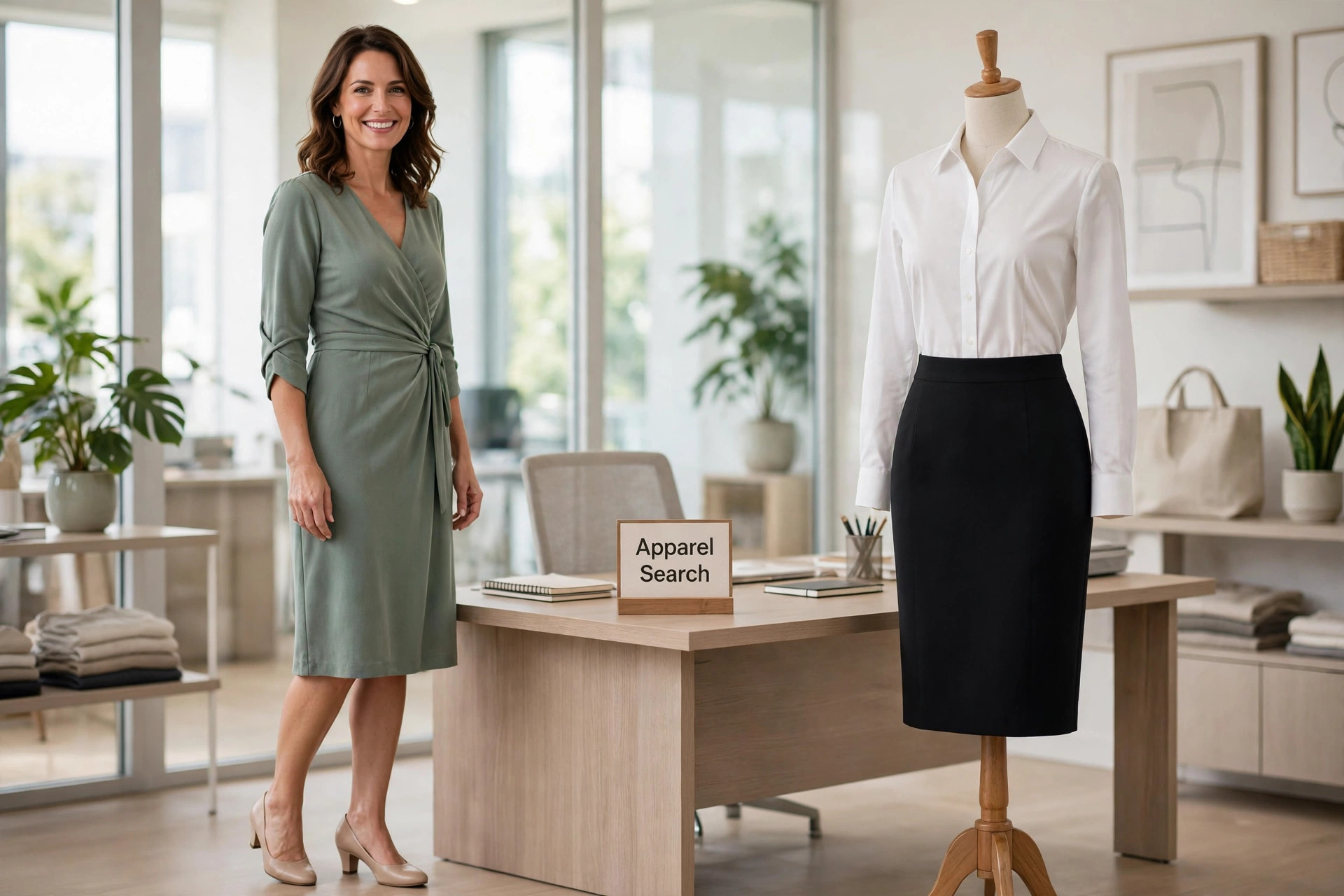
A dress is the most efficient business casual outfit: one decision in the morning, a complete look by design. A skirt is its flexible cousin — one bottom that pairs across every knit, blouse and blazer in the wardrobe. Both belong at the centre of the code, provided four details are right: length, neckline, sleeve and fabric. Get those right and almost any classic dress shape is office-safe.
This guide is the dress-and-skirt spoke of the Business Casual & Work Outfits hub, sitting beside Women’s Business Casual Outfits, which covers the trouser and knit formulas. The general garment references — the women’s dresses guide for shapes and the skirt guides linked below — explain the clothing itself; this page applies the workplace filter.
Length & Neckline
Lengths and Necklines: Where the Line Sits
Length is the first check. Knee-length — just above, at, or just below the knee — is the universally safe zone, and midi lengths below it are equally secure and currently the more modern read. Anything mid-thigh or shorter moves the dress out of business casual in all but the most relaxed offices, and sitting down shortens every hem, so judge length seated, not standing at a mirror.
Necklines follow the same logic of margin. Boat, scoop, crew, shirt and shallow V necklines all pass; a wrap dress’s V is fine when it closes securely or layers over a camisole. Plunging necklines, halter cuts and off-shoulder styles belong to evening and occasion wear. The test is movement: if a neckline needs monitoring when you lean, reach or sit, it is wrong for work however pretty it is standing still.
Sleeves & Fabrics
Sleeves, Fabrics and the Shapes That Carry Them
Sleeves settle most borderline cases. A dress with sleeves — short, elbow, three-quarter or long — is business casual almost by default. Sleeveless dresses work under a blazer or cardigan, and on their own only when the shoulder is wide and structured; narrow straps never qualify. In summer, a sleeved dress in a breathable fabric is the practical answer to the same problem.
Fabrics decide the register as much as cut. Ponte, crepe, wool blends, cotton twill, fine knits and matte jersey read as work fabrics; they hold shape, resist creasing and look deliberate at 4 p.m. Thin, shiny, clingy or sheer fabrics read as evening or leisure whatever the shape. Shapes that carry these fabrics best: the sheath, the shirt dress, the wrap, the fit-and-flare with a modest hem, and the knit column. For skirts, the pencil, A-line and pleated midi are the working trio.
Tights, Shoes & Seasons
Tights, Shoes and Dressing by Season
Tights extend the skirt and dress wardrobe through the cold half of the year: sheer black or nude for dressier offices, opaque black or navy for everyday winter wear. Bare legs are a summer norm in most workplaces; patterned or fishnet tights push an outfit toward evening. Shoes pair by formality — low pumps and loafers for dressier days, ballet flats and loafers for standard days, ankle boots with tights in winter. Strappy sandals and very high heels move the whole outfit out of the code.
Seasonally: spring brings shirt dresses and lighter crepe; summer leans on sleeved linen-blend and cotton dresses that breathe without going sleeveless; autumn is midi season, with knit dresses and boots; winter layers fine knits under sleeveless dresses, adds opaque tights, and switches to wool-blend skirts with heavier shoes. The formula tables in the women’s outfits guide show how these pieces rotate across a full week.
Formulas
Four Reliable Dress and Skirt Formulas
| Formula | Combination |
|---|---|
| The sheath day | Knee-length sheath dress, low pumps, optional blazer |
| The wrap day | Wrap dress over a camisole if needed, flats or low heels |
| The skirt rotation | Pencil or A-line midi skirt, tucked knit or blouse, loafers or ankle boots |
| The winter knit | Knit midi dress, opaque tights, ankle boots, long cardigan or blazer |
Each formula survives the seated-length test, the neckline-movement test and the 4 p.m. crease test — the three checks that separate work dresses from dresses that merely visit an office.
Questions
Common Questions
How short can a business casual dress be?
Knee-length is the safe standard — just above, at or below the knee — and midi lengths are equally appropriate. Judge the length seated, because hems rise when you sit. Mid-thigh and shorter dresses fall outside business casual in most offices, whatever they are paired with.
Can I wear a sleeveless dress to work?
Usually under a layer. A sleeveless dress with a blazer or cardigan over it is standard business casual; on its own it works only when the shoulder is wide and structured, in a relaxed office. Narrow straps and bare-shoulder styles sit outside the code.
Are maxi dresses business casual?
A plain, structured maxi in a matte work fabric can pass in relaxed offices, especially in summer, but it reads as leisure dress in traditional workplaces. A midi is the safer long option: it gives the same ease with an unmistakably office register.
More to Explore
Search Apparel Search