The Default
The Men’s Business Casual Uniform, Piece by Piece
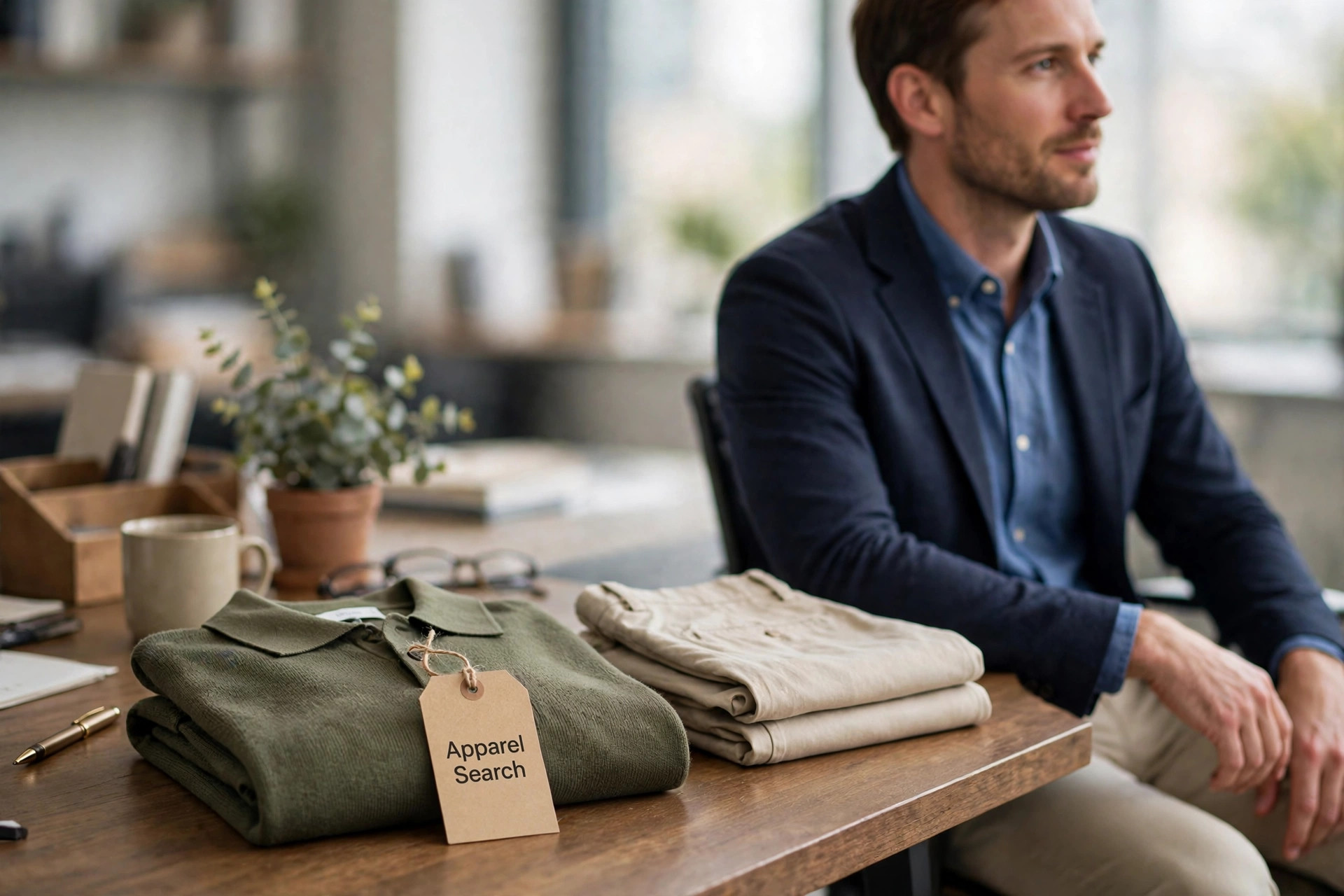
Men’s business casual has a recognisable uniform: chinos or tailored trousers below, an oxford shirt, polo or fine knit above, an unstructured blazer when the day demands it, and leather shoes or clean minimal trainers below that. It is the suit taken apart and relaxed — every piece is a softer cousin of something in the formal wardrobe.
Until now this side of the code had no dedicated guide on Apparel Search, while the women’s side had its pants guide and definition. This page fills that gap as part of the family gathered at the Business Casual & Work Outfits hub. The aim is a wardrobe of interchangeable pieces: three bottoms, five tops, one or two jackets and two pairs of shoes that combine into weeks of correct outfits without repetition anxiety.
Bottoms
Chinos, Khakis and Trousers
Chinos are the centre of the code. In navy, stone, olive or charcoal, cut slim or straight and hemmed to sit cleanly on the shoe, they pair with every top in this guide — the men’s chinos guide covers fabrics and fits. Khakis are simply chinos in the classic tan shade; they read slightly more relaxed, so pair them with a shirt rather than a tee-adjacent knit. Tailored trousers — wool or wool-blend, flat-front — are the dressier option for client days, covered in the men’s trousers guide.
Dark denim is the borderline case: unripped, dark and slim, it passes in relaxed offices with a blazer over it, and fails in traditional ones regardless. Shorts do not appear in this code at all.
Tops
Oxford Shirts, Polos and Knit Polos
The oxford shirt — button-down collar, textured weave — is the safest top in the code, tidy untucked only if cut to sit right, and better tucked. The men’s dress shirts guide explains collars and cloth; the oxford’s softer finish is what keeps it casual rather than boardroom. Polos work in piqué cotton for warm months, worn plain, fitted and logo-free. Knit polos — finer-gauge, often with a knitted collar that sits like a shirt’s — are the 2026 favourite, reading dressier than piqué and pairing naturally with trousers and a blazer; see the men’s knit polo shirts guide and the broader men’s knitwear guide for crew and quarter-zip knits, the other reliable top category.
T-shirts, even plain and expensive ones, sit below the line in most offices unless a jacket stays on over them all day — a fragile arrangement. Hoodies, sportswear and anything with a slogan are out.
Jackets & Shoes
Unstructured Blazers and the Shoes That Decide It
An unstructured blazer — soft shoulders, little or no lining, in navy hopsack, jersey or a cotton blend — is the single most useful garment in men’s business casual. It sharpens chinos and a knit polo into a meeting outfit and comes off to leave a perfectly good desk outfit. The men’s blazers guide covers cuts and cloth, and blazer vs sport coat untangles the neighbouring terms.
Shoes decide the register. Loafers are the code’s home shoe — suede for relaxed days, leather for dressier ones. Brogues, Derby shoes and Chelsea boots step up; minimal white leather trainers step down and only suit offices where they are already common. Running shoes, sandals and worn trainers end the argument the wrong way. A belt that matches the shoes, or no belt with a clean waistband, finishes the job.
Formulas
Four Outfit Formulas and the Line Between In and Out
| Formula | Combination |
|---|---|
| Everyday default | Navy chinos, light-blue oxford shirt, suede loafers |
| Meeting day | Charcoal trousers, white or pale shirt, unstructured navy blazer, leather loafers or Derbys |
| Warm weather | Stone chinos, plain polo or knit polo, loafers without socks or with invisible socks |
| Relaxed office | Dark unripped jeans, knit polo or crew knit, blazer, minimal leather trainers |
What counts: clean, fitted, unbranded versions of the pieces above. What does not: shorts, cargo trousers, ripped or faded denim, graphic tees, hoodies, gym kit, flip-flops and beat-up trainers. Fit and condition do as much work as garment choice — a pressed mid-range outfit beats a creased expensive one every time.
Questions
Common Questions
Can men wear trainers with business casual?
Only minimal, clean leather trainers, and only in offices where they are already common. They pair with chinos and a knit or blazer, never with the dressiest trousers. Running shoes and worn trainers fall below the line — when in doubt, loafers are the safer default.
Does business casual for men require a blazer?
No. A blazer is an upgrade, not a requirement: chinos with an oxford shirt or a fine knit are complete business casual on their own. The blazer earns its place on meeting and client days, and in air-conditioned offices where a layer is practical anyway.
Are untucked shirts business casual?
Rarely. An oxford or dress shirt should be tucked for business casual; untucked reads as off-duty even when the shirt itself is smart. Short, straight-hemmed knit polos and casual shirts designed to be worn untucked are the exception, and only in relaxed offices.
More to Explore
Search Apparel Search