Men's Knitwear Guide
Men's knitwear is clothing and fashion accessories made of knitted fabrics - the umbrella category of this letter, covering the sweaters, knit shirts, knit pants, hats and more that the rest of the K guides take one by one. Knitted fabric is a textile that results from knitting; its properties are distinct from woven fabric in that it is more flexible and can be more readily constructed into smaller pieces, making it ideal for socks and hats - and, scaled up, for nearly everything a man wears when comfort is the brief.
Shop Men's Knitwear Now
Shop Men's Knitwear on Amazon Shop Men's Knitwear on eBayThe Amazon and eBay links on this page are affiliate links. If you make a purchase through them, Apparel Search may earn a commission.
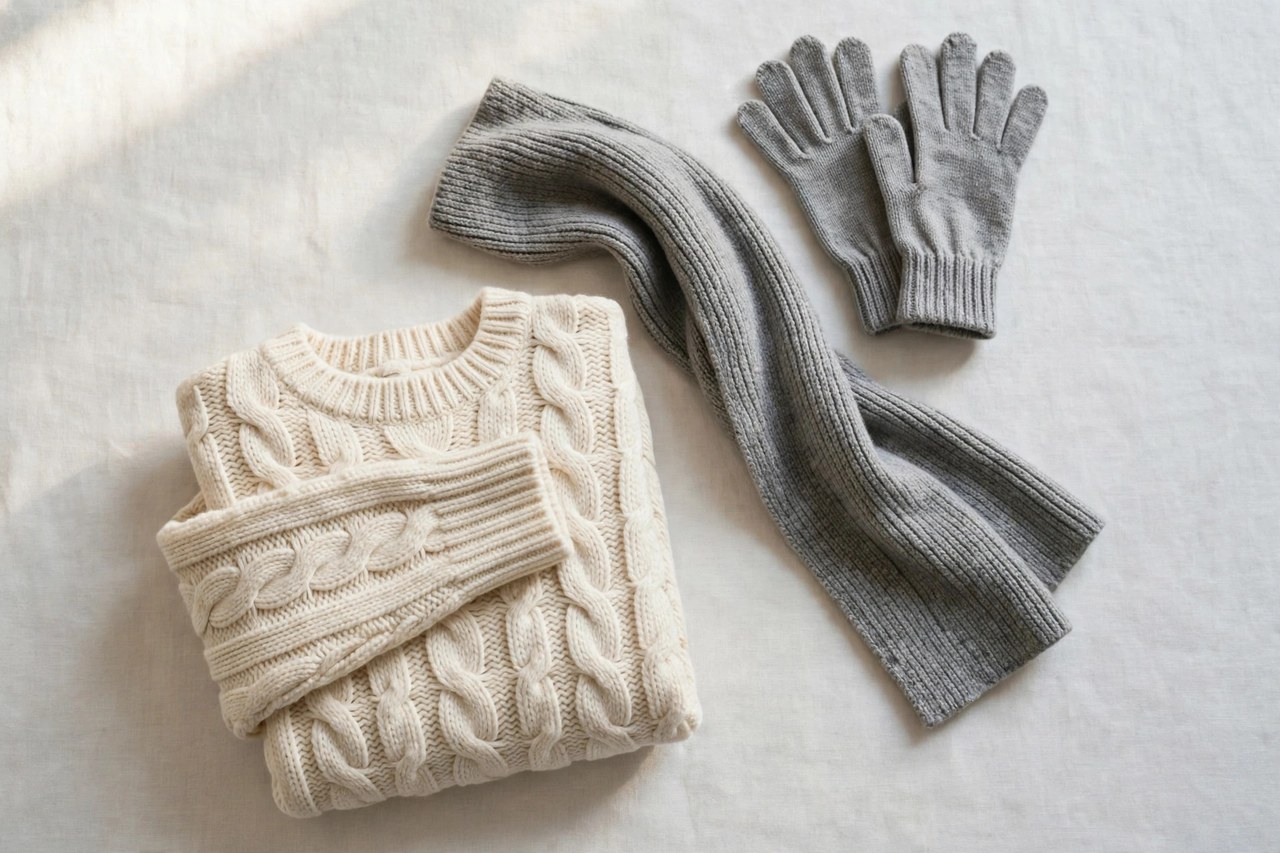
Men's knitwear is clothing and fashion accessories made of knitted fabrics - the umbrella category of this letter, covering the sweaters, knit shirts, knit pants, hats and more that the rest of the K guides take one by one. Knitted fabric is a textile that results from knitting; its properties are distinct from woven fabric in that it is more flexible and can be more readily constructed into smaller pieces, making it ideal for socks and hats - and, scaled up, for nearly everything a man wears when comfort is the brief. This guide is built around the questions buyers actually ask: which style, which size, which fabric, and what will it look like after a year of real use - answered in order, with the trade-offs stated plainly.
The Loop: Weft, Warp, Fashioned and Cut-and-Sew
Knitwear begins with a loop. Knitting manipulates yarn into interlocking loops - by hand or by machine - and the two great families divide by how the loops are fed: weft knitting builds across the yarn, row by row, and produces the jerseys, ribs and sweater bodies of this guide; warp knitting feeds many yarns lengthwise at once and produces stable, run-resistant cloth for sportswear and trims. Every virtue and vice of the category follows from the loop: knits stretch and recover because loops flex; they insulate because loops trap air; they drape softly because nothing in the structure is rigid; and they can snag, pill and bag because a loop pulled is a loop displaced. Garments are made two ways - fully fashioned, where each piece is knitted to shape and linked at the seams, and cut-and-sew, where knitted cloth is cut like woven fabric and seamed - and the first is the mark of the better sweater, hat or glove. Around those facts the wardrobe arranges itself: sweaters and cardigans, knit shirts and polos, knit trousers, hats, scarves, gloves and socks, each covered in its own guide in this letter and each obeying the same loop logic at a different weight and gauge.
Judge knitwear by gauge, ply and finishing rather than by softness in the shop, because every knit feels kind on day one. Gauge counts stitches per inch - finer gauges drape and layer, coarser gauges insulate and read casual. Ply counts the strands twisted into the yarn: more plies mean more warmth, roundness and price. Fully-fashioned shaping, knitted in rather than cut and sewn, marks better garments, and linked seams at the shoulders and neck lie flatter and last longer than overlocked ones.
For the full technical treatment of the loop — weft and warp knitting compared, the stitch structures, machine gauge, intarsia and jacquard colorwork, and the fully-fashioned, cut-and-sew and whole-garment methods step by step — see the Knitwear Construction Guide, Apparel Search’s series on how knitted fabric and sweaters are made.
Fit Across the Knitwear Family
Fit in knitwear is a negotiation with stretch, and the rules rhyme across every garment in the family. Knits should skim, not cling: the loop structure shows every contour it is stretched over, so ease is what keeps a knit looking like clothing rather than casing. Shoulders and necklines carry the landmarks - shoulder seams belong at the shoulder bone, necklines flat at the base of the neck - because those are the points a knit cannot be altered away from. Everything knitted relaxes: with body heat across a day, with gravity across a season on a hanger, and with washing across its life, so the right new fit across the whole category is slightly firm rather than exactly right, and ribbed edges - cuffs, hems, collars, waistbands - should spring back smartly when stretched, because their recovery is the garment's memory. Size from measurements, as with woven clothing, but add the knit's own test: wear it ten minutes, move in it, sit in it, and judge the fit it settles into, not the fit it was pulled into. A knit that needs constant adjustment in the shop will need it forever.
Fit knitwear by the body, not the shoulders alone: a sweater should skim rather than cling, with ease for a shirt beneath at the chest, sleeves ending at the wrist bone, and body length covering the waistband without pooling. Knits relax with wear - a slightly firm new fit is often the right long-term fit - but ribbed cuffs and hems should recover when stretched, and a neckline should sit flat against the base of the neck, neither gaping nor strangling.
One Care System for the Whole Family
One care system serves the whole family, with gentleness as its first principle. Wash knits cool, on gentle or wool cycles with suitable detergent, inside out where there are prints or dark dyes; lift water by rolling in a towel rather than wringing; and dry flat or low, reshaped to size, because a damp knit dries in whatever shape it is left in. Fold knitwear for storage - hangers are a slow stretch applied to shoulders - and rest garments a day between wears so the loops recover their loft. Keep wool and cashmere pieces with cedar or lavender against moths, depill soft yarns with a comb as pills appear, and mend a snagged loop by drawing it to the inside before it runs. Heat is the family's common enemy, tiring elastane, felting wool and setting twist into jersey; cool water and patience are its common friends. Master those few habits and knitwear - the most comfortable category in the wardrobe - also becomes one of the longest-lived, which is why its guides fill more of this letter than any other subject.
Knitwear care is gentle by default: wash cool by hand or on a wool cycle with knitwear detergent, never wring, roll in a towel to lift water, and dry flat on a mesh or towel, reshaped to its measurements. Fold for storage - hangers stretch shoulders into points - with cedar or lavender against moths, and rest a sweater a day between wears so its fibers recover their loft. Depill with a comb or electric shaver; pilling is loose fiber migrating, not the garment failing.
Common Questions
What is knitwear, and what counts as part of it?
Knitwear is clothing or fashion accessories made of knitted fabrics - the umbrella for most of this letter. If the garment's cloth was built by interlocking loops of yarn rather than by weaving threads over and under, it is knitwear: sweaters and cardigans, t-shirts and polo shirts, knit trousers and lounge pants, hats, scarves, gloves and socks. The loop structure is what unites them - it gives every one of them their shared stretch, softness, warmth and drape, and their shared care rules of cool washing, flat drying and folded storage.
What is the difference between knitted and woven fabric?
Loops versus crossings. Knitted fabric results from knitting - yarn manipulated into interlocking loops - and its properties are distinct from woven fabric in that it is more flexible and can be more readily constructed into smaller pieces, making it ideal for socks and hats. Woven fabric interlaces warp and weft threads at right angles; it is more stable, holds a crease and a tailored shape, and stretches only on the bias or with added elastane. Knits move with the body and resist wrinkling; wovens hold a line and a press. A complete wardrobe is built from both, each doing the work its structure suits.
What does fully fashioned mean in knitwear?
It means the garment's pieces were knitted to their final shape on the machine - widened and narrowed by adding or dropping stitches - and then linked together loop by loop at the seams, rather than being cut from a length of knitted cloth and sewn. Fully-fashioned construction wastes almost no yarn, lies flatter at the shoulders and neck, and holds its shape better across years, because the shaping is in the structure instead of being forced by seams. It costs more for the same reason tailoring costs more: more machine time and more skill per garment. Look for it - and for linked rather than serged seams - on any sweater you expect to keep.
More in Men's Clothes Guide K
What Knitwear Is
Knitted fabric is a textile that results from knitting; its properties are distinct from woven fabric in that it is more flexible and can be more readily constructed into smaller pieces, making it ideal for socks and hats. Knitwear is clothing or fashion accessories made of knitted fabrics. The trade side of the category — the men’s knitwear wholesalers directory and the knitwear manufacturers listings — is linked below, alongside the five knit garment guides of this letter.
Looking for Men's Clothing Stores?
This guide explains men's knitwear. To browse where to buy, visit our men's clothing store directory, where you can find retailers that carry them.