Men's Knit Lounge Pants Guide
Men's knit lounge pants are trousers for relaxing in: pants - an item of clothing worn from the waist to the ankles, covering both legs separately - cut generously and sewn from knitted fabric, whose interlocked loops make it more flexible than woven cloth. Lounge pants are generally worn in casual situations for lounging; they are often thought of as pajama bottoms or sleep pants, but technically sleepwear and loungewear are different - even though they can be made in exactly the same way.
Shop Men's Knit Lounge Pants Now
Shop Men's Knit Lounge Pants on Amazon Shop Men's Knit Lounge Pants on eBayThe Amazon and eBay links on this page are affiliate links. If you make a purchase through them, Apparel Search may earn a commission.
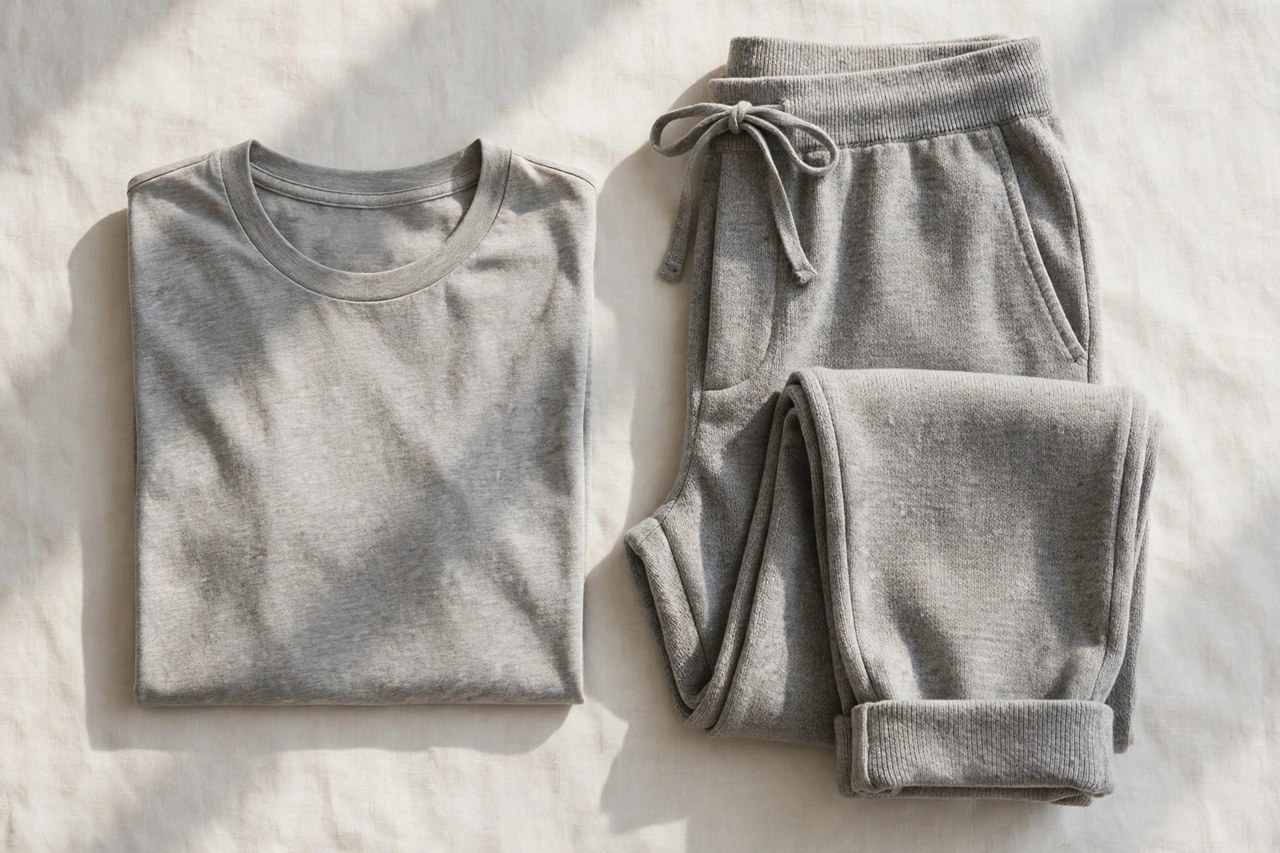
Men's knit lounge pants are trousers for relaxing in: pants - an item of clothing worn from the waist to the ankles, covering both legs separately - cut generously and sewn from knitted fabric, whose interlocked loops make it more flexible than woven cloth. Lounge pants are generally worn in casual situations for lounging; they are often thought of as pajama bottoms or sleep pants, but technically sleepwear and loungewear are different - even though they can be made in exactly the same way. This guide covers the styles worth knowing, the fit points that decide comfort, the fabrics and construction that separate a good buy from a regret, and the simple care that makes the garment last.
Jersey, Terry, Fleece and the Waistband Test
The knit decides everything about a lounge pant, because there is no tailoring to hide behind. Jersey - the same single-knit as a t-shirt - drapes light and cool for summer evenings and warm houses; French terry adds a looped back that absorbs and insulates a step further; fleece-backed knits and double-knits carry winter. Cotton jersey breathes and washes without ceremony but can bag at the knees by the third evening; cotton blended with polyester holds its shape and its color; a touch of elastane - two to five percent - buys recovery, so the seat and knees return instead of remembering. Construction checkpoints are few and decisive: an elastic waist with a working drawstring (elastic alone migrates; a drawstring alone ties in knots in the wash - together they behave), flatlock or covered seams that will not print into your thigh on the sofa, pockets deep enough to hold a phone without launching it when you sit, and a leg finish that suits the house - open hems read as pajama-adjacent, while ribbed jogger cuffs keep the ankle tidy and stay out from underfoot on stairs. Weight is the quiet specification: the right lounge pant disappears, and any pair you keep noticing is the wrong pair.
Judge knitwear by gauge, ply and finishing rather than by softness in the shop, because every knit feels kind on day one. Gauge counts stitches per inch - finer gauges drape and layer, coarser gauges insulate and read casual. Ply counts the strands twisted into the yarn: more plies mean more warmth, roundness and price. Fully-fashioned shaping, knitted in rather than cut and sewn, marks better garments, and linked seams at the shoulders and neck lie flatter and last longer than overlocked ones.
Fit: Ease With Boundaries
Fit in this category means ease with boundaries. The waist should hold on the drawstring with the elastic merely assisting, sitting at your natural trouser height rather than slung low - lounge pants that need hitching read as slept-in even when fresh. Through the seat and thigh, allow a full, relaxed hand of ease: you are fitting for cross-legged sofas, floor cushions and the deep armchair, and a lounge pant that fits like a trouser has missed its brief entirely. Length is the one place to be strict - an open hem should just clear the floor in bare feet, because dragging hems fray, soil and trip on stairs, while a cuffed jogger leg should land at the ankle bone. Inseams in this category shrink and relax in opposite directions: cotton knits give back a little length in wear and take it in the wash, so judge the length after the first laundering, not off the rail. If you run warm, size the fabric before the fit - a lighter jersey in a generous cut sleeps cooler than any slim cut in fleece.
Fit knitwear by the body, not the shoulders alone: a sweater should skim rather than cling, with ease for a shirt beneath at the chest, sleeves ending at the wrist bone, and body length covering the waistband without pooling. Knits relax with wear - a slightly firm new fit is often the right long-term fit - but ribbed cuffs and hems should recover when stretched, and a neckline should sit flat against the base of the neck, neither gaping nor strangling.
Wearing and Care
Loungewear works hard at low intensity and dies by the laundry more than by wear. Wash cool with like colors - heather greys hide a multitude, dark knits fade at the folds if they are dried hot - and turn drawstring pairs inside out or tie the cord in a loose bow so it does not retreat into the waistband channel or tangle the load. Dry low or on the line; elastane tires early under high heat, and the waistband is where a lounge pant's fit actually lives. Because these pants are worn for long, close hours, wash them on a real rotation - two or three pairs cycling means each is washed when it should be, worn rested, and elastic that recovers between wears instead of stretching out by Friday. Mend a thinning seat or a loose cuff early; knits ladder from small holes if they are ignored. Stored folded - never hung, since a knit leg stretches under its own weight - a decent pair should give years of evenings.
Knitwear care is gentle by default: wash cool by hand or on a wool cycle with knitwear detergent, never wring, roll in a towel to lift water, and dry flat on a mesh or towel, reshaped to its measurements. Fold for storage - hangers stretch shoulders into points - with cedar or lavender against moths, and rest a sweater a day between wears so its fibers recover their loft. Depill with a comb or electric shaver; pilling is loose fiber migrating, not the garment failing.
Common Questions
What is the difference between lounge pants and pajama pants?
Less than the labels suggest: lounge pants are often thought of as pajama bottoms or sleep pants, but technically sleepwear and loungewear are different - although they can be made in exactly the same way. In practice, lounge pants are cut and finished for waking hours at home - better pockets, a drawstring waist that presents decently at the door, fabrics that read as clothing - while pajama bottoms optimize only for sleep. Either can do the other's job; buy by fabric weight, pocket honesty and waist construction rather than by which word is printed on the tag.
What is the best fabric for men's knit lounge pants?
For most men, cotton jersey or French terry with a small percentage of elastane. Cotton breathes, washes without ceremony and feels right against skin for long hours; French terry's looped back adds a step of warmth and absorbency for cooler houses; and two to five percent elastane gives the knees and seat their recovery, so the pants return to shape instead of bagging by the third evening. Pure cotton bags fastest, fleece-backed knits are winter-only for most sleepers, and modal blends are the soft upgrade if you run warm.
Why do lounge pants bag at the knees and seat?
Because knit loops stretch under load and only recover as far as the fiber allows. Cotton has modest natural recovery, so hours of sitting and kneeling pull the loops open and they stay - the bag is the fabric remembering your posture. Blends with polyester or a few percent of elastane recover far better, resting the pants a full day between wears lets the knit relax back, and washing cool resets some of the stretch. It is wear physics, not failure - but a pair that bags in the shop fitting room will only get worse.
More in Men's Clothes Guide K
Loungewear Is Not Quite Sleepwear
Knitted fabric is a textile that results from knitting; its properties are distinct from woven fabric in that it is more flexible, and it can be used to make many different types of clothing, including lounge bottoms. Pants are an item of clothing worn from the waist to the ankles, covering both legs separately. Lounge pants are generally worn in casual situations for lounging — relaxing. They are often thought of as pajama bottoms or sleep pants, but technically sleepwear and loungewear are different — although they can be made in the exact same way.
Looking for Men's Clothing Stores?
This guide explains men's knit lounge pants. To browse where to buy, visit our men's clothing store directory, where you can find retailers that carry them.