Men's Lounge Pants Guide
Lounge pants are the trousers of the house: soft, loose pants made for relaxing at home, extremely similar to pajama pants - but cut for waking hours. Loungewear is casual, comfortable clothing suitable for wearing at home, and the lounge pant is its anchor garment: the pair you change into when the day's trousers come off, and, the bottom half of the classic home uniform of lounge pant and t-shirt.
Shop Men's Lounge Pants Now
Shop Men's Lounge Pants on Amazon Shop Men's Lounge Pants on eBayThe Amazon and eBay links on this page are affiliate links. If you make a purchase through them, Apparel Search may earn a commission.
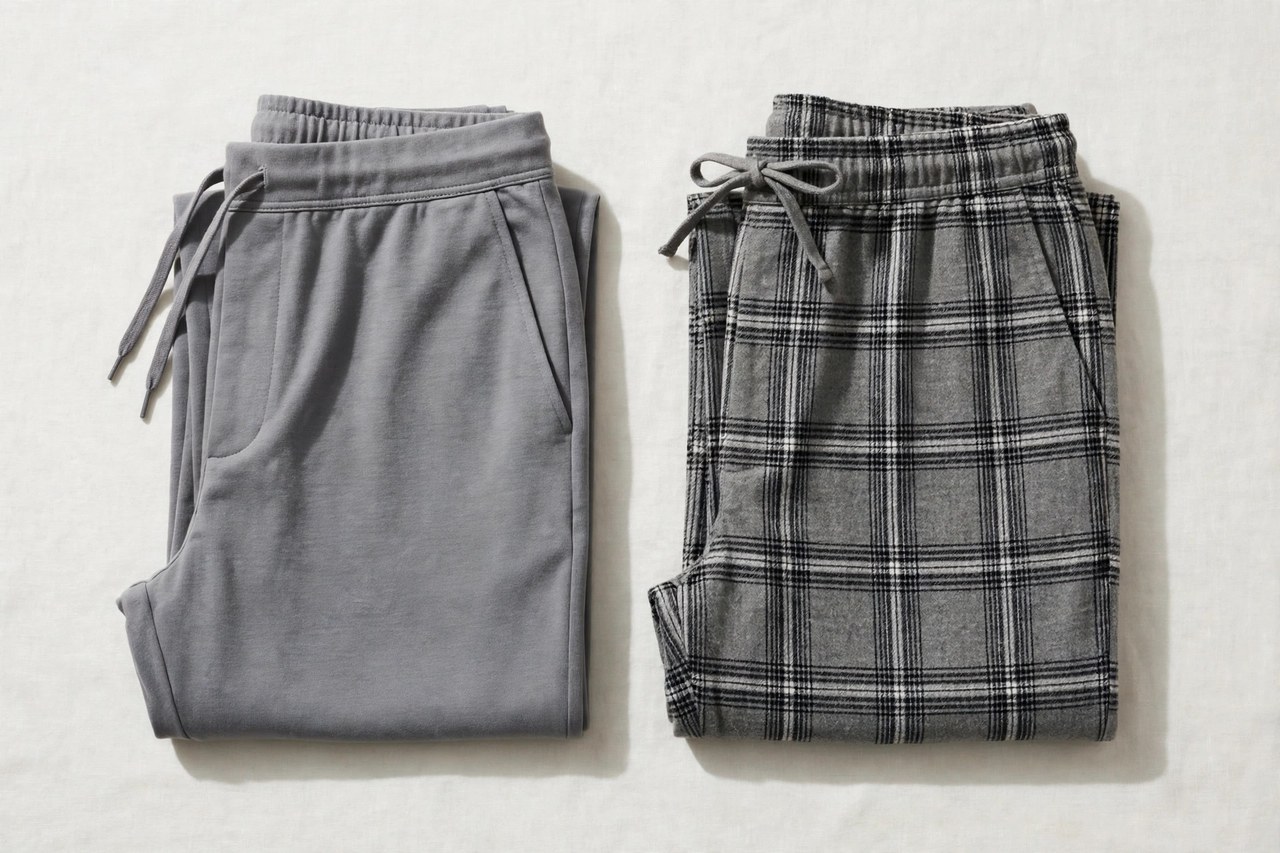
Lounge pants are the trousers of the house: soft, loose pants made for relaxing at home, extremely similar to pajama pants - but cut for waking hours. Loungewear is casual, comfortable clothing suitable for wearing at home, and the lounge pant is its anchor garment: the pair you change into when the day's trousers come off, and, the bottom half of the classic home uniform of lounge pant and t-shirt. This guide is built around the questions buyers actually ask: which style, which size, which fabric, and what will it look like after a year of real use - answered in order, with the trade-offs stated plainly.
Knit Versus Woven at Home
Construction divides by cloth. Knit lounge pants in cotton jersey, French terry or fleece move and drape like athletic wear, keep a drawstring-and-elastic waist, and suit year-round indoor wear; for a little stretch, the advice is direct - choose knit rather than woven fabric. Woven versions in flannel, poplin or brushed cotton read closer to pajama pants, cooler in summer weights and warmer in brushed winter flannels, with plaid and check patterns that belong to the style. Details decide daily satisfaction: a drawstring that actually draws (some are decorative over elastic alone), pockets deep enough for a phone - pockets are where home pants earn their rating - a gusset or a relaxed seat for the sofa's full range of postures, and hems that end at the ankle rather than pooling, because a dragging hem on stairs is a hazard, not a comfort. Cuffed jogger-style hems solve the length problem for most heights at a stroke.
For any leg garment the rise is the first specification, because it decides sitting comfort before fabric gets a vote: measure from front waistband through to back and compare it with a pair that already works. Then audit the stress points - bar-tacked belt loops and pocket corners, double-stitched inseams, hems finished evenly - and the pocketing, which should be deep, smooth and strong enough to carry what the garment's pockets invite you to carry.
Comfort Fit With Two Limits
Fit for comfort, with two limits. The waist should hold on the elastic with the drawstring as adjustment, not as structure - tie it once and forget it - and the rise should be generous enough to sit cross-legged, kneel and sprawl without the waistband migrating. Through the leg, loose is the point, but volume has a ceiling: enough cloth to move, not so much that the pants twist around the legs in a chair or catch underfoot. Length is the safety fit, as above: ankle-clearing in the shoes or slippers you wear at home. If you will answer the door, take the mail or walk the dog in them - the modern reality of the garment - a knit pair in a solid dark color with real pockets crosses that line gracefully, which is a legitimate buying criterion and not a confession.
Measure where the waistband will actually sit, plus inseam to your preferred break, and thigh and seat for closer cuts. Then sit, squat and climb a step in the fitting room - a leg garment that only works standing still does not work. Waistbands relax roughly half an inch in wear and inseams shrink most in early washes, so buy the fit you want after those changes rather than the fit in the mirror.
Built for the Laundry
Lounge pants are washed as often as they are worn, so buy for the laundry: cotton knits and flannels that tolerate warm washing and low drying without shrinking out of their length - check the first wash in cold if the label warns, since lounge pants are often cut generously in anticipation of exactly that shrinkage. Elastic and drawstrings are the wear parts: dry them on low heat, which is what tires elastic, and the waist will outlast the cloth. Keep two or three pairs in rotation - the home wardrobe obeys the same rest-and-rotate arithmetic as shoes - and demote by stages, from door-answering pairs to paint-and-garden pairs. When the knees bag permanently and the elastic sighs, the pair has served; the category is inexpensive, high-use and honest about its lifespan.
Wash leg garments inside out and cool; heat is the agent that fades dye, tires elastic and shortens inseams. Dry low or on the line, hang or fold promptly, and crease deliberately or not at all. Walk the stress points each season - hem edges, pocket corners, seat and inner thigh - and mend the small fray while it is still small: leg garments fail gradually, then suddenly, and the two-minute October repair prevents the November replacement.
Common Questions
What is the difference between lounge pants and pajama pants?
Intended hour. Pajama pants are sleepwear, made to be slept in; lounge pants are cut and styled for waking hours at home - relaxing, working, receiving the door - though the two are extremely similar, and many men opt to sleep or lounge in the pajama-style pant alone. In practice lounge pants add the waking details: real pockets, a drawstring waist, fabrics and patterns presentable beyond the bedroom, and in silk versions, covered in this letter's wider family, a more luxurious cloth entirely.
Should lounge pants be knit or woven?
Knit if you want stretch and drape, woven if you want crispness and coolness. The suggestion stands: if you are looking for a little stretch, choose knit rather than woven fabric - jersey, French terry and fleece knits move with the sofa's postures and forgive sizing. Woven flannel and poplin breathe better, hold a pajama-style pattern crisply, and wear cooler in summer, at the cost of zero give at the knee and seat.
How long should lounge pants be?
To the ankle, and no further. Lounge pants are worn on stairs, around kitchens and in slippers, often while carrying things - a hem that pools underfoot is a trip hazard wearing the costume of comfort. Cuffed jogger hems solve the problem by gathering at the ankle in any size; straight hems should be bought or hemmed to clear the floor in your house shoes, and re-checked after the first wash, when cotton lounge pants give up most of their shrinkage.
More in Men's Clothes Guide L
Lounge Pants and Their Pajama Cousins
Loungewear is casual, comfortable clothing suitable for wearing at home. Lounge pants are extremely similar to pajama pants — pajamas, often shortened to PJs, jimmies, jimjams or jammies, are loose-fitting garments worn chiefly for sleeping but sometimes also for lounging, and many people opt to sleep or lounge in just the pajama pants. While relaxing, men often wear a lounge pant and t-shirt. A pant is an item of clothing worn from the waist to the ankles, covering both legs separately; lounge pants are typically made of soft, comfortable fabrics, in knit or woven construction and from a variety of textile fiber options, with cotton a popular option — and if you are looking for a little stretch, choose “knit” rather than woven fabric. The loungewear guide beside this page, the silk lounge pants guide, and our fashion products section’s lounge pants page are linked below.
Looking for Men's Clothing Stores?
This guide explains men's lounge pants. To browse where to buy, visit our men's clothing store directory, where you can find retailers that carry them.