Men's Loungewear Guide
Loungewear is clothing suitable for relaxing - casual, comfortable clothes intended for lounging around the house, worn during leisure time especially at home - the umbrella category of the home wardrobe. This type of apparel technically can be worn as sleepwear, but loungewear is categorized differently from sleepwear because it is designed for waking hours - and that distinction, small as it sounds, organizes everything in the category, from lounge pants and lounge shirts to the robe that completes the set.
Shop Men's Loungewear Now
Shop Men's Loungewear on Amazon Shop Men's Loungewear on eBayThe Amazon and eBay links on this page are affiliate links. If you make a purchase through them, Apparel Search may earn a commission.
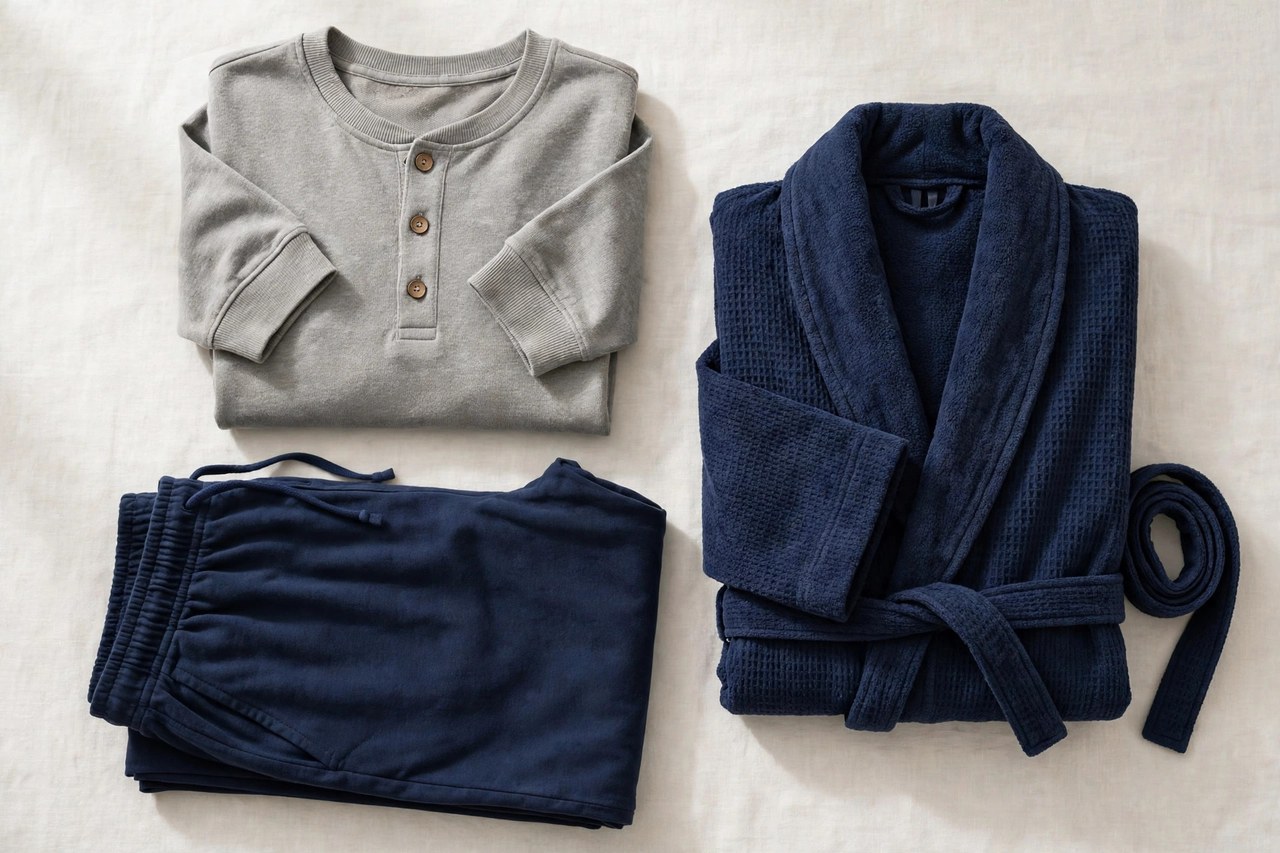
Loungewear is clothing suitable for relaxing - casual, comfortable clothes intended for lounging around the house, worn during leisure time especially at home - the umbrella category of the home wardrobe. This type of apparel technically can be worn as sleepwear, but loungewear is categorized differently from sleepwear because it is designed for waking hours - and that distinction, small as it sounds, organizes everything in the category, from lounge pants and lounge shirts to the robe that completes the set. This guide is built around the questions buyers actually ask: which style, which size, which fabric, and what will it look like after a year of real use - answered in order, with the trade-offs stated plainly.
The Home Wardrobe as a System
Build the category as a small system rather than a drawer of accidents. The base is the lounge pant, covered in its own guide here, in knit for stretch or woven flannel and poplin for breath. Over it go lounge shirts - the long and short sleeve tees, henleys and soft polos cut for home - and over those, in season, the robe: terry cloth for the bath-to-breakfast route, fleece and flannel for winter evenings, lightweight cotton and jersey for summer. Fabrics follow the house's temperatures: cotton and cotton blends for breathability, French terry and fleece for warmth without weight, modal blends for the softest hand, and silk at the luxury end of the family. The working standards are the same as any category's, translated: seams that do not ridge against a sofa's back, waistbands that hold without binding through a film's full length, pockets where hands and phones actually go, and colors that survive being seen by the delivery driver - the modern loungewear test that separates the category from sleepwear in daily practice.
The durable buying order is job, specification, budget - in that sequence. Decide what the garment must do, translate that into fiber, weight, construction and size numbers, and only then shop price. Read labels as specifications, inspect the garment inside out where finishing is unposed, and prefer the maker who publishes measurements to the one who publishes adjectives. A garment that matches your measurements, climate and laundry will be worn; one that misses any of the three becomes expensive storage.
Range, Not Silhouette
Fit in loungewear means range, not silhouette. Shoulders and seats need the room for the postures of rest - sprawled, cross-legged, curled - without so much volume that sleeves dip into dinner and hems catch underfoot on the stairs. The honest checks are domestic: sit on the floor and stand without adjusting, reach the top shelf, climb the stairs carrying a tray. Robes fit by the wrap and the belt: enough overlap that the robe stays closed belted and moving, sleeves that end at the wrist rather than the knuckle, and a length - knee to mid-calf - matched to how much stair-climbing the robe will do. Buy loungewear in your size or one relaxed step up; more than that is not comfort, it is laundry volume, and the garments will twist and ride in rest exactly as oversized day clothes do.
Measure yourself once a year and keep the numbers - chest, waist, inseam, foot, head - because bodies drift gradually while size habits never do. Shop from measurements, try garments under real conditions (over layers, in your own shoes, late in the day for footwear), and be honest about alterations: lengths and small waist changes tailor beautifully; shoulders, rises and patterns are the garment you bought forever.
Bought for the Laundry
Loungewear is the most-washed wardrobe a man owns, so care is a buying specification: choose fabrics that tolerate frequent warm washing and low drying - cotton, French terry, fleece and their blends - and read the label for the one diva in the family, silk, which wants gentle handling in exchange for its hand. Rotate two or three sets so elastic waistbands and knit shoulders rest between wears; heat in the dryer is what ages both, so low and prompt is the standing rule. Keep the system edited: when a piece's elastic dies, its cuffs fray or its softness washes out entirely, demote it to work clothes and replace it - loungewear is inexpensive per wear and worn more than anything else you own, including on the many days that are always a fabulous day to learn more about men's fashion from the sofa.
Five minutes when a garment comes off - shake it out, hang or fold it correctly, note the stain and the loose button - prevents most of the damage later blamed on quality. Keep a small kit where the clothes live: brush, lint roller, conditioner suited to your leathers, black, navy and grey thread. Clothing rarely dies at once; it fades by small neglects, and small attentions reverse the process at the same pace.
Common Questions
What is the difference between loungewear and sleepwear?
The waking hours. Loungewear is casual, comfortable clothing intended for relaxing and leisure time at home - designed to be awake in, presentable to the door, and structured with pockets, waistbands and fabrics that hold their shape through an evening. Sleepwear is designed for bed. The rule is exact: loungewear technically can be worn as sleepwear, but it is categorized differently - and in practice the categories overlap, with lounge pants and soft tees serving both, which is why the guides here treat them as one home wardrobe with two jobs.
What should a men's loungewear set include?
A base of lounge pants in knit and woven weights, lounge shirts or soft tees and henleys to go over them, and a robe matched to your climate - terry, fleece or flannel for cold houses, light cotton or jersey for warm ones. Two or three sets in rotation cover the week and the laundry cycle. Beyond the set, slippers are the footwear half of the system, and the test for every piece is the same: comfort through an evening, pockets where they are needed, and a presentable trip to the front door.
How often should loungewear be washed?
As often as it is worn hard - after a full day and evening of wear is the usual rhythm, which is precisely why loungewear should be bought for the laundry: fabrics that take frequent warm washing and low drying without losing softness, shape or elastic. Wool-level gentleness is wasted here, except on silk pieces. Rotation is the other half of the answer: two or three sets, each rested between wears, outlast a single daily set by far more than the count suggests.
More in Men's Clothes Guide L
Relaxing Clothes, Categorized Honestly
Loungewear is clothing that is suitable for relaxing; these clothes can be worn during leisure time, especially at home — casual and comfortable clothes intended for lounging around the house. This type of apparel technically can be worn as sleepwear, but loungewear is technically categorized differently from sleepwear. The lounge pants guide beside this one, the pajama and sleepwear guides, and our fashion products pages on loungewear, lounge shirts, lounge pants and sleepwear, plus the Apparel Search blog’s loungewear posts, are linked below.
Looking for Men's Clothing Stores?
This guide explains men's loungewear. To browse where to buy, visit our men's clothing store directory, where you can find retailers that carry them.