Men's Long Underwear Guide
Long underwear - also called long johns or thermal underwear - is a style of two-piece underwear with long legs and long sleeves, normally worn during cold weather - the base layer that makes winter clothing work. Undergarments are worn beneath outer clothes, usually in direct contact with the skin, and this is the most functional of them - a product judged purely on warmth, moisture handling and comfort under layers, in strictly practical terms.
Shop Men's Long Underwear Now
Shop Men's Long Underwear on Amazon Shop Men's Long Underwear on eBayThe Amazon and eBay links on this page are affiliate links. If you make a purchase through them, Apparel Search may earn a commission.
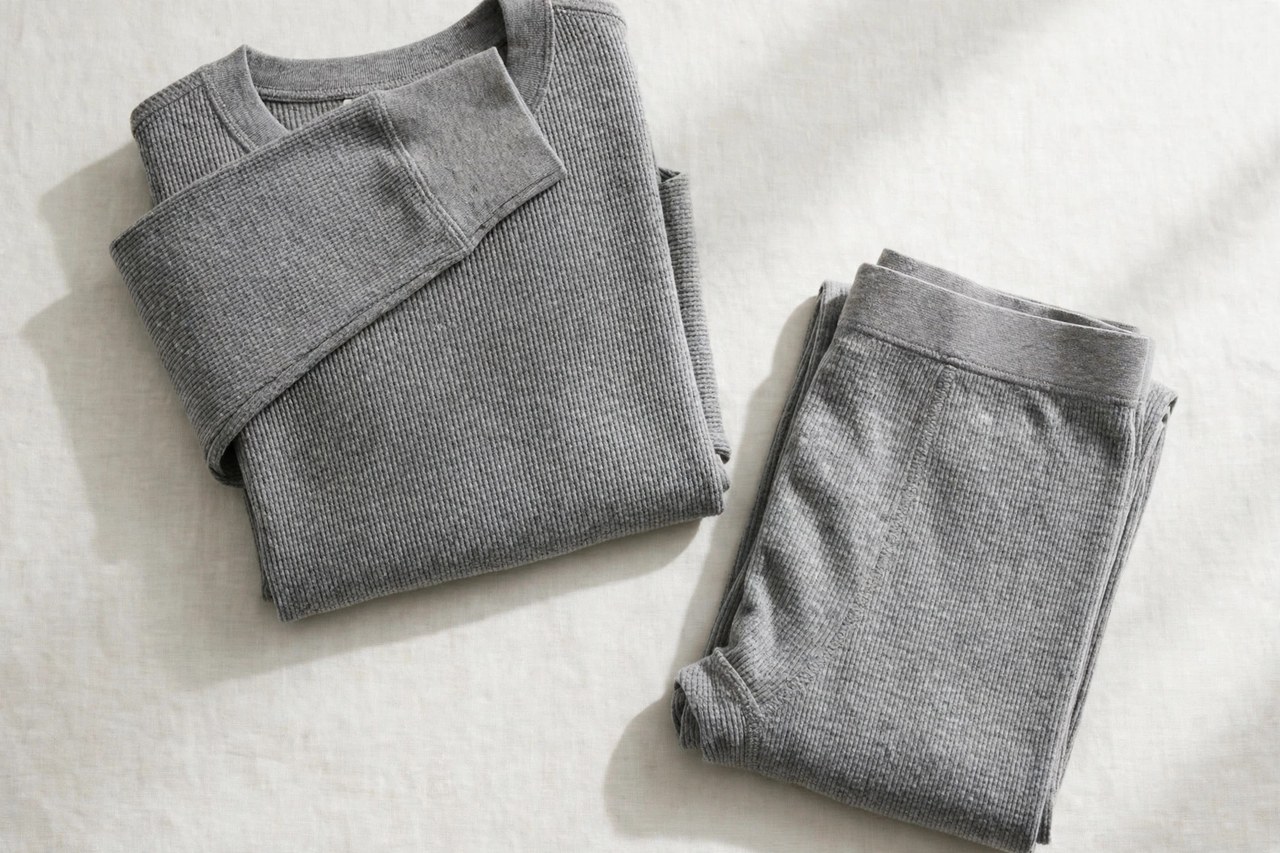
Long underwear - also called long johns or thermal underwear - is a style of two-piece underwear with long legs and long sleeves, normally worn during cold weather - the base layer that makes winter clothing work. Undergarments are worn beneath outer clothes, usually in direct contact with the skin, and this is the most functional of them - a product judged purely on warmth, moisture handling and comfort under layers, in strictly practical terms. This guide covers the styles worth knowing, the fit points that decide comfort, the fabrics and construction that separate a good buy from a regret, and the simple care that makes the garment last.
Cotton, Synthetic, Merino: The Fabric Decision
Fabric is the performance. In the United States, long underwear is usually made from cotton or a cotton-polyester blend with a box-weave texture, and some varieties come in flannel - the classic union suit fabric - while many newer varieties are made from polyester. European manufacturers use wool blends or even 100 percent wool, usually Merino: wool is naturally fire retardant, provides highly effective insulation, and keeps its insulating properties even when wet, as cotton does not. That single contrast decides most purchases. Cotton is comfortable and cheap for mild cold and indoor-outdoor days, but it absorbs sweat and turns cold against the skin under exertion. Synthetics move moisture off the skin and dry fast, at some cost in odor retention. Merino wool regulates temperature across the widest range, resists odor for days, and insulates when damp - the outdoors standard, priced like it. Weights run light, mid and expedition; match the weight to the activity, because a base layer too warm is as miserable as one too thin, and silkweight layers serve under dress clothes where bulk cannot show.
The durable buying order is job, specification, budget - in that sequence. Decide what the garment must do, translate that into fiber, weight, construction and size numbers, and only then shop price. Read labels as specifications, inspect the garment inside out where finishing is unposed, and prefer the maker who publishes measurements to the one who publishes adjectives. A garment that matches your measurements, climate and laundry will be worn; one that misses any of the three becomes expensive storage.
Contact Fit and the Union Suit Alternative
Base layers fit by contact: the fabric must touch the skin over as much area as possible, because insulation and moisture movement both fail across air gaps. Buy your normal size in a cut described as fitted or athletic - snug through the torso and legs without compression, sleeves to the wrist, legs to the ankle, and a top long enough to stay tucked into the bottoms when you bend, since the gap at the small of the back is where cold enters a two-piece set. Flatlock or offset seams matter here more than in any other garment: a seam ridge under a boot top, a backpack strap or a seatbelt presses for hours, so check that seams sit away from those points. The one-piece alternative is the union suit, covered in this guide's history - created in Utica, New York, patented in 1868 as 'emancipation union under flannel', traditionally red flannel with a buttoned front and a button-up rear flap - which some cold-weather workers still prefer because it can never separate at the waist.
Measure yourself once a year and keep the numbers - chest, waist, inseam, foot, head - because bodies drift gradually while size habits never do. Shop from measurements, try garments under real conditions (over layers, in your own shoes, late in the day for footwear), and be honest about alterations: lengths and small waist changes tailor beautifully; shoulders, rises and patterns are the garment you bought forever.
Wash by Fiber, Store Clean
Wash base layers by their fiber. Merino wants cool, gentle washing and flat or line drying - heat and agitation felt it - and rewards the care by needing washing far less often than synthetics, since wool resists odor naturally. Synthetics wash cool and dry fast, but skip fabric softener, which coats the fibers and disables the moisture movement you paid for; a sport wash helps clear the odor synthetics retain. Cotton long underwear is the forgiving set - wash warm, dry low, expect gradual shrinkage in the first washes and buy length accordingly. Store all of it clean, since soiled fibers degrade in the drawer, and check elastic at cuffs and waistbands each season: a base layer whose cuffs have gone loose has lost the contact that makes it work, and demotion to sleepwear is its honest next job.
Five minutes when a garment comes off - shake it out, hang or fold it correctly, note the stain and the loose button - prevents most of the damage later blamed on quality. Keep a small kit where the clothes live: brush, lint roller, conditioner suited to your leathers, black, navy and grey thread. Clothing rarely dies at once; it fades by small neglects, and small attentions reverse the process at the same pace.
Common Questions
What is the best fabric for long underwear?
For active cold, Merino wool or a wool blend: European makers use wool blends or 100 percent wool, usually Merino, because wool insulates highly effectively and keeps insulating when wet, unlike cotton - and it resists odor for days. Synthetic polyester is the durable, fast-drying budget performer. Cotton and cotton-poly blends with a box-weave texture, the usual American construction, suit mild cold and low activity but chill when damp, and flannel belongs to the traditional union suit.
What is a union suit?
The one-piece form of long underwear. Created in Utica, New York, it originated as women's wear during 19th-century American clothing reform, as an alternative to constricting garments, and soon gained popularity among men; the first union suit was patented in 1868 as 'emancipation union under flannel'. Traditionally made of red flannel with long arms and legs, it buttoned up the front and carried a button-up flap in the rear - the 'access hatch' or 'drop seat' - and it survives today because a one-piece base layer can never gap at the waist.
How should long underwear fit?
In full contact with the skin, without compression. A base layer insulates and moves moisture only where it touches, so choose a fitted cut in your normal size: sleeves to the wrist, legs to the ankle, no bunching at the joints, and a top long enough to remain tucked when you bend. Seams should be flat and placed away from boot tops and straps. If it fits like a loose pajama, it will perform like one - warm on the couch, cold on the hill.
More in Men's Clothes Guide L
Long Johns, the Union Suit, and Wool That Works Wet
Undergarments are items of clothing worn beneath outer clothes, usually in direct contact with the skin, worn by people under their clothes in cold countries. Long underwear, also called long johns or thermal underwear, is a style of two-piece underwear with long legs and long sleeves that is normally worn during cold weather. In the United States it is usually made from a cotton or cotton-polyester-blend fabric with a box-weave texture, although some varieties are also made from flannel — particularly the union suit — while many newer varieties are made from polyester. A union suit is a type of one-piece long underwear, created in Utica, New York; it originated as women’s wear during the 19th-century United States clothing reform efforts, as an alternative to constricting garments, and soon gained popularity among men as well. The first union suit was patented in 1868 as “emancipation union under flannel”; traditionally made of red flannel with long arms and long legs, it buttoned up the front and had a button-up flap in the rear covering the buttocks — colloquially known as the “access hatch”, “drop seat” or “fireman’s flap” — allowing the wearer to use facilities without removing the garment. European manufacturers use wool blends or even 100 percent wool, usually Merino or other high-quality wool, sometimes with a thin layer of polyester to transport moisture away from the skin; wool, in addition to being fire retardant, provides highly effective insulation and keeps its insulating properties even when wet, as opposed to cotton. Long johns were first introduced into England in the 17th century, but did not become popular as sleepwear until the 18th century. The underwear and thermal underwear guides and the long underwear definition are linked below.
Looking for Men's Clothing Stores?
This guide explains men's long underwear. To browse where to buy, visit our men's clothing store directory, where you can find retailers that carry them.