Men's Long Sleeve T-Shirts Guide
A long sleeve t-shirt is the knit branch of the long-sleeve family: a jersey shirt with sleeves to the wrist, pulled over the head, without the collar, placket or cuffs of a woven shirt. A shirt is a cloth garment for the upper body, and a sleeve is the part of a garment that covers the arm. The long sleeve tee earns its own guide because it does two jobs no other top does as cheaply: it is a complete casual shirt on its own, and it is the layering piece that slips under shirts, sweaters and jackets all winter.
Shop Men's Long Sleeve T-Shirts Now
Shop Men's Long Sleeve T-Shirts on Amazon Shop Men's Long Sleeve T-Shirts on eBayThe Amazon and eBay links on this page are affiliate links. If you make a purchase through them, Apparel Search may earn a commission.
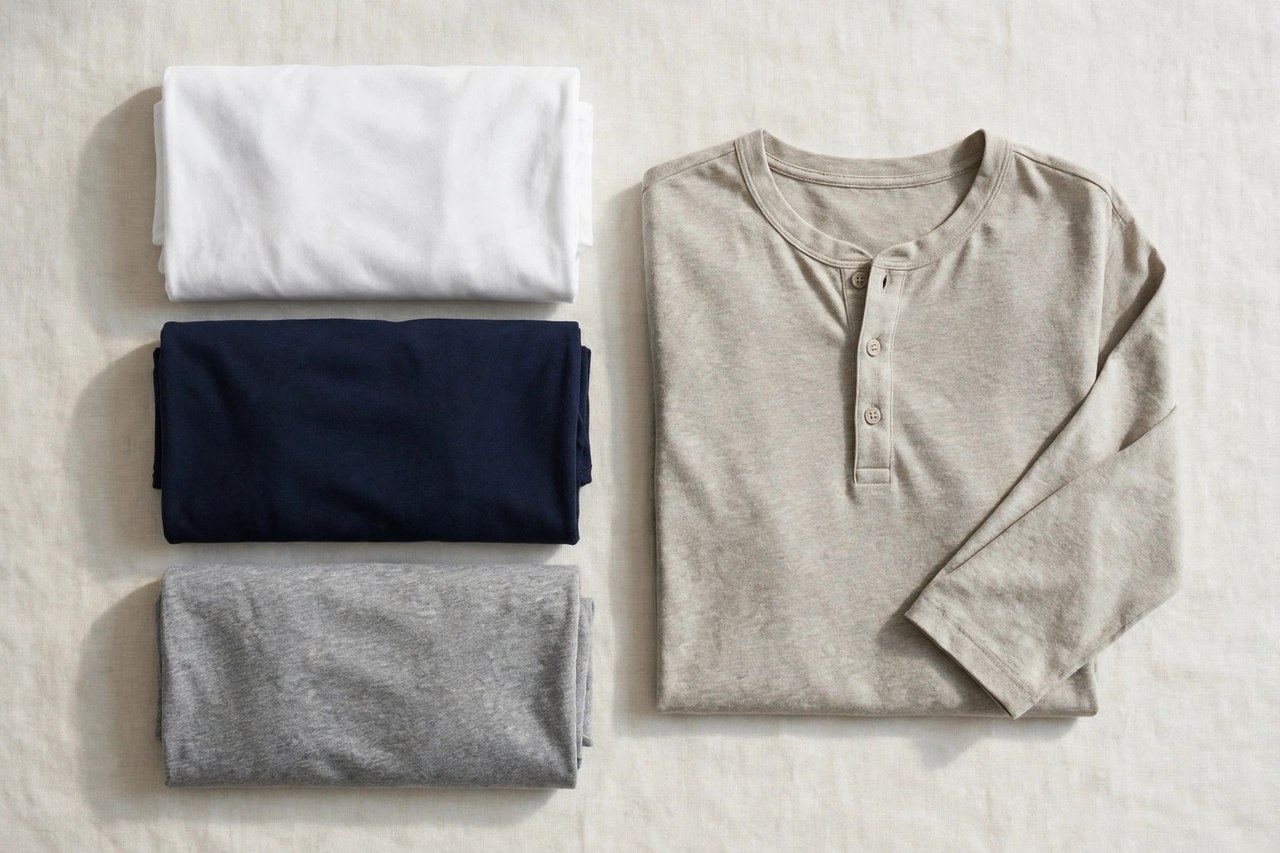
A long sleeve t-shirt is the knit branch of the long-sleeve family: a jersey shirt with sleeves to the wrist, pulled over the head, without the collar, placket or cuffs of a woven shirt. A shirt is a cloth garment for the upper body, and a sleeve is the part of a garment that covers the arm. The long sleeve tee earns its own guide because it does two jobs no other top does as cheaply: it is a complete casual shirt on its own, and it is the layering piece that slips under shirts, sweaters and jackets all winter. This guide covers the styles worth knowing, the fit points that decide comfort, the fabrics and construction that separate a good buy from a regret, and the simple care that makes the garment last.
Jersey Weights and Necklines
Fabric weight is the whole specification. Lightweight jersey tees are undershirt-adjacent - layering pieces that add warmth and a finished cuff at the wrist without bulk under a shirt or sweater. Midweight jersey stands alone as a casual shirt, holding its shape through the day; heavyweight and thermal-knit versions, including waffle knits, step toward sweatshirt territory. Neckline sorts the styles: the crew neck is the default, the henley adds its buttoned placket and a step of formality, the V-neck layers invisibly under open collars, and raglan sleeves - the baseball tee's diagonal seam - give the shoulder its easiest movement. Cotton jersey is the classic hand and breathes well but holds moisture; cotton-polyester and modal blends keep color and shape longer and dry faster; a touch of elastane in the ribbed cuffs helps them recover instead of bell-ing out by noon. Cuff and hem finishing separates the keepers: ribbed cuffs that grip the wrist, a hem that covers the waistband, side seams that stay at the sides - a tee whose seams spiral after washing was cut off-grain, and no care fixes it.
A top earns its keep in finishing: seams that hang straight and stay even at eight to twelve stitches per inch, collars and plackets that lie flat after washing, buttons sewn with thread shanks so they sit in their holes without pulling. Hold the cloth to the light - a tight, even weave or knit outwears a loose one at the same labeled weight, and pattern pieces cut on grain keep the garment from twisting around your body by the third wash.
Two Fits: Layering and Standalone
A long sleeve tee should fit closer than a woven shirt and cleaner than a sweatshirt: shoulders at the shoulder line, chest skimming without pulling across, sleeves reaching the wrist bone without bunching up the forearm, and a body that ends at mid-fly for untucked wear. The layering fit is slimmer than the standalone fit, which is why many men keep both - a tee that disappears under a sweater is a size trimmer than the one worn alone with jeans. Check the cuff in the shop: it should stay where you push it on the forearm, the classic three-quarter adjustment of this garment, and return to the wrist without hanging loose. Length in the sleeve matters as much as in the body; a long sleeve tee with short sleeves reads as a printing error, not a style.
Fit tops shoulders and chest first, because tailors cannot cheaply move either: the shoulder seam ends at the shoulder bone, the chest closes without pulling, and both arms raise without the hem escaping the waistband. Tucked lengths must stay tucked sitting; untucked lengths should end mid-fly. Sleeves are the cheap alteration, shoulders the permanent one - reject a wrong shoulder for any reason, forgive a long sleeve for many.
Cool Wash, Line Dry, Rotate Down
Knit care is gentle care: wash cool, inside out to protect prints and dark colors, with like fabrics - open zips and hooks from other garments chew jersey in the drum. Dry low or on the line; the dryer is where long sleeves shorten and cuffs tire, and a tee that fits perfectly deserves the extra hour on the rack. Fold or hang on a wide hanger - thin wire hangers point the shoulders of jersey - and rest prints face-in in the drawer. Treat underarm and collar soil promptly, and retire tees by stages: standalone to layering, layering to sleep and work wear. A good long sleeve tee is cheap enough to replace and useful enough that a drawer of sound ones, rotated, is one of the hardest-working systems in the wardrobe.
Launder tops by the label with three defaults: cool or warm water to protect color and trims, dark and printed pieces inside out, and low or line drying, which is the largest single lever on a shirt's lifespan. Fasten buttons and zips before washing to protect the whole load, treat stains before the dryer can set them, and store knits folded so their shoulders keep the shape they were knitted with.
Common Questions
What is a long sleeve t-shirt for?
Two jobs. Worn alone, it is a complete casual shirt with more coverage and polish than a short sleeve tee - the henley version especially bridges toward smart-casual. Worn under, it is the wardrobe's layering standard: warmth without bulk under woven shirts, a clean cuff at the wrist under sweaters, and a barrier that keeps outer layers cleaner longer. Choose the weight by the job - light jersey to layer, midweight and heavyweight knits to stand alone.
How should a long sleeve t-shirt fit?
Closer than a woven shirt, neater than a sweatshirt: shoulders on the shoulder line, chest skimming, sleeves ending at the wrist bone with ribbed cuffs that grip and recover - a good cuff stays pushed up on the forearm and returns to the wrist without sagging. Standalone tees can carry a little more ease; layering tees should fit a size trimmer so they disappear under a sweater or shirt without bunching at the arm.
Why do my t-shirts twist after washing?
The body tube was cut off-grain. Jersey is knitted in a spiral-prone structure, and garments cut carelessly - or from fabric that was not properly stabilized - relax after washing into the twist you see, with side seams migrating toward the front. It is a manufacturing fault, not a laundry fault, and it cannot be washed or ironed out. Better tees are cut on grain and keep their seams at the sides for life; check for straight seams when you buy.
More in Men's Clothes Guide L
Sleeves, Defined
A shirt is a cloth garment for the upper body. A sleeve is the part of a garment that covers the arm — and the long sleeve form, by the definition used across this letter, covers the entire length of the wearer’s arm, where a short-sleeved garment has sleeves that do not reach below the elbow. The men’s long sleeve shirts page beside this one, and the t-shirts, designer t-shirts, graphic t-shirts, novelty t-shirts and band t-shirts guides across the directory, are linked below.
Looking for Men's Clothing Stores?
This guide explains men's long sleeve t-shirts. To browse where to buy, visit our men's clothing store directory, where you can find retailers that carry them.