Men's Long Sleeve Shirts Guide
A long sleeve shirt is a cloth garment for the upper body whose sleeve covers the entire length of the wearer's arm - unlike the short sleeve shirt, which covers only a portion of the arm. That full sleeve is what makes the category the default of the shirt wardrobe: it is the version that works under a jacket, rolls to the elbow when the work warms up, takes a cufflink or a button cuff, and covers the ground from dress shirt to flannel work shirt without changing its basic pattern.
Shop Men's Long Sleeve Shirts Now
Shop Men's Long Sleeve Shirts on Amazon Shop Men's Long Sleeve Shirts on eBayThe Amazon and eBay links on this page are affiliate links. If you make a purchase through them, Apparel Search may earn a commission.
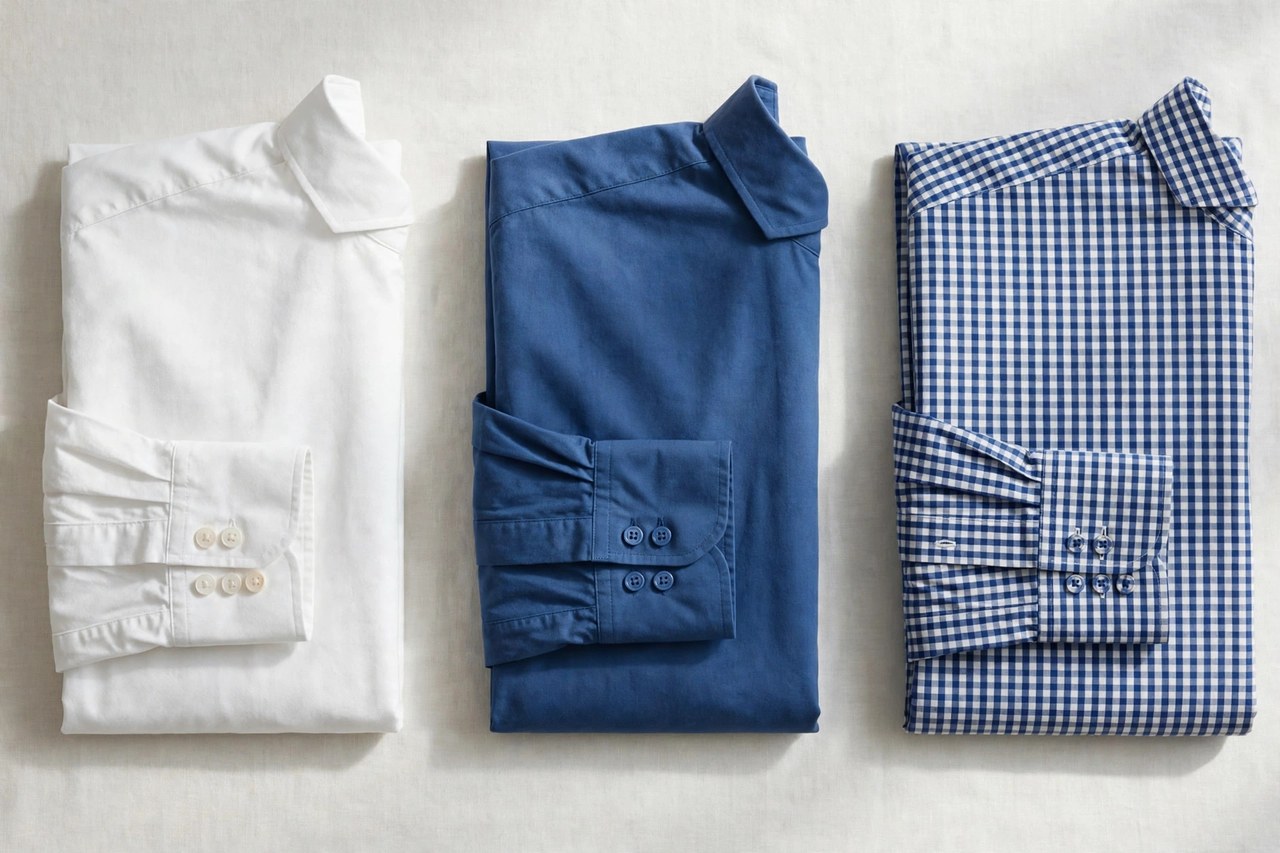
A long sleeve shirt is a cloth garment for the upper body whose sleeve covers the entire length of the wearer's arm - unlike the short sleeve shirt, which covers only a portion of the arm. That full sleeve is what makes the category the default of the shirt wardrobe: it is the version that works under a jacket, rolls to the elbow when the work warms up, takes a cufflink or a button cuff, and covers the ground from dress shirt to flannel work shirt without changing its basic pattern. This guide is built around the questions buyers actually ask: which style, which size, which fabric, and what will it look like after a year of real use - answered in order, with the trade-offs stated plainly.
Cloth and Collar Set the Job
Sort the category by cloth and collar, because those two choices set every shirt's job. Dress shirts in cotton poplin, twill or broadcloth carry spread, point or button-down collars and single or double (French) cuffs, and are cut to be tucked, with a hem that stays put. Oxford-cloth button-downs relax the same pattern into the sport-shirt role that anchors smart-casual wear. Flannel, chambray and denim shirts thicken the cloth for work and winter; linen and linen-cotton long sleeves keep the coverage while breathing through summer, accepting their wrinkles as the price. Sleeve construction is identical in logic across all of them: a sleeve placket with a button - the gauntlet button - that keeps the opening closed above the cuff, a cuff sized to sit at the wrist and show a sliver beyond a jacket sleeve, and a yoke across the shoulders, split and bias-cut in better shirts so the cloth moves with the shoulder blades. T-shirts can be long sleeved too - that knit branch of the family has its own guide beside this one.
A top earns its keep in finishing: seams that hang straight and stay even at eight to twelve stitches per inch, collars and plackets that lie flat after washing, buttons sewn with thread shanks so they sit in their holes without pulling. Hold the cloth to the light - a tight, even weave or knit outwears a loose one at the same labeled weight, and pattern pieces cut on grain keep the garment from twisting around your body by the third wash.
Sleeve Length Is the Defining Fit
Sleeve length is this category's defining fit, and it is measured, not assumed: the cuff should end at the wrist bone, covering the wrist with the arm bent, and show about half an inch beyond a jacket cuff - a sleeve that disappears into the jacket is too short, one that bunches at the hand too long. The rest follows the shirt rules: collar closing comfortably with two fingers' ease at the neck, shoulder seams at the shoulder bone, chest smooth without the buttons pulling, and a body long enough to stay tucked through a working day if the shirt is meant to tuck. Armholes cut higher and closer give the modern, mobile fit - the whole shirt lifts less when you raise your arms - while traditional cuts trade that neatness for ease. When your neck and sleeve numbers are known, buy by them: shirts are one of the few garments still sold by exact measurement, and the exactness is a gift to anyone whose arms are longer or shorter than the size chart's assumption.
Fit tops shoulders and chest first, because tailors cannot cheaply move either: the shoulder seam ends at the shoulder bone, the chest closes without pulling, and both arms raise without the hem escaping the waistband. Tucked lengths must stay tucked sitting; untucked lengths should end mid-fly. Sleeves are the cheap alteration, shoulders the permanent one - reject a wrong shoulder for any reason, forgive a long sleeve for many.
Cuffs and Collars: Where Shirts Age
Long sleeves double a shirt's care surface, so the details live at the cuff and collar: unbutton cuffs and collars before washing so they lie flat and clean evenly, treat collar and cuff soil - the first places a shirt shows its age - before the wash rather than after, and wash dress cotton cool to warm, removing shirts promptly to hang by the shoulders so most wrinkles fall out before the iron. The gauntlet and cuff buttons take the strain of rolling sleeves; check them seasonally and re-sew at the first wobble. Iron or press sleeves with a single crease along the underside seam line if you press at all, store everyday shirts hung rather than folded, and rotate enough shirts that each rests a day between wears - cotton shirts, like shoes, last measurably longer rested and rotated than worn in daily succession.
Launder tops by the label with three defaults: cool or warm water to protect color and trims, dark and printed pieces inside out, and low or line drying, which is the largest single lever on a shirt's lifespan. Fasten buttons and zips before washing to protect the whole load, treat stains before the dryer can set them, and store knits folded so their shoulders keep the shape they were knitted with.
Common Questions
How long should a long sleeve shirt's sleeves be?
To the wrist bone, with the cuff sitting at the base of the thumb when the arm hangs, covering the wrist fully when the arm bends, and showing about half an inch of cuff beyond a jacket sleeve. Sleeve length is sold as an exact measurement on dress shirts - paired with the neck size - so measure your arm from the center of the back neck, over the shoulder, to the wrist, and buy that number rather than accepting the generic sleeve bundled with a letter size.
What is the difference between a long sleeve shirt and a long sleeve t-shirt?
Cloth and construction. A long sleeve shirt is a woven garment - poplin, oxford cloth, flannel, linen - with a collar, a buttoned front, a yoke and buttoned cuffs. A long sleeve t-shirt is a knitted jersey garment with none of those, pulled over the head. And yes, t-shirts can also be long sleeved - and that knit version is covered in its own guide in this letter, right beside this one.
Why do shirt collars and cuffs wear out first?
They take the friction and the soil: collars ride against the neck and its oils all day, cuffs rub desks, steering wheels and watch straps, and both are folded and creased at exactly the same lines for the shirt's whole life. Unbuttoning them before washing, pre-treating their soil, and rotating shirts so each rests between wears delays the fraying - but accept the verdict when it comes: a shirt whose collar and cuffs have gone has given its full service, and no laundering reverses it.
More in Men's Clothes Guide L
The Whole Arm, Covered
A shirt is a cloth garment for the upper body. The long sleeve version covers the entire length of the wearer’s arm, as opposed to a short sleeve shirt, which covers only a portion of the arm. Yes, t-shirts can also be long sleeved. The long sleeve t-shirts page in this same letter, the men’s t-shirts guide, and the men’s shirts guide in the S section are linked below.
Looking for Men's Clothing Stores?
This guide explains men's long sleeve shirts. To browse where to buy, visit our men's clothing store directory, where you can find retailers that carry them.