Men's Band T-Shirts Guide
A men's band t-shirt is a licensed music garment: a tee carrying a band's name, artwork or tour graphics, sold as merchandise and worn as a statement of allegiance. Unlike a blank tee with a random print, a genuine band tee is authorized merchandise - the artwork is the point, the shirt is the canvas, and everything from the print method to the fabric weight is chosen to carry a design that fans want to keep for years.
Shop Men's Band T-Shirts Now
Shop Men's Band T-Shirts on Amazon Shop Men's Band T-Shirts on eBayThe Amazon and eBay links on this page are affiliate links. If you make a purchase through them, Apparel Search may earn a commission.
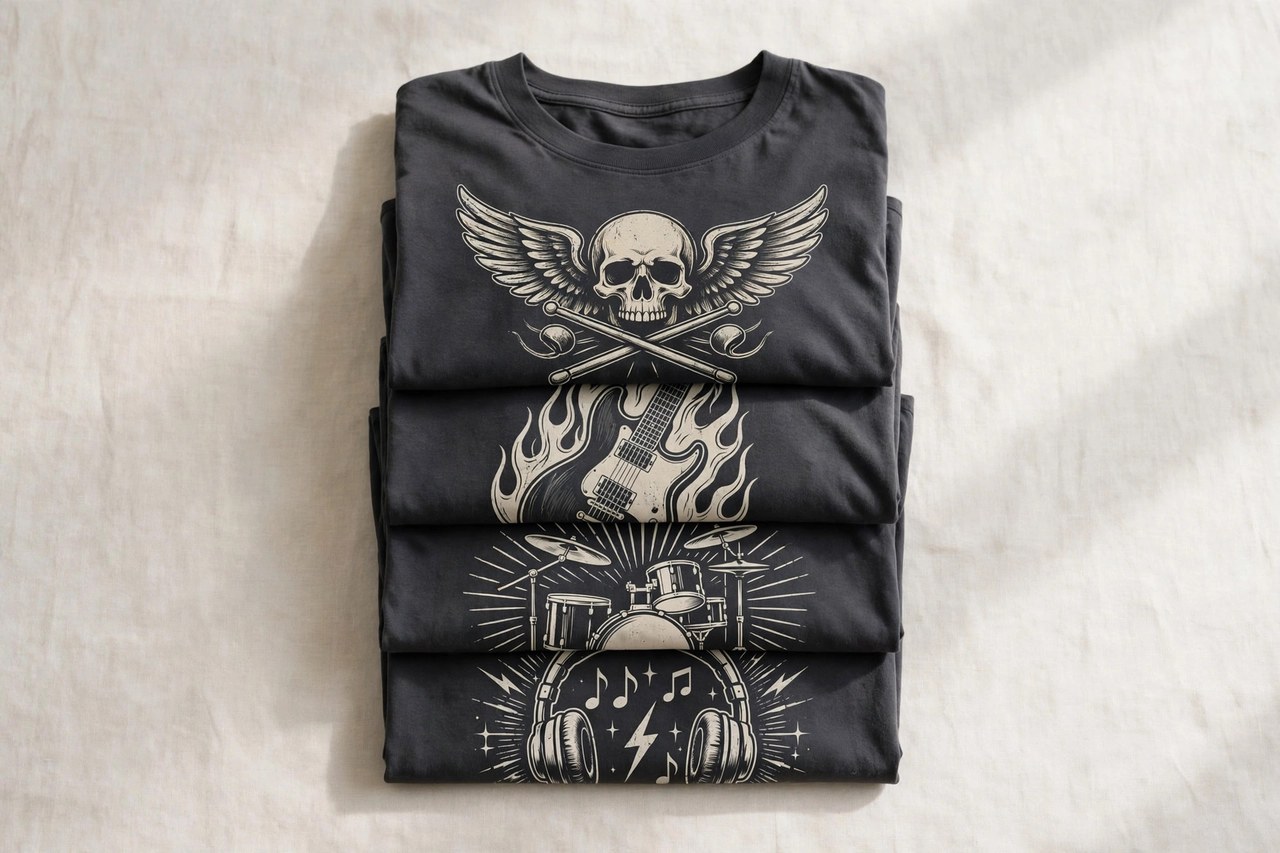
A men's band t-shirt is a licensed music garment: a tee carrying a band's name, artwork or tour graphics, sold as merchandise and worn as a statement of allegiance. Unlike a blank tee with a random print, a genuine band tee is authorized merchandise - the artwork is the point, the shirt is the canvas, and everything from the print method to the fabric weight is chosen to carry a design that fans want to keep for years. This guide covers the styles worth knowing, the fit points that decide comfort, the fabrics and construction that separate a good buy from a regret, and the simple care that makes the garment last.
Styles and Construction
Band tees divide by era and print. Vintage-style shirts use distressed, faded artwork on soft, thin jersey - sometimes genuine deadstock, more often a careful reproduction - while modern tour and retail shirts print bold, full-color art on midweight cotton. Print methods matter: screen printing lays down durable, slightly raised ink; direct-to-garment printing handles photographic art but can fade faster; discharge printing dyes the design into the fabric for the softest hand. Check licensing marks on the hem or neck print - an official shirt supports the artist and almost always prints and washes better.
Construction tells separate a shirt that lasts from one that twists after three washes: side seams should hang straight on a flat surface, collars and plackets should lie flat without curling, and stitching should run even - roughly eight to twelve stitches per inch on better garments - with no loose threads at stress points. Shoulder seams belong on the shoulder bone, and buttonholes should be dense and cleanly cut. Hold the fabric to the light: a tight, even weave wears longer and keeps its color better than a loose one at the same labeled weight.
Fit and Sizing
Fit follows the tee underneath the art: a classic band tee is a regular crew-neck cut, while fashion reissues often run slim and vintage originals run small and short by modern standards - measure a vintage shirt flat (pit to pit, and length) rather than trusting its tag. Decide the look you want: true to size reads current, one size up reads like the relaxed concert fit the garment grew up with. Long sleeves and raglan baseball cuts appear in colder-season merchandise lines.
Fit a top by the shoulders and the chest first, because those cannot be tailored cheaply: the shoulder seam should end at your shoulder bone, the chest should button or lie without pulling, and you should be able to raise both arms without the hem leaving your waistband. Length is the second check - a shirt meant to tuck should stay tucked when you sit, and one meant to wear loose should end mid-fly. Sleeve length is the easiest alteration, so never reject an otherwise right garment for sleeves alone, and never accept a wrong shoulder for any reason.
Wearing and Care
Wash band tees inside out, cool, and dry them low or on the line - the print is the garment, and heat plus friction is what cracks and fades it. Never iron directly on artwork. Store folded rather than hung to keep necks from stretching, and treat a genuinely old shirt gently: vintage jersey grows fragile, and a shirt that survived thirty years of concerts deserves a retirement rotation rather than weekly wear.
Launder by the label, but know the defaults: cool or warm water preserves color and elastic trims, turning printed or dark garments inside out protects their faces, and tumble-low or line drying is the single biggest lever on a shirt's lifespan. Button buttons and zip zips before washing to protect both the garment and its load-mates. Iron or steam on the fabric's own setting, store knits folded rather than hung so shoulders keep their line, and treat stains before the wash, not after the dryer has set them.
Common Questions
How can you tell an official band t-shirt from a bootleg?
Look for licensing information printed at the hem, under the main graphic or inside the neck - an official shirt names its licensor or carries a copyright line for the band. Bootlegs usually show muddier print registration, off-color artwork and no licensing marks, and they wash noticeably worse because the print and the blank are both cheaper.
Do band t-shirts shrink?
Most are cotton or cotton-rich jersey, so expect some length shrinkage in the first hot wash - one reason to wash cool and dry low. Pre-shrunk and garment-dyed blanks shrink least; vintage shirts have usually done all their shrinking decades ago, which is why their tagged size understates nothing - it simply reflects an older, smaller cut.
Why do vintage band tees cost so much?
Supply is fixed and shrinking: a genuine tour shirt from a famous run exists in whatever quantity survived, in wearable condition, in your size. Add the softness that only decades of washing produce and the fact that the artwork documents a specific moment in music history, and the price is a collector's market working exactly as expected.
More in Men's Clothes Guide B
What Are Band Shirts?
What are band shirts? They belong to the t-shirt family, alongside men’s designer t-shirts, men’s graphic t-shirts and men’s shirts generally, with close relatives in rock t-shirts, novelty t-shirts and the wider t-shirt guide — all linked below. One rule closes the topic: whatever you are wearing is in fashion.
Looking for Men's Clothing Stores?
This guide explains men's band t-shirts. To browse where to buy, visit our men's clothing store directory, where you can find retailers that carry them.