Men's Novelty T-shirts Guide
A novelty t-shirt is a tee whose point is its picture: a graphic, slogan, joke, band, film or artwork printed on the front (and sometimes the back) of the basic crew-neck shirt. The word itself is the definition - novelty derives from the Latin novus, meaning new, and a novelty tee is by design new, striking, original or unusual. Where the graphic t-shirts guide in G treats print as a broad category and band tees get their own pages in B and R, this guide is about novelty as such: the licensed, humorous and statement prints bought to say something before the wearer says a word.
Shop Men's Novelty T-shirts Now
Shop Men's Novelty T-shirts on Amazon Shop Men's Novelty T-shirts on eBayThe Amazon and eBay links on this page are affiliate links. If you make a purchase through them, Apparel Search may earn a commission.
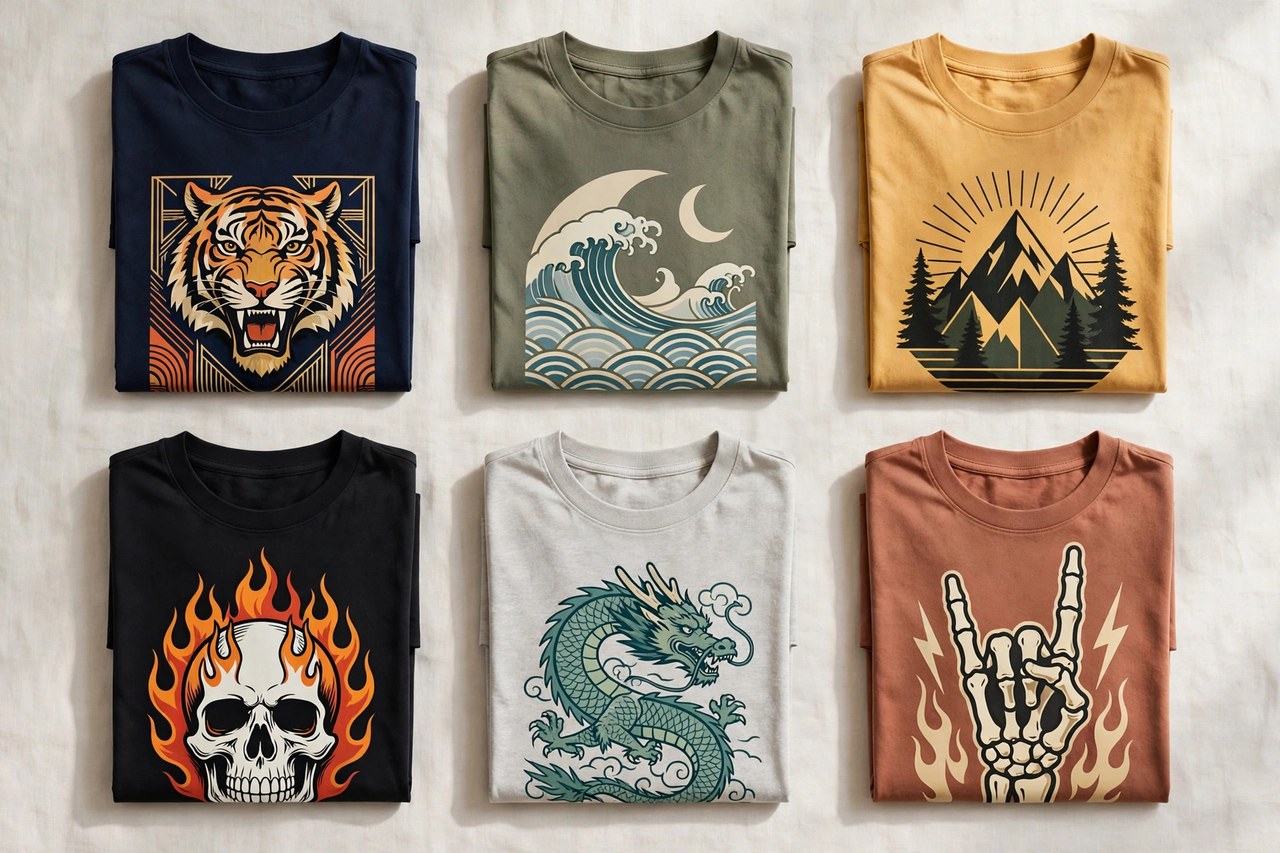
A novelty t-shirt is a tee whose point is its picture: a graphic, slogan, joke, band, film or artwork printed on the front (and sometimes the back) of the basic crew-neck shirt. The word itself is the definition - novelty derives from the Latin novus, meaning new, and a novelty tee is by design new, striking, original or unusual. Where the graphic t-shirts guide in G treats print as a broad category and band tees get their own pages in B and R, this guide is about novelty as such: the licensed, humorous and statement prints bought to say something before the wearer says a word. This guide covers the styles worth knowing, the fit points that decide comfort, the fabrics and construction that separate a good buy from a regret, and the simple care that makes the garment last.
Print Families and Print Methods
Shop the category by print family and print method together. The families: licensed graphics (bands, films, comics, games - the comic book t-shirts guide in C is the deep dive), humor and slogan tees, vintage-look and distressed reproductions, and event and place souvenirs. The method decides how the shirt ages: screen printing sits slightly on the fabric and lasts longest in bold designs; direct-to-garment printing renders photographs and fine detail but fades sooner; heat transfers are the budget route and the first to crack. Fabric follows the same logic as any tee - midweight cotton for body and print support, cotton-poly blends for softness and shape retention - but check the print before the cloth: edges should be sharp, registration aligned, and the ink flexible rather than a stiff plastic shield that will split across the chest by autumn.
A top earns its keep in finishing: seams that hang straight and stay even at eight to twelve stitches per inch, collars and plackets that lie flat after washing, buttons sewn with thread shanks so they sit in their holes without pulling. Hold the cloth to the light - a tight, even weave or knit outwears a loose one at the same labeled weight, and pattern pieces cut on grain keep the garment from twisting around your body by the third wash.
Fit the Graphic, Then the Body
Fit a novelty tee like any t-shirt, with one extra consideration: the graphic has a placement, and fit moves it. A chest print should sit centered and level across the upper chest; a shirt too small stretches the image out of proportion and cracks the ink early, while one too large lets the design sag below the chest it was drawn for. Classic fits carry most novelty art best, because the category skews casual; keep untucked length ending around mid-fly so the full design shows rather than folding at the waistband. Check the size chart against your chest measurement rather than your habitual letter - novelty and licensed lines are notorious for running a size small or large depending on the printer.
Fit tops shoulders and chest first, because tailors cannot cheaply move either: the shoulder seam ends at the shoulder bone, the chest closes without pulling, and both arms raise without the hem escaping the waistband. Tucked lengths must stay tucked sitting; untucked lengths should end mid-fly. Sleeves are the cheap alteration, shoulders the permanent one - reject a wrong shoulder for any reason, forgive a long sleeve for many.
Wash for the Print
The print is the fragile part, so wash for it: inside out, cool water, mild detergent, and no bleach on colors. Tumble low or line dry - heat is what cracks and peels transfers and fades direct-to-garment ink, and a line-dried novelty tee keeps its design years longer than a hot-dried one. Iron inside out or not at all, never directly on the print. Fold rather than hang heavy tees so the shoulders keep their shape. Treated this way the shirt outlives the joke, which is the right order of things: a faded, cracked print reads as neglect, while a bright one on a sound shirt reads as vintage on purpose.
Launder tops by the label with three defaults: cool or warm water to protect color and trims, dark and printed pieces inside out, and low or line drying, which is the largest single lever on a shirt's lifespan. Fasten buttons and zips before washing to protect the whole load, treat stains before the dryer can set them, and store knits folded so their shoulders keep the shape they were knitted with.
Common Questions
What makes a t-shirt a novelty t-shirt?
Its graphic intent. A novelty tee carries a printed design - a joke, slogan, licensed image, band or artwork - that is meant to be new, striking, original or unusual; the word novelty comes from the Latin novus, for new. A plain tee is a basic and a logo tee is branding, but a shirt bought for the picture or the line on its front is a novelty shirt, whatever its fabric or fit.
How do I keep a novelty print from cracking and fading?
Wash the shirt inside out in cool water with mild detergent, keep bleach away from colors, and dry it low or on the line - dryer heat is the main agent that cracks transfers and fades printed ink. Never iron directly on the design; iron inside out if you must. Screen prints are the hardiest, heat transfers the most fragile, but gentle washing roughly doubles the bright life of any of them.
Should a novelty t-shirt fit differently from a plain tee?
Only in one respect: the graphic's placement. The design should sit centered and level on the upper chest, so avoid sizes that stretch it out of shape (too small, which also cracks ink early) or let it sag (too large). Otherwise fit it as you would any tee - shoulders at the shoulder bone, untucked length around mid-fly - and check the maker's chart, because licensed and novelty lines run inconsistently between printers.
More in Men's Clothes Guide N
What Novelty Means
A T-shirt (or tee shirt, or tee) is a style of unisex fabric shirt named after the T shape of its body and sleeves, normally associated with short sleeves and a round crew neckline with no collar, though it actually comes in a wide assortment of styles. Novelty, derived from the Latin word novus for “new”, is the quality of being new, or following from that, of being striking, original or unusual — so novelty tees are new, unique, or unusual graphically illustrated t-shirts. See also the men’s t-shirts, band t-shirts, rock band t-shirts, comic book t-shirts, designer t-shirts and graphic t-shirts guides.
Looking for Men's Clothing Stores?
This guide explains men's novelty t-shirts. To browse where to buy, visit our men's clothing store directory, where you can find retailers that carry them.