Men's Nylon Pants Guide
Nylon pants are trousers made from nylon fabric, or from a blend in which nylon does the hard work - the lightweight, quick-drying, abrasion-resistant legwear of travel, hiking and wet-weather work. Nylon is a thermoplastic, silky material, introduced as a fabric at the 1939 New York World's Fair, first sold in a nylon-bristled toothbrush in 1938 and made famous by women's stockings in 1940. This guide follows that fiber into a pair of pants: what nylon does well on the leg, where it loses to cotton and wool, and how to buy and keep a pair.
Shop Men's Nylon Pants Now
Shop Men's Nylon Pants on Amazon Shop Men's Nylon Pants on eBayThe Amazon and eBay links on this page are affiliate links. If you make a purchase through them, Apparel Search may earn a commission.
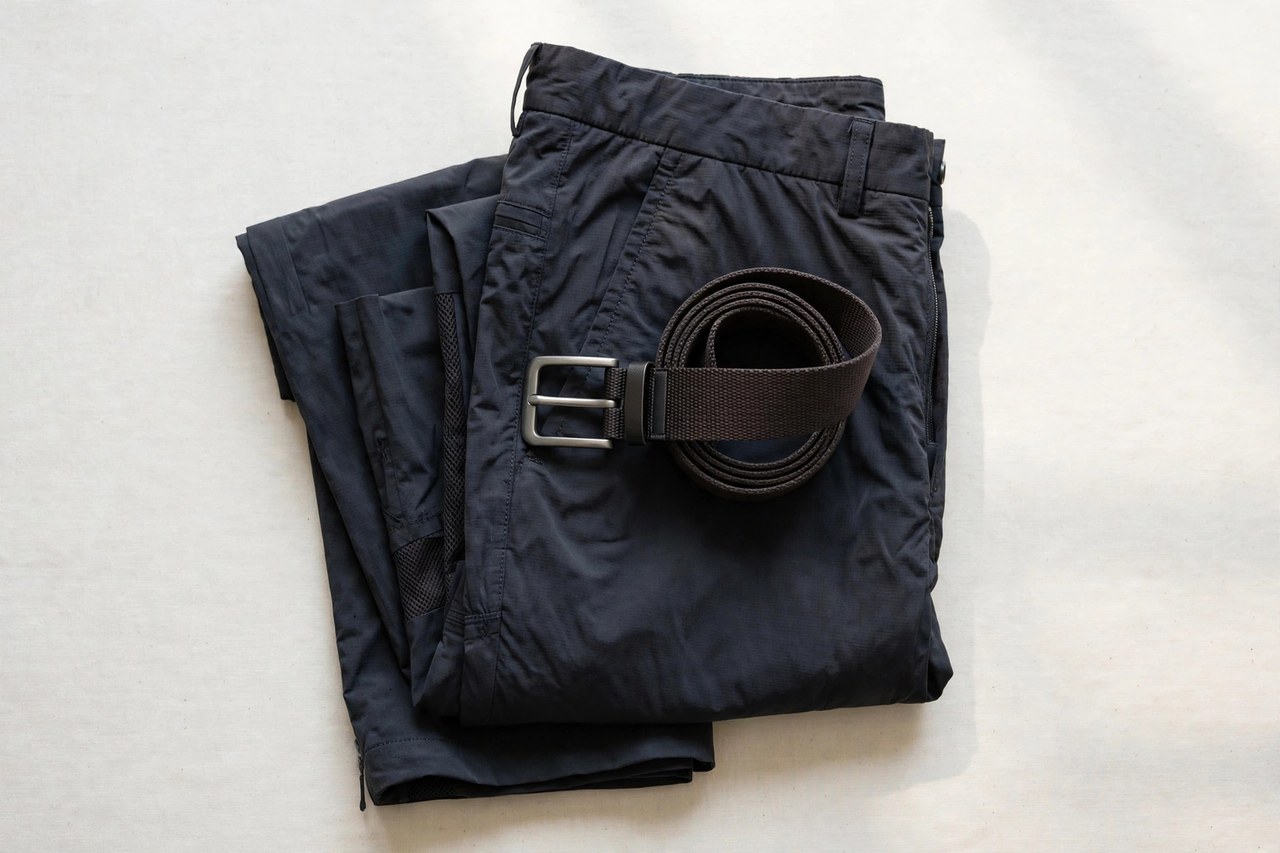
Nylon pants are trousers made from nylon fabric, or from a blend in which nylon does the hard work - the lightweight, quick-drying, abrasion-resistant legwear of travel, hiking and wet-weather work. Nylon is a thermoplastic, silky material, introduced as a fabric at the 1939 New York World's Fair, first sold in a nylon-bristled toothbrush in 1938 and made famous by women's stockings in 1940. This guide follows that fiber into a pair of pants: what nylon does well on the leg, where it loses to cotton and wool, and how to buy and keep a pair. This guide is built around the questions buyers actually ask: which style, which size, which fabric, and what will it look like after a year of real use - answered in order, with the trade-offs stated plainly.
The Fiber Behind the Trousers
Understand the fiber and the styles explain themselves. Nylon was intended as a synthetic replacement for silk, and when silk grew scarce during the Second World War it replaced silk in military uses such as parachutes and flak vests - the same strength-to-weight logic that fills this category, right down to the parachute pants. In trousers, nylon brings abrasion resistance well beyond cotton, a fraction of the weight, and drying times measured in an hour rather than a day; blends add spandex for stretch or cotton for a less technical hand. The styles follow the uses: convertible zip-off travel pants, hiking and trekking trousers with articulated knees, rain and wind shell pants worn over layers, and plain chino-cut nylon trousers that pass in town. The honest weaknesses are heat (nylon breathes less than cotton), static, a slight swish in movement, and a shine that reads sporty rather than tailored.
For any leg garment the rise is the first specification, because it decides sitting comfort before fabric gets a vote: measure from front waistband through to back and compare it with a pair that already works. Then audit the stress points - bar-tacked belt loops and pocket corners, double-stitched inseams, hems finished evenly - and the pocketing, which should be deep, smooth and strong enough to carry what the garment's pockets invite you to carry.
Fit by Movement
Fit nylon pants by movement rather than mirror. The rise and waist follow the usual trouser rules in our pants guide in P, but the test here is dynamic: climb a step, squat, sit cross-legged if the trail will ask it - nylon has little natural give, so the pattern and any spandex in the blend must supply the ease the fiber does not. Convertible styles add a specific check: the zip-off line should sit above or below the knee's bend, never across it, and the legs should reattach without a wrestling match. Length matters more than in denim because nylon does not take a casual stacked break gracefully; hem to the shoe. Waistbands often add drawcords or side adjusters for pack-belt wear - use them rather than sizing down.
Measure where the waistband will actually sit, plus inseam to your preferred break, and thigh and seat for closer cuts. Then sit, squat and climb a step in the fitting room - a leg garment that only works standing still does not work. Waistbands relax roughly half an inch in wear and inseams shrink most in early washes, so buy the fit you want after those changes rather than the fit in the mirror.
Easy to Wash, Easy to Melt
Nylon is the easiest trouser fiber to launder and the easiest to melt: wash cool or warm, skip the fabric softener on water-repellent finishes (it clogs the treatment), and line dry or tumble low - the pants will be dry before the rest of the load either way. Keep them away from high iron heat and open flame, near which nylon softens rather than burns. Refresh a rain style's water-repellent finish with a wash-in or spray treatment when water stops beading on the surface. Inspect zips, drawcord anchors and seat abrasion each season; the fabric itself will usually outlast its hardware, and a replaced zipper buys a sound pair another few years.
Wash leg garments inside out and cool; heat is the agent that fades dye, tires elastic and shortens inseams. Dry low or on the line, hang or fold promptly, and crease deliberately or not at all. Walk the stress points each season - hem edges, pocket corners, seat and inner thigh - and mend the small fray while it is still small: leg garments fail gradually, then suddenly, and the two-minute October repair prevents the November replacement.
Common Questions
Why choose nylon pants over cotton or polyester?
For weight, strength and drying speed. Nylon resists abrasion better than cotton at a fraction of the weight, and it dries in about an hour where cotton chinos stay damp all day - the combination that makes it the travel and hiking default. Polyester is its closest rival and dries as fast, but nylon is generally tougher against scuffs and tears. The trades are breathability, static and a sportier look, which is why nylon pants rule trails and trips more than offices.
What is nylon, and where did it come from?
Nylon is a synthetic thermoplastic fiber with a silky hand, introduced as a fabric at the 1939 New York World's Fair. It was first used commercially in a nylon-bristled toothbrush in 1938, then famously in women's stockings - 'nylons' - in 1940. Designed as a synthetic replacement for silk, it substituted for silk during the Second World War in parachutes and flak vests, and it is now woven into everything from shorts and long pants to technical outerwear.
How do you wash nylon pants?
Cool or warm machine wash, line dry or tumble on low - and keep them away from a hot iron, which can soften or glaze the fiber. Skip fabric softener on water-repellent styles because it clogs the finish; reproof them when water stops beading. Nylon dries so quickly that line drying costs nothing, and its color and shape survive gentle washing far longer than cotton's do.
More in Men's Clothes Guide N
The Fiber's History
Trousers — pants in North America — are worn from the waist to the ankles, covering both legs separately, and can be made from many textile fibers, including nylon fabric or fabric blended with nylon. Nylon is a thermoplastic, silky material, first used commercially in a nylon-bristled toothbrush (1938), followed more famously by women’s stockings (“nylons”; 1940) after being introduced as a fabric at the 1939 New York World’s Fair. Nylon was intended to be a synthetic replacement for silk and substituted for it in many products after silk became scarce during World War II; it replaced silk in military applications such as parachutes and flak vests, and it is now used for other clothing styles such as shorts and long pants. See also the nylon fiber and nylon definition pages, the parachute pants page, and our guides to pant styles and men’s pants.
Looking for Men's Clothing Stores?
This guide explains men's nylon pants. To browse where to buy, visit our men's clothing store directory, where you can find retailers that carry them.