Men's Neckwear Guide
Neckwear is everything worn around the neck - and no, neckwear is not only ties. The family covers neckties and bow ties, cravats and ascots, scarves and neck gaiters, and historically the ruffs and bands of earlier centuries, all worn for some mix of fashion, ceremony, and protection against the weather. This guide treats the whole family: which piece does which job, how each is sized and tied, and what separates a well-made example from a costume-shop one.
Shop Men's Neckwear Now
Shop Men's Neckwear on Amazon Shop Men's Neckwear on eBayThe Amazon and eBay links on this page are affiliate links. If you make a purchase through them, Apparel Search may earn a commission.
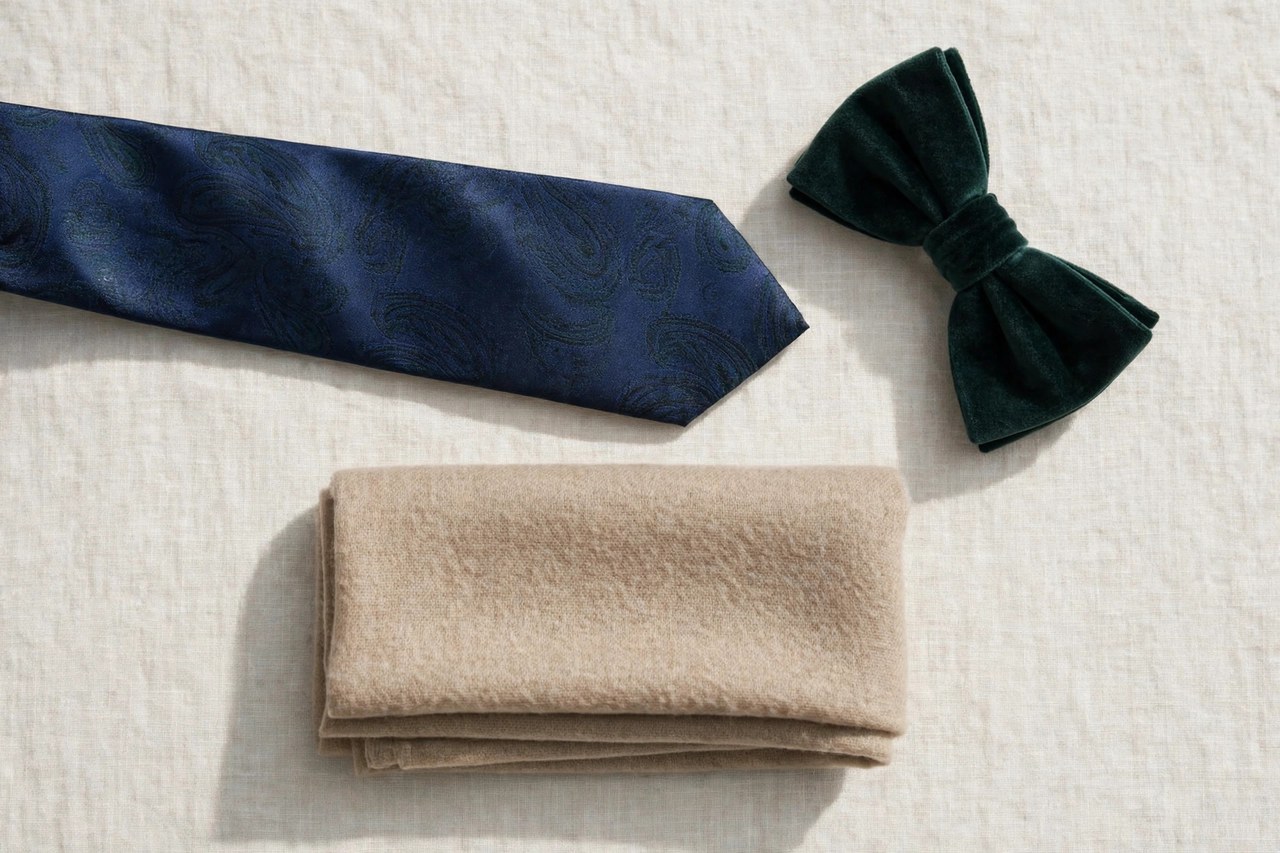
Neckwear is everything worn around the neck - and no, neckwear is not only ties. The family covers neckties and bow ties, cravats and ascots, scarves and neck gaiters, and historically the ruffs and bands of earlier centuries, all worn for some mix of fashion, ceremony, and protection against the weather. This guide treats the whole family: which piece does which job, how each is sized and tied, and what separates a well-made example from a costume-shop one. This guide covers the styles worth knowing, the fit points that decide comfort, the fabrics and construction that separate a good buy from a regret, and the simple care that makes the garment last.
A Family, Not Just Ties
Sort the family by job. The necktie - a long strip of cloth worn under the shirt collar and knotted at the throat - is the office and formal default; its variants run from the silk tie of our silk ties guide to the ascot, the bolo, the zipper tie and the clip-on, all descended from the cravat. The bow tie is the tie's symmetrical cousin, a ribbon tied so its two ends form loops, sold self-tie, pre-tied on a band, or clip-on - the self-tie being the traditional form a wearer ties by hand. Scarves trade ceremony for warmth and drape, and the neck gaiter - a closed tube of fleece or synthetic fabric slipped over the head and pulled up over the mouth against wind and sand - is the family's pure weather tool, the piece winter sports made popular. Silk remains the prestige tie fiber for its sheen and knot, polyester and microfiber the durable budget route, and wool and knit ties the textured, casual end of the drawer.
Accessories reward material honesty: solid metal over plated base metal, full-grain leather over bonded scraps, stitching over glue wherever fabric or hide is joined. Work every moving part through its full travel before paying - clasps, hinges, springs, adjusters - because small hardware fails before large materials do. And budget the care with the purchase: conditioner, the right cloth, a dry drawer; an accessory you can maintain will outlast a finer one you cannot.
Length, Width and Neck Size
Neckwear sizing is quiet but real. Neckties are generally unsized, yet longer sizes exist and matter: a tall man or a larger neck needs the extra length so the tip reaches the belt line with the knot he actually ties - a wider knot spends more cloth. Width should echo the lapels and the wearer's frame, roughly three to three and a quarter inches for a classic proportion. Bow ties size by neck measurement on their adjustable bands, and a self-tie must be bought in your neck size, not a generic one. Scarves fit by length and weight against the coat they will live under, and a gaiter should stretch over the head yet stay up over the nose without constant tugging - test both movements before trusting one on a slope or a site.
Accessories have exact fits and exact measures: belt length to the middle hole of a belt you own, hat size as head circumference, a watch case within the wrist's width. Makers' accessory charts vary more than apparel charts, so measure and use the chart rather than ordering a habitual letter - ninety seconds with a tape prevents the most avoidable returns in menswear.
Untie, Rest, Clean Gently
Ties ask for rest and gentle handling: untie them after wear rather than pulling the knot through, roll or hang them away from light, and let a silk tie rest a day or two between wearings so the fabric recovers from the knot. Spot-clean first; dry-clean silk sparingly, because each cleaning dulls a little sheen, and never machine-wash a constructed tie - the interlining that gives it body will not survive. Scarves wash by their fiber, wool cool and gentle, synthetics hardier, and gaiters simply join the wash like the technical layers they are - they are the one piece of neckwear built to be laundered without ceremony.
Store accessories deliberately: leather away from sun and plastic, metal dry, belts rolled or hung by the buckle rather than folded at the same crease forever. Condition leather a few times a year, polish metal with the cloth meant for its finish, and repair hardware early - a loose screw today is a lost cufflink or a failed clasp next month. Rotate daily pieces in pairs and both will outlast a single workhorse.
Common Questions
What counts as men's neckwear?
Everything worn around the neck: neckties and bow ties first, then cravats and ascots, scarves, and weather pieces such as neck warmers and gaiters. Historically the family also included ruffs - the stiff collars of the sixteenth and seventeenth centuries - and bands, the twin white tabs still worn by some clergy, lawyers and academics. Neckwear is not only ties.
What is the difference between a self-tie, pre-tied and clip-on bow tie?
The construction. A self-tie (also called tie-it-yourself or freestyle) is a strip of cloth the wearer ties by hand into the bow - the traditional form, slightly imperfect in the way real knots are. A pre-tied bow has its bow sewn fixed onto a neck band that clips or adjusts closed. A clip-on dispenses with the band altogether and clips straight to the collar. The self-tie is the connoisseur's choice; the other two trade character for convenience.
How long should a men's necktie be?
Long enough that, tied in your usual knot, the front blade's tip reaches the middle of your belt buckle or waistband - no higher, and at most a little past it. Standard ties run about 57 to 58 inches; men over six feet tall, or with necks above about 17.5 inches, usually need the long size at 62 to 63 inches. A bigger knot, such as a full Windsor, spends extra length, so size the tie to the knot as well as the man.
More in Men's Clothes Guide N
Neckwear Is Not Only Ties
Neckwear refers to the various styles of clothing worn around the neck, worn for fashion, combat, or protection against the influences of weather; common neckwear today includes bow ties, neckties (cravats), scarves, feather boas and shawls, and historically ruffs and bands were worn. Neck warmers have become popular for winter sports and cold environments, and a neck gaiter is a closed tube of fabric, often thick fleece or synthetic, slipped on and off over the head and pulled up over the mouth to keep out wind and sand; some balaclavas have a thin hood attached to what is essentially a neck gaiter. A necktie is a long piece of cloth worn for decorative purposes around the neck, resting under the shirt collar and knotted at the throat; its variants include the ascot tie, bow tie, bolo tie, zipper tie, cravat and clip-on tie, and the modern necktie, ascot and bow tie are descended from the cravat. The bow tie is a ribbon of fabric tied around the collar symmetrically so the two ends form loops, in three types — pre-tied, clip-on, and the traditional self-tie (or “tie-it-yourself”) bow the wearer ties by hand. A scarf, also known as a Kremer, muffler or neck-wrap, is worn for warmth, cleanliness, fashion or religious reasons; a ruff was worn in Western Europe from the mid-sixteenth to the mid-seventeenth century; and bands — two oblong pieces of cloth tied at the neck — remain formal neckwear for some clergy (preaching bands, tabs or Geneva bands), lawyers (barrister’s bands, or tabs in Canada) and academic dress. Note that it is not spelled “neckware”.
Looking for Men's Clothing Stores?
This guide explains men's neckwear. To browse where to buy, visit our men's clothing store directory, where you can find retailers that carry them.