Men's Silk Ties Guide
Men's silk ties are neckties made from woven silk - the standard against which all other ties are judged, because silk takes dye with unmatched depth, knots with a dimple that holds, and drapes in the soft, weighted fall that makes a tie look like jewelry for a suit rather than a strap on a shirt. Printed, woven-jacquard, grenadine and knitted, silk is the tie fiber of record, and this guide explains how a good one is made and chosen.
Shop Men's Silk Ties Now
Shop Men's Silk Ties on Amazon Shop Men's Silk Ties on eBayThe Amazon and eBay links on this page are affiliate links. If you make a purchase through them, Apparel Search may earn a commission.
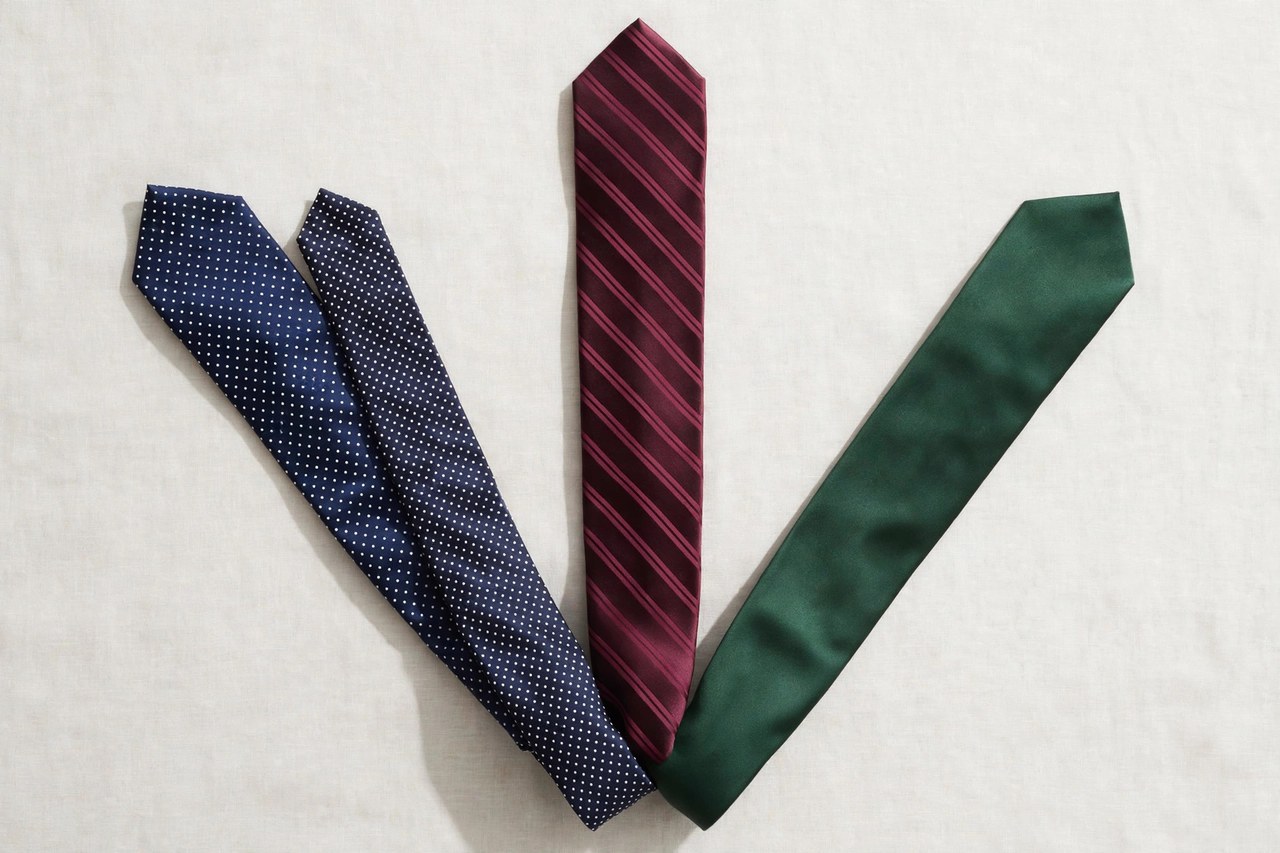
Men's silk ties are neckties made from woven silk - the standard against which all other ties are judged, because silk takes dye with unmatched depth, knots with a dimple that holds, and drapes in the soft, weighted fall that makes a tie look like jewelry for a suit rather than a strap on a shirt. Printed, woven-jacquard, grenadine and knitted, silk is the tie fiber of record, and this guide explains how a good one is made and chosen. This guide is built around the questions buyers actually ask: which style, which size, which fabric, and what will it look like after a year of real use - answered in order, with the trade-offs stated plainly.
Bias Cut, Interlinings and Weaves
A tie is three pieces of silk cut on the bias, folded over an interlining that gives it body - and every quality signal lives in those facts. Bias cutting lets the tie hang straight without twisting; the interlining (wool blends in good ties) decides whether the knot is crisp or limp; a hand-rolled, hand-stitched tip outranks a machine edge; and the keeper loop and bar-tack at the back are small honesty tests. Weaves divide the wardrobe: smooth rep and twill stripes for business, jacquard wovens for texture, printed silk for pattern play, open grenadine weaves for the connoisseur's quiet statement, and knitted silk - square-ended, casual - for knitwear days. Width follows lapels: roughly three to three and a quarter inches is the enduring middle.
Accessories reward material honesty: solid metal over plated base metal, full-grain leather over bonded scraps, stitching over glue wherever fabric or hide is joined. Work every moving part through its full travel before paying - clasps, hinges, springs, adjusters - because small hardware fails before large materials do. And budget the care with the purchase: conditioner, the right cloth, a dry drawer; an accessory you can maintain will outlast a finer one you cannot.
Fit: Length and Knot
A tie's fit is length and knot. The tip should touch the middle of the belt buckle - just covering it is the classic mark - which means tall men need long ties (marked XL for a reason) and no one needs a tie that reaches the fly or stops at the navel. Knot choice follows collar spread and tie weight: a four-in-hand for narrow points and knitted silk, a half or full Windsor where the collar and cloth give room. The dimple below the knot is not an accident; pinch it in as you tighten, and a good silk interlining will hold it all day.
Accessories have exact fits and exact measures: belt length to the middle hole of a belt you own, hat size as head circumference, a watch case within the wrist's width. Makers' accessory charts vary more than apparel charts, so measure and use the chart rather than ordering a habitual letter - ninety seconds with a tape prevents the most avoidable returns in menswear.
Wearing and Care
Untie a silk tie by reversing the knot's steps - never pull the narrow end through, which stretches the bias - then hang it or roll it loosely so the day's creases fall out overnight. Rest ties between wears; silk recovers, but slowly. Spot-clean with care (water spots silk), and send valued ties to a cleaner who understands unlined construction; pressing a tie flat at home kills its roll and its life. Store rolled or hung away from sunlight, which fades silk faster than any other wardrobe fabric.
Store accessories deliberately: leather away from sun and plastic, metal dry, belts rolled or hung by the buckle rather than folded at the same crease forever. Condition leather a few times a year, polish metal with the cloth meant for its finish, and repair hardware early - a loose screw today is a lost cufflink or a failed clasp next month. Rotate daily pieces in pairs and both will outlast a single workhorse.
Common Questions
Why are most good ties made of silk?
Because no other fiber does all three of a tie's jobs: it takes dye in deep, light-catching colors; it knots into a smooth, dimpled knot that holds without bulk; and its weight and bias drape fall straight and stay straight. Polyester ties imitate the look at a distance and fail the knot and the fall; wool and linen ties are deliberate seasonal variations. Silk is the default because physics keeps voting for it.
How long should a tie be?
Long enough for the tip to touch the middle of your belt buckle when knotted at your collar - standard ties run about 57-58 inches, long (XL) sizes 62-63 for tall men or larger knots. Knot choice changes the arithmetic: a full Windsor consumes more length than a four-in-hand. If your knot is right and the tip still misses the buckle zone, the tie's length - not your technique - is the problem.
Woven or printed silk tie?
Woven (jacquard) patterns are built into the cloth: they carry texture, weight and a slight relief, and suit stripes, dots and formal patterns. Printed silk lays the pattern on a smooth twill: lighter, crisper in fine detail, and the home of playful prints. Neither is better globally - wovens read sober and rich, prints read sharp and light. Grenadine, woven in an open gauze-like structure, is the quiet third answer connoisseurs reach for.
More in Men's Clothes Guide S
The Croatian Cravat
A necktie is a long piece of cloth worn for decorative purposes around the neck, resting under the shirt collar and knotted at the throat - with variants including the ascot, bow tie, bolo tie, zipper tie, cravat and clip-on. In 1660, celebrating victory over the Ottoman Empire, a crack regiment from Croatia visited Paris, its officers wearing brightly colored silk handkerchiefs around their necks; Louis XIV made them an insignia of royalty, creating a regiment of Royal Cravattes - “cravat” deriving from à la croate, in the style of the Croats. The four-in-hand necktie became fashionable in Great Britain in the 1850s. See also our fashion designer directory, the how-to-tie guide and the tie definition.
Looking for Men's Clothing Stores?
This guide explains men's silk ties. To browse where to buy, visit our men's clothing store directory, where you can find retailers that carry them.