Men's Polyester Ties Guide
Polyester ties are neckties woven from polyester - in modern practice usually a microfiber polyester that mimics silk's hand and sheen closely enough that the honest differences are price, durability and stain behavior rather than appearance. Filed beside our polyester pants guide in this letter's polyester section, this page judges the tie fiber on its merits: where a polyester tie is the smart working choice, where silk still wins, and how to tell a good microfiber weave from the stiff, shiny ties that gave the fiber its name.
Shop Men's Polyester Ties Now
Shop Men's Polyester Ties on Amazon Shop Men's Polyester Ties on eBayThe Amazon and eBay links on this page are affiliate links. If you make a purchase through them, Apparel Search may earn a commission.
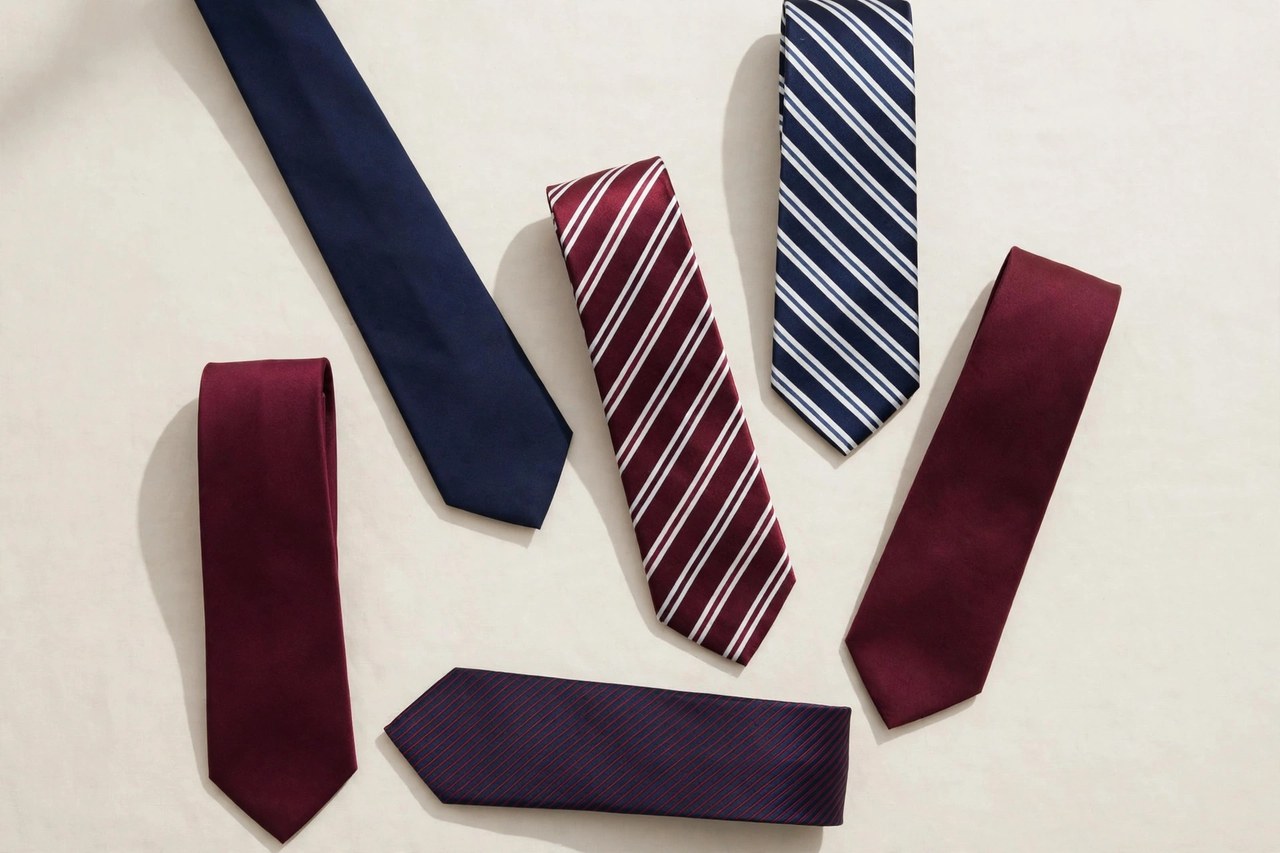
Polyester ties are neckties woven from polyester - in modern practice usually a microfiber polyester that mimics silk's hand and sheen closely enough that the honest differences are price, durability and stain behavior rather than appearance. Filed beside our polyester pants guide in this letter's polyester section, this page judges the tie fiber on its merits: where a polyester tie is the smart working choice, where silk still wins, and how to tell a good microfiber weave from the stiff, shiny ties that gave the fiber its name. This guide is built around the questions buyers actually ask: which style, which size, which fabric, and what will it look like after a year of real use - answered in order, with the trade-offs stated plainly.
Microfiber Changed the Answer
The modern polyester tie is a microfiber garment: filaments split so fine that the woven cloth drapes, knots and catches light much like silk, in the same constructions - woven stripes and neats, jacquard patterns woven in rather than printed on, and solids with a grenadine-like texture at the better end. Its working virtues are concrete. It resists stains and water spots that mark silk permanently, survives a tie's actual enemies - coffee, rain, a caught drawer - and costs a fraction of silk, which is why uniform programs, event staff and daily-wear rotations run on it. The differences that remain: silk's knot has a slightly richer dimple and its sheen is depth rather than surface, and silk recovers from a day knotted with an ease polyester approaches but does not equal. Width and lining decide more of a tie's quality than fiber does - a well-interlined polyester tie in a classic width out-dresses a skinny, limp silk one every day of the week.
Accessories reward material honesty: solid metal over plated base metal, full-grain leather over bonded scraps, stitching over glue wherever fabric or hide is joined. Work every moving part through its full travel before paying - clasps, hinges, springs, adjusters - because small hardware fails before large materials do. And budget the care with the purchase: conditioner, the right cloth, a dry drawer; an accessory you can maintain will outlast a finer one you cannot.
Knot, Length, Width
A tie's fit is its knot and its length. Tied, the tip should reach the belt line - touching the buckle, not hovering at the navel or diving past the waistband - and that single measurement, against your torso and your trousers' rise, decides whether a standard or a long size is yours. Width should converse with your lapels and your frame: classic widths around three to three and a quarter inches suit most lapels and most men, and extremes in either direction date a tie faster than its fiber ever will. The knot itself is fiber-aware: polyester microfiber's slight body makes a four-in-hand sit neatly and a half-Windsor fill a spread collar, and its surface grip means knots hold without creeping - check, though, that the knot slides for adjustment rather than locking, because a tie you cannot adjust is a tie you will fight daily.
Accessories have exact fits and exact measures: belt length to the middle hole of a belt you own, hat size as head circumference, a watch case within the wrist's width. Makers' accessory charts vary more than apparel charts, so measure and use the chart rather than ordering a habitual letter - ninety seconds with a tape prevents the most avoidable returns in menswear.
The Low-Maintenance Drawer
Polyester ties are the low-maintenance end of the tie drawer. Most spot-clean and many hand wash cool with mild detergent - check the label, since interlinings vary - and they shrug off the rain and coffee incidents that send silk to the cleaner or the bin. Untied and hang or roll them after wear, as with silk: the knot left overnight sets wrinkles into any fiber, though polyester forgives it sooner, recovering on the hanger within a day. Press only through a cloth at low heat, never iron the blade flat, and store rolled or hung out of sunlight, which fades synthetics unevenly. A rotation of polyester ties in the staple patterns - navy, burgundy, a stripe, a neat - covers a working wardrobe at a cost that makes their durability almost an insult to the silk drawer beside them.
Store accessories deliberately: leather away from sun and plastic, metal dry, belts rolled or hung by the buckle rather than folded at the same crease forever. Condition leather a few times a year, polish metal with the cloth meant for its finish, and repair hardware early - a loose screw today is a lost cufflink or a failed clasp next month. Rotate daily pieces in pairs and both will outlast a single workhorse.
Common Questions
Can people tell a polyester tie from a silk one?
With a modern microfiber weave, at conversational distance, generally no - the drape, knot and matte sheen are close enough that uniform programs and television wardrobes rely on the resemblance. In the hand, silk still feels cooler and smoother, its knot dimples a touch richer, and its sheen reads as depth. The ties that give polyester away are the cheap end: stiff, shiny, thin-lined examples. A well-made polyester tie's honest tells are its price and its care label, not its face.
Are polyester ties a good choice for everyday wear?
Often the smartest choice. A working rotation punishes ties with coffee, rain, commuting and daily knotting, and polyester microfiber resists stains and water spots, holds its knot, recovers on the hanger and costs little enough to replace without grief. Silk keeps the edge for occasions where its hand and knot richness show - formal events, the best suit, photographs at close range. Many drawers therefore run mixed: silk for the summit, polyester for the schedule.
How long should a tie be when tied?
The tip should reach the belt line - just touching the top of the buckle is the classic mark. Shorter reads boyish, longer reads careless, and both are sizing issues rather than knot issues: torso length and trouser rise decide which tie length you need. Standard ties suit most men with mid-rise trousers; tall men and high rises call for long sizes. Measure once with your usual knot, and buy lengths to that number rather than adjusting the knot to compensate.
More in Men's Clothes Guide P
Any Fabric, Including Polyester
Bow ties may be made of any fabric material, but most are made from silk, polyester, cotton, or a mixture of fabrics — and fabrics woven or knitted from polyester thread or yarn are used extensively in apparel, which obviously includes neckwear such as neckties. A necktie, or simply tie, is a long piece of cloth worn for decoration around the neck. See also the neckwear and ties guides, the how-to-tie-a-tie page, the tie definition and the silk ties guide.
More to Explore on Apparel Search
Men’s Clothes Guide by Letter: Men's Clothes Guide M
Looking for Men's Clothing Stores?
This guide explains men's polyester ties. To browse where to buy, visit our men's clothing store directory, where you can find retailers that carry them.