Men's Sleepwear Guide
Men's sleepwear is the clothing made for sleeping and for the hours that border sleep: pajama sets, nightshirts, sleep pants and shorts, and the tees and Henleys sold for the purpose. It is the most purely functional category in the wardrobe - judged on fabric behavior against skin, freedom of movement through the night, and temperature management - and this guide treats it strictly as a product: what the fabrics do, how the garments are cut, and how to choose and care for them.
Shop Men's Sleepwear Now
Shop Men's Sleepwear on Amazon Shop Men's Sleepwear on eBayThe Amazon and eBay links on this page are affiliate links. If you make a purchase through them, Apparel Search may earn a commission.
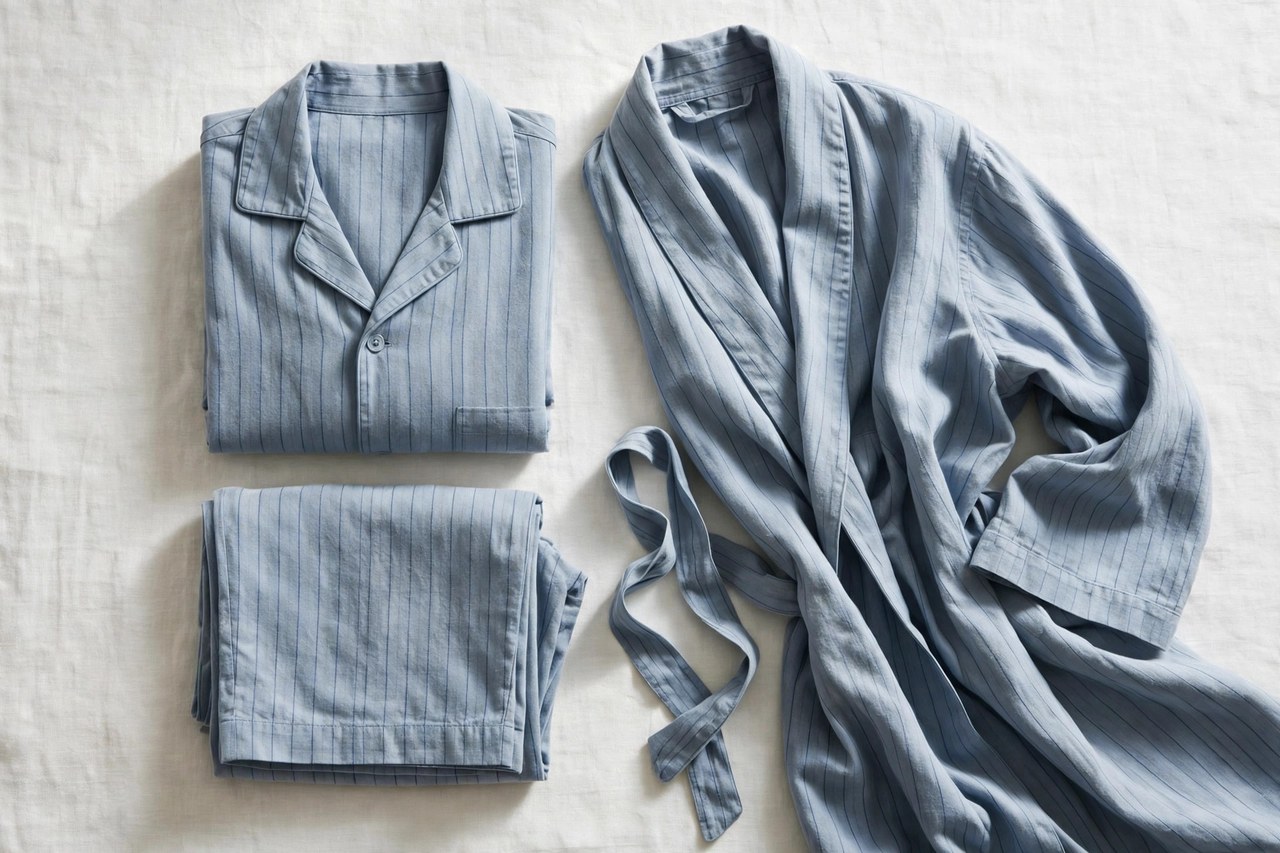
Men's sleepwear is the clothing made for sleeping and for the hours that border sleep: pajama sets, nightshirts, sleep pants and shorts, and the tees and Henleys sold for the purpose. It is the most purely functional category in the wardrobe - judged on fabric behavior against skin, freedom of movement through the night, and temperature management - and this guide treats it strictly as a product: what the fabrics do, how the garments are cut, and how to choose and care for them. This guide covers the styles worth knowing, the fit points that decide comfort, the fabrics and construction that separate a good buy from a regret, and the simple care that makes the garment last.
Sleep Fabrics and Night-Proof Construction
Sleepwear fabrics divide by season and by sleeper. Cotton jersey and woven cotton (broadcloth, flannel in winter) are the defaults: soft, washable, honest. Cotton-modal and bamboo-derived knits add drape and moisture handling for warm sleepers. Silk is the luxury tier, regulated and smooth. The construction that matters is what you cannot see in a listing: flat or bound seams that leave no ridge to lie on, waistbands that adjust without hardware digging in (covered elastic, soft drawstrings), tagless or printed labels, and cuts with genuine ease at the shoulder and hip, because a sleeping body changes position scores of times a night and the garment must never be the thing that wakes it.
The durable buying order is job, specification, budget - in that sequence. Decide what the garment must do, translate that into fiber, weight, construction and size numbers, and only then shop price. Read labels as specifications, inspect the garment inside out where finishing is unposed, and prefer the maker who publishes measurements to the one who publishes adjectives. A garment that matches your measurements, climate and laundry will be worn; one that misses any of the three becomes expensive storage.
Fit and Sizing
Sleepwear sizing should be taken at the chart, not the ego: the garment's ease is engineered into the cut, so your measured size already includes the room. Pajama trousers should finish at the ankle without pooling - excess length twists around legs at night and trips on the stairs. Tops should close (if they button) without pulling when you sit up in bed. Warm sleepers in cool rooms and the reverse is the eternal mismatch; solve it with fabric weight and layering (a robe over light pajamas) rather than with size games.
Measure yourself once a year and keep the numbers - chest, waist, inseam, foot, head - because bodies drift gradually while size habits never do. Shop from measurements, try garments under real conditions (over layers, in your own shoes, late in the day for footwear), and be honest about alterations: lengths and small waist changes tailor beautifully; shoulders, rises and patterns are the garment you bought forever.
Wearing and Care
Wash sleepwear after a few wears at most - it is worn against skin for a third of your life, and freshness is part of its function - in cool water with mild detergent, dried low or on the line. Skip heavy fragrances and softeners on night garments if your skin is at all sensitive. Rotate two or three sets so each fully dries and rests; sleepwear laundered gently outlasts its daytime cousins precisely because nothing else is asked of it but comfort.
Five minutes when a garment comes off - shake it out, hang or fold it correctly, note the stain and the loose button - prevents most of the damage later blamed on quality. Keep a small kit where the clothes live: brush, lint roller, conditioner suited to your leathers, black, navy and grey thread. Clothing rarely dies at once; it fades by small neglects, and small attentions reverse the process at the same pace.
Common Questions
What is the best fabric for men's sleepwear?
It depends on the sleeper's temperature. Cotton is the versatile default - jersey for softness, broadcloth for a crisp classic pajama, flannel for winter. Warm sleepers do better in cotton-modal or bamboo-derived knits that move moisture, or in silk, which regulates in both directions at a luxury price and a laundry cost. The worst choice is a non-breathable synthetic that traps the night's heat against the skin.
Pajama set, nightshirt or separates?
All three work; the differences are habit and temperature. A matched pajama set is the classic complete garment, tidy for guests and travel. A nightshirt ventilates best and suits warm sleepers and men who dislike waistbands. Separates - sleep pants or shorts with a tee - are the flexible modern system, letting the top and bottom weights differ by season. Buy the format you will actually wear nightly.
How loose should sleepwear be?
Easy, not enormous. Sleepwear is cut with its ease designed in, so your true size gives full movement - shoulders that reach, hips that turn, a waistband that never binds - without the excess cloth that twists, bunches and tangles at 3 a.m. Oversizing sleepwear is the common mistake: two sizes of ease is a blanket worn as clothing, and it sleeps worse than the right size.
More in Men's Clothes Guide S
More Options Exist
Yes, men often sleep in boxer shorts and t-shirts - but more options do exist. Sleepwear, sometimes referenced as nightwear, is clothing designed to be worn while sleeping; pajamas are loose or fitted garments worn chiefly for sleeping and sometimes for lounging, with adult pajamas a cross between loungewear and sleepwear; the traditional set is a jacket-and-pants combination in soft fabric such as flannel or lightweight cotton, the jacket usually with a placket front and cuffless sleeves. In the men’s market pajama bottoms are often sold as separates, the style varies with the seasons - warmer in cold conditions, lighter fabrics in warm - and adult onesies and footed sleepsuits exist in the market too.
Looking for Men's Clothing Stores?
This guide explains men's sleepwear. To browse where to buy, visit our men's clothing store directory, where you can find retailers that carry them.