Men's Pajamas Guide
Men's pajamas are a matched sleepwear set - a loose button-front or pullover top with matching drawstring or elastic-waist trousers - made to be slept in rather than merely worn indoors. This guide treats pajamas strictly as a product: the fabrics that regulate temperature through the night, the cuts that do not twist or bind in sleep, and the construction details that decide whether a set is still comfortable after fifty washes. Loungewear and robe questions belong to their own guides; here the job is a full night's sleep.
Shop Men's Pajamas Now
Shop Men's Pajamas on Amazon Shop Men's Pajamas on eBayThe Amazon and eBay links on this page are affiliate links. If you make a purchase through them, Apparel Search may earn a commission.
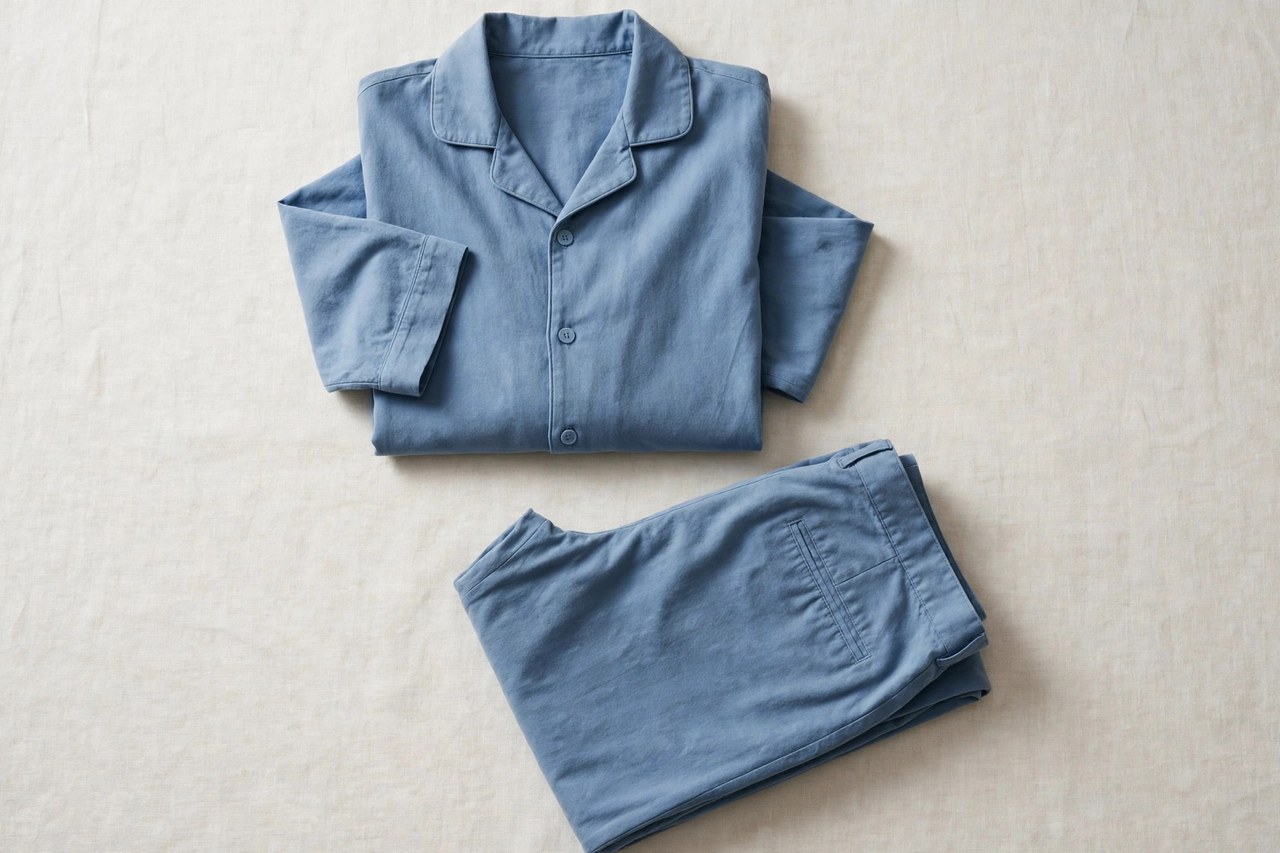
Men's pajamas are a matched sleepwear set - a loose button-front or pullover top with matching drawstring or elastic-waist trousers - made to be slept in rather than merely worn indoors. This guide treats pajamas strictly as a product: the fabrics that regulate temperature through the night, the cuts that do not twist or bind in sleep, and the construction details that decide whether a set is still comfortable after fifty washes. Loungewear and robe questions belong to their own guides; here the job is a full night's sleep. This guide is built around the questions buyers actually ask: which style, which size, which fabric, and what will it look like after a year of real use - answered in order, with the trade-offs stated plainly.
Fabrics for a Full Night
Sort pajama fabrics by the sleeper, not the season label. Cotton poplin and broadcloth are the classic woven choice: smooth, breathable, crisp enough to slide in bed rather than grip the sheets. Cotton flannel adds a brushed warmth for cold rooms and winter, at the price of slower drying. Knit jersey pajamas stretch with movement and suit restless sleepers, while modal and bamboo-derived knits feel cooler and drape softer, though they pill sooner at friction points. Silk is the luxury outlier - light and temperature-neutral, fragile in the wash. Construction tells follow the fabric: woven sets should have smooth flat-felled or overlocked seams that will not ridge under body weight, a drawstring backed by elastic so the waist survives the drawstring's eventual failure, and buttons sewn to stay through commercial-strength home laundry. Piping, plackets and chest pockets are styling; seam smoothness is comfort.
The durable buying order is job, specification, budget - in that sequence. Decide what the garment must do, translate that into fiber, weight, construction and size numbers, and only then shop price. Read labels as specifications, inspect the garment inside out where finishing is unposed, and prefer the maker who publishes measurements to the one who publishes adjectives. A garment that matches your measurements, climate and laundry will be worn; one that misses any of the three becomes expensive storage.
Ease With a Purpose
Pajama fit is ease with a purpose. The top should close across the chest without the buttons working, the shoulders should allow both arms overhead without the hem climbing, and the trousers should sit at the waist you choose - drawstring sets forgive a size of drift, elastic-only sets do not. Length matters more asleep than awake: trouser hems that pool catch on bedding and twist the leg, so a hem at the ankle bone is the working target, and sleeve cuffs should end at the wrist so they do not ride over the hands. Buy sleepwear by the maker's garment measurements where given, and size for the position you sleep in - side sleepers feel waistband and seam pressure that back sleepers never notice.
Measure yourself once a year and keep the numbers - chest, waist, inseam, foot, head - because bodies drift gradually while size habits never do. Shop from measurements, try garments under real conditions (over layers, in your own shoes, late in the day for footwear), and be honest about alterations: lengths and small waist changes tailor beautifully; shoulders, rises and patterns are the garment you bought forever.
Washed Often, Washed Gently
Wash pajamas more often than day clothes and more gently than their price suggests: they spend eight hours against skin and absorb the night's perspiration, so a weekly rhythm for a set in rotation is normal. Cool or warm water, mild detergent, and low or line drying protect elastic - heat is what kills drawstring-channel elastic and jersey recovery alike. Flannel pills less washed inside out; knits keep their softness out of the dryer. Keep two or three sets in rotation so no set is worn twice before washing, and retire a set when the waistband stops recovering, because a waist that will not stay up is the one fault no amount of softness excuses.
Five minutes when a garment comes off - shake it out, hang or fold it correctly, note the stain and the loose button - prevents most of the damage later blamed on quality. Keep a small kit where the clothes live: brush, lint roller, conditioner suited to your leathers, black, navy and grey thread. Clothing rarely dies at once; it fades by small neglects, and small attentions reverse the process at the same pace.
Common Questions
What is the best pajama fabric for a warm sleeper?
A light, breathable one: cotton poplin or broadcloth for woven sets, or a modal or bamboo-derived knit for stretch sets. Both move air and absorb moisture without the cling of synthetics. Avoid flannel and heavy jersey, which are built for cold rooms, and be skeptical of 'cooling' finishes whose effect fades in the wash - the base fabric does the real work.
Should men's pajamas fit loose or close?
Loose enough to never bind: the top should button without strain, both arms should reach overhead without the hem climbing, and the trousers should stay at the waist on their drawstring or elastic alone. Close-fitting sleepwear twists and rides as you turn; excess fabric pools and catches. The test is movement - roll, reach and sit in them before deciding the size is right.
How often should pajamas be washed?
After two or three nights at most, and weekly for a set in a normal rotation - they spend the whole night against skin. Wash cool or warm with mild detergent and dry low or on the line, because dryer heat is what tires waistband elastic and jersey stretch. Rotating two or three sets spreads the washing and makes each set last noticeably longer.
More in Men's Clothes Guide P
PJs, Jimmies and Jammies
Pajamas, or pyjamas as spelled in British English, are often shortened to PJs, jimmies, jimjams or jammies, and the page asked its cheerful question — do manly men wear PJs to bed? — answering that a large percentage of the male population owns pajamas, whether or not all of them actually wear them. Pajamas are loose-fitting garments derived from the original garment and worn chiefly for sleeping, but sometimes also for lounging.
Looking for Men's Clothing Stores?
This guide explains men's pajamas. To browse where to buy, visit our men's clothing store directory, where you can find retailers that carry them.