Men's Polo Shirts Guide
A polo shirt is a knitted pullover shirt with a soft fold-down collar, a short buttoned placket and banded short sleeves - the garment Rene Lacoste cut for tennis in the 1920s and Ralph Lauren later made a wardrobe empire's emblem. It occupies the exact middle of menswear: more deliberate than a t-shirt, less formal than a button-up, and acceptable almost everywhere the other two are not quite right. This guide covers the polo as a style - its collar, placket, fits and wardrobe work - while our pique tennis shirts guide in this letter covers the waffle knit most polos are made from.
Shop Men's Polo Shirts Now
Shop Men's Polo Shirts on Amazon Shop Men's Polo Shirts on eBayThe Amazon and eBay links on this page are affiliate links. If you make a purchase through them, Apparel Search may earn a commission.
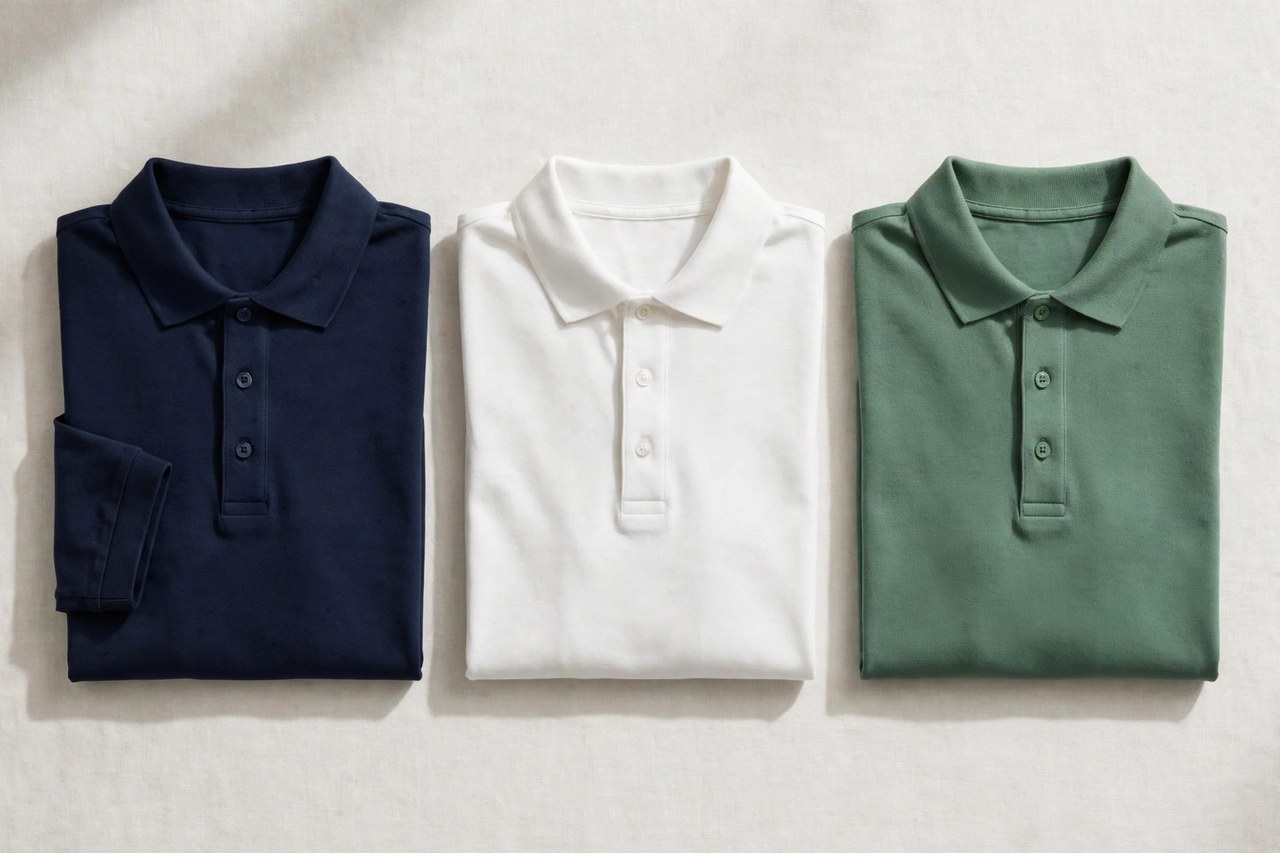
A polo shirt is a knitted pullover shirt with a soft fold-down collar, a short buttoned placket and banded short sleeves - the garment Rene Lacoste cut for tennis in the 1920s and Ralph Lauren later made a wardrobe empire's emblem. It occupies the exact middle of menswear: more deliberate than a t-shirt, less formal than a button-up, and acceptable almost everywhere the other two are not quite right. This guide covers the polo as a style - its collar, placket, fits and wardrobe work - while our pique tennis shirts guide in this letter covers the waffle knit most polos are made from. This guide explains what to look for, how the sizing actually works, which fabrics and constructions earn their price, and how to care for the garment so it keeps doing its job season after season.
Collar, Placket, Bands
Read a polo from the collar down. A good collar is knitted or cut to lie flat and keep its line through a day and a season of washing; a floppy or curling collar is the first sign of a cheap example, and collar construction is where money shows. The placket runs two or three buttons - two reads classic, three reads a little more formal - and should lie closed without gaping. Sleeve bands should grip the mid-bicep gently; a band that floats looks borrowed. Fabric divides the family: cotton pique, textured and breathable, is the original, with its own guide in this letter; flat cotton jersey polos drape softer and read dressier; performance polos in wicking synthetics belong to the golf course and our performance apparel guide's logic. The tennis tail - a back hem slightly longer than the front - is the authentic leftover of a shirt designed to stay tucked through a match, and a side vent is its modern form.
Judge knitwear by gauge, ply and finishing rather than by softness in the shop, because every knit feels kind on day one. Gauge counts stitches per inch - finer gauges drape and layer, coarser gauges insulate and read casual. Ply counts the strands twisted into the yarn: more plies mean more warmth, roundness and price. Fully-fashioned shaping, knitted in rather than cut and sewn, marks better garments, and linked seams at the shoulders and neck lie flatter and last longer than overlocked ones.
Skim, Never Slouch
Polo fit is the difference between sharp and sloppy, because the style's ease invites excess. The body should skim: you should be able to pinch an inch or two of cloth at the sides, not a handful. Shoulder seams at the bone, sleeves ending mid-bicep and banded close, and length to mid-fly untucked or long enough to stay tucked through a sitting day. A polo is the rare shirt where the collar judges the size - if the collar stands away from the neck or the placket pulls open, the chest is wrong regardless of how the body feels. Fit it in the register you will wear it: tucked with trousers for the office version of the style, untucked with shorts or chinos for the weekend one, because a polo bought for one and worn for the other is usually the wrong length for both.
Fit knitwear by the body, not the shoulders alone: a sweater should skim rather than cling, with ease for a shirt beneath at the chest, sleeves ending at the wrist bone, and body length covering the waistband without pooling. Knits relax with wear - a slightly firm new fit is often the right long-term fit - but ribbed cuffs and hems should recover when stretched, and a neckline should sit flat against the base of the neck, neither gaping nor strangling.
The Collar Decides Retirement
Polos age at the collar and the color. Wash inside out, cool or warm, with the placket buttoned, and dry low briefly or reshape on the line - heat and hanging conspire to curl collars and point shoulders. Button the top button in storage if you hang them, or fold, which this knit prefers. Dark polos fade fastest at the collar and shoulders where sun lands; rotating three or four extends the deep-color years across all of them. A steamer revives a collar better than an iron, which can shine the pique. Retire a polo when the collar will no longer lie flat or the banded sleeves have lost their grip - those two failures are the style's definition dissolving, and no other part of the shirt can compensate for either.
Knitwear care is gentle by default: wash cool by hand or on a wool cycle with knitwear detergent, never wring, roll in a towel to lift water, and dry flat on a mesh or towel, reshaped to its measurements. Fold for storage - hangers stretch shoulders into points - with cedar or lavender against moths, and rest a sweater a day between wears so its fibers recover their loft. Depill with a comb or electric shaver; pilling is loose fiber migrating, not the garment failing.
Common Questions
What is the difference between a polo shirt and a pique tennis shirt?
Style versus fabric. Polo names the shirt - soft collar, short placket, banded sleeves - whatever it is knitted from. Pique names the waffle-textured cotton knit most classic polos use. Our pique tennis shirts guide covers that fabric in depth: its ventilation, grades and care. Most polos are pique, many tennis shirts are polos in all but name, and the overlap is why the two guides sit side by side in this letter - one reads the shirt, the other reads the cloth.
Should a polo shirt be tucked in?
Both are correct in their registers. Tucked into trousers or chinos, a polo reads as smart business-casual, and the traditional tennis tail - a longer back hem - was designed to keep it tucked. Untucked with shorts, denim or casual trousers, it is the weekend standard, provided the hem ends around mid-fly: much longer looks like a dress, much shorter rides up. Decide per outfit and size for the version you wear most, since length requirements differ.
How can you tell a good polo shirt from a cheap one?
Start at the collar: a quality collar is substantial, lies flat, and keeps its edge through wear and washing, while cheap collars curl and go limp within weeks. Then check the placket for clean, reinforced stitching, the sleeve bands for a gentle grip, and the fabric for an even, springy knit - pique with real texture rather than a printed suggestion of it. Weight in hand and seams that run straight finish the audit; polos are simple garments, so their few details carry all the quality there is.
More in Men's Clothes Guide P
Golf Shirt, Tennis Shirt, One Shirt
Our polo shirts page in the fashion influence section gathers the style’s names in one definition: A polo shirt, also known as a golf shirt and tennis shirt, is a form of shirt with a collar, a placket with typically two or three buttons, and an optional pocket — all three names describing the same garment at its three sporting homes. The classic polo is knitted from pique — see the pique tennis shirts guide in this letter.
Looking for Men's Clothing Stores?
This guide explains men's polo shirts. To browse where to buy, visit our men's clothing store directory, where you can find retailers that carry them.