Men's Pocket Tees Guide
A pocket tee is a t-shirt with a single patch pocket sewn at the left chest - the working tee of carpenters and stagehands before it was a style staple, kept in the wardrobe because the pocket is genuinely useful and because it gives a plain shirt a focal point. This guide is about the pocket as a design and construction problem: its placement, size and reinforcement, the small prints and contrasting fabrics that live on it, and why a pocket changes how a tee drapes. The wider printed-tee family has its own guides in this letter; here the print, when there is one, is measured in inches and sits on the pocket.
Shop Men's Pocket Tees Now
Shop Men's Pocket Tees on Amazon Shop Men's Pocket Tees on eBayThe Amazon and eBay links on this page are affiliate links. If you make a purchase through them, Apparel Search may earn a commission.
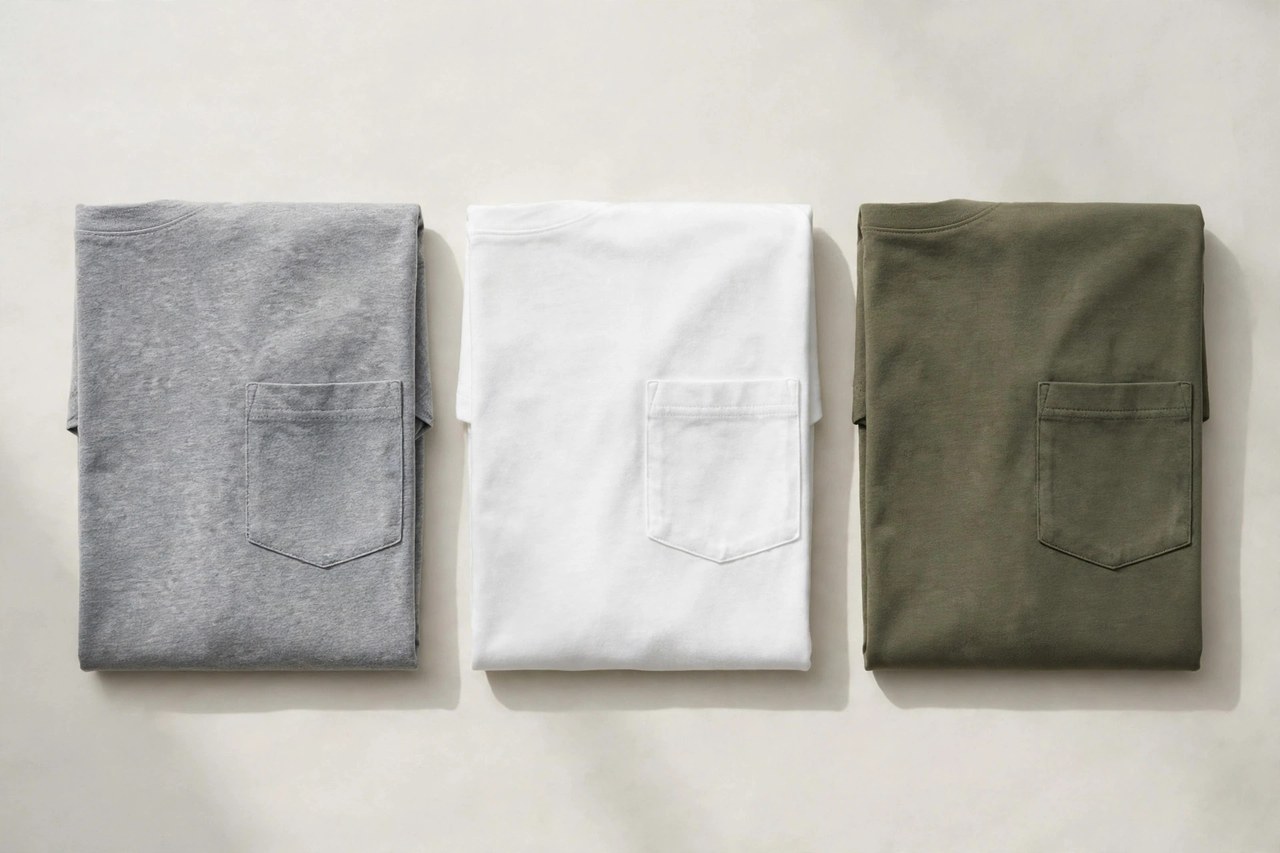
A pocket tee is a t-shirt with a single patch pocket sewn at the left chest - the working tee of carpenters and stagehands before it was a style staple, kept in the wardrobe because the pocket is genuinely useful and because it gives a plain shirt a focal point. This guide is about the pocket as a design and construction problem: its placement, size and reinforcement, the small prints and contrasting fabrics that live on it, and why a pocket changes how a tee drapes. The wider printed-tee family has its own guides in this letter; here the print, when there is one, is measured in inches and sits on the pocket. This guide covers the styles worth knowing, the fit points that decide comfort, the fabrics and construction that separate a good buy from a regret, and the simple care that makes the garment last.
A Bag Hung From Stitching
Placement is geometry. A correct pocket sits on the left chest with its top edge roughly at the second-button position of a shirt, its inner edge clear of the center line, level, and sized in proportion - about four to four and a half inches wide on a medium, big enough for glasses, a phone in a pinch, or the pens it was drawn for. Construction decides whether it stays correct: the pocket's top hem should be reinforced, its corners bar-tacked or riveted, because a pocket is a bag hung from stitching and its top corners take every load. Better tees cut the pocket on the same grain as the body so it does not skew after washing, and pattern-match or deliberately contrast it - a chambray, striped or printed pocket on a plain body is the style's favorite move, and the bridge to this letter's printed pages: the pocket becomes a small canvas, carrying a logo, a pocket-print design or a contrast fabric while the shirt stays plain.
A top earns its keep in finishing: seams that hang straight and stay even at eight to twelve stitches per inch, collars and plackets that lie flat after washing, buttons sewn with thread shanks so they sit in their holes without pulling. Hold the cloth to the light - a tight, even weave or knit outwears a loose one at the same labeled weight, and pattern pieces cut on grain keep the garment from twisting around your body by the third wash.
The Pocket as Fit Instrument
A pocket changes fit subtly. It adds a layer and a fraction of weight at the chest, which improves how midweight and heavyweight tees hang - one reason the classic pocket tee is cut from sturdier jersey than a fashion tee - and it slightly warms and stiffens the chest panel, a reason some makers use a lighter pocket fabric. Fit otherwise follows t-shirt law: shoulder seam at the bone, chest smooth without pull, hem around mid-fly. Because the pocket is a visual anchor, its placement betrays a wrong size instantly - a pocket wandering toward the armpit says the chest is too big, one pulled toward center says too small - so use it as a fit instrument in the mirror. If you actually carry things, test with the load in place: a pocket that sags open with your glasses in it needs a reinforced or buttoned variant, not a bigger shirt.
Fit tops shoulders and chest first, because tailors cannot cheaply move either: the shoulder seam ends at the shoulder bone, the chest closes without pulling, and both arms raise without the hem escaping the waistband. Tucked lengths must stay tucked sitting; untucked lengths should end mid-fly. Sleeves are the cheap alteration, shoulders the permanent one - reject a wrong shoulder for any reason, forgive a long sleeve for many.
Empty the Pocket First
Pocket tees wash like the work shirts they descend from, with one addition: empty the pocket. Pens, screws and forgotten receipts write on the whole load, and a loaded pocket washes unevenly and dries twisted. Inside out and cool protects prints and contrast pockets; low or line drying preserves the pocket's alignment against the body, since differential shrinkage between pocket and shirt is what pulls a pocket diagonal over a season. Press the pocket flat if it curls. Inspect the top corners monthly if you use the pocket for real - restitching a corner is a two-minute job, while a torn corner retires the shirt's defining feature. A sound heavyweight pocket tee is one of the longest-lived casual garments a man owns, and the pocket usually decides when it ends.
Launder tops by the label with three defaults: cool or warm water to protect color and trims, dark and printed pieces inside out, and low or line drying, which is the largest single lever on a shirt's lifespan. Fasten buttons and zips before washing to protect the whole load, treat stains before the dryer can set them, and store knits folded so their shoulders keep the shape they were knitted with.
Common Questions
What is a pocket tee's pocket actually for?
Originally, work: the chest pocket held pencils, cigarettes, small tools and notes for men whose shirts had no other storage - carpenters, stagehands, tradesmen. Today it is half utility, half design: genuinely handy for glasses and light items, and a visual focal point that carries contrast fabrics and small prints. What it is not built for is weight - a heavy phone stretches the pocket's stitching and pulls the chest out of shape, which is why reinforced corners and honest loads matter.
Why do some pocket tees have a print only on the pocket?
Because the pocket is the tee's natural small canvas. A pocket-area print - a logo, emblem or design placed on or just above the pocket - keeps the shirt plain and wearable while marking it, and brands prize the position because the eye goes to the chest anyway. It is the restrained end of the printed t-shirt family covered elsewhere in this letter: the print serves the garment's proportions instead of covering its chest, and it dates far more slowly.
How should a pocket tee fit compared with a plain tee?
Nearly identically - same shoulder, chest and length rules - with the pocket as a placement check: correctly sized, the pocket sits level on the left chest, clear of the center and the armpit. If it drifts toward the armpit the shirt is too large; if it pulls toward center, too small. Pocket tees are often cut from heavier jersey that hangs straighter, so they can look neater in the same size - judge by the pocket's position, not just the body's feel.
More in Men's Clothes Guide P
Pockets Are Not Only for Pants
First of all, pockets are not only for pants. A pocket is a bag- or envelope-like receptacle either fastened to or inserted in an article of clothing to hold small items, and pockets may be attached to various types of shirts; in older usage a pocket was a separate small bag or pouch, but now they are mostly attached directly to the garment. The chest pocket on a tee is that receptacle’s most casual modern home.
More to Explore on Apparel Search
Looking for Men's Clothing Stores?
This guide explains men's pocket tees. To browse where to buy, visit our men's clothing store directory, where you can find retailers that carry them.