Men's Silk Pajamas Guide
Men's silk pajamas are a matched sleepwear set - a button-front, piped pajama shirt and drawstring trousers - made from woven silk rather than the cotton and flannel of everyday pajamas. The pattern is the classic one formalized in the early twentieth century, and silk changes its character: the set drapes instead of rumpling, the piping sits crisp, and the fabric's natural temperature regulation keeps the wearer comfortable across the night's warm and cool hours. This guide treats the set strictly as a product - fabric weights, construction and care.
Shop Men's Silk Pajamas Now
Shop Men's Silk Pajamas on Amazon Shop Men's Silk Pajamas on eBayThe Amazon and eBay links on this page are affiliate links. If you make a purchase through them, Apparel Search may earn a commission.
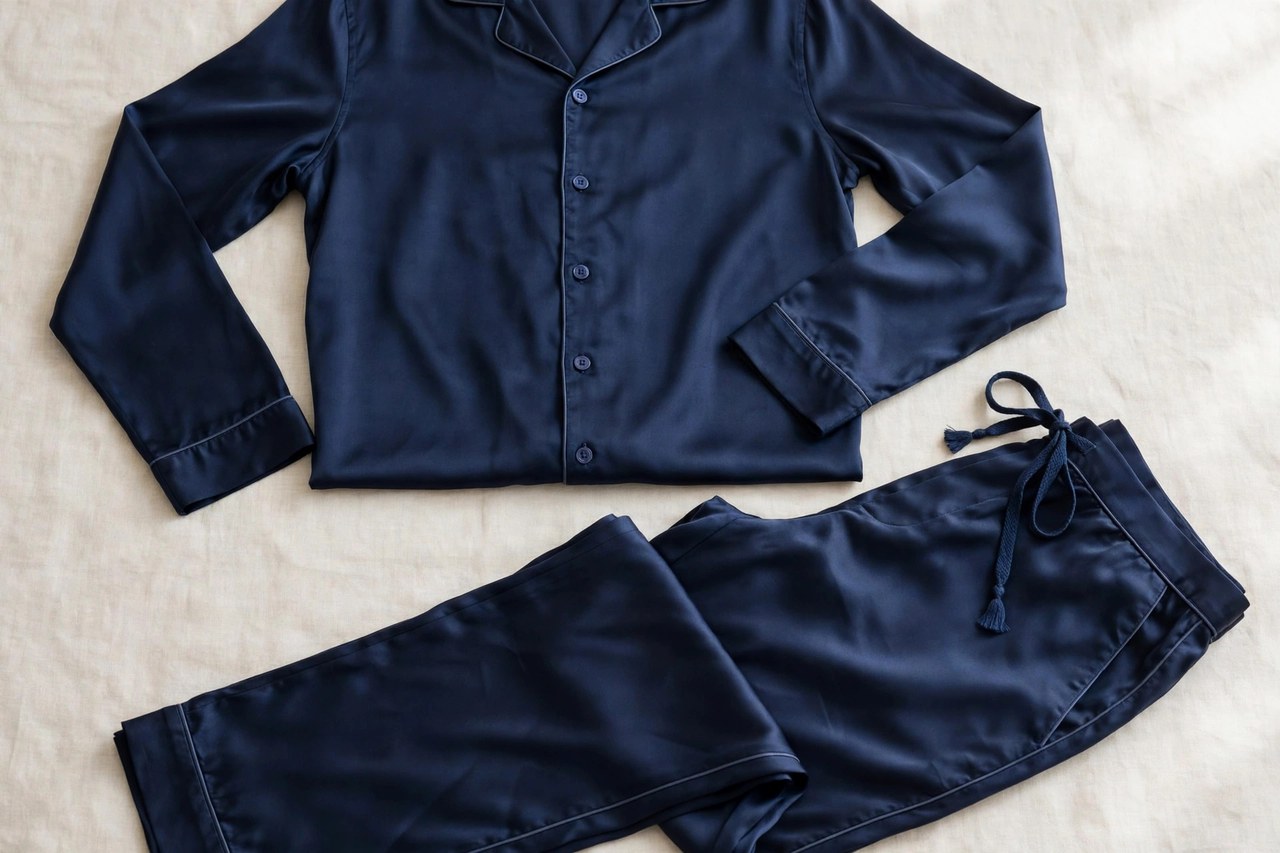
Men's silk pajamas are a matched sleepwear set - a button-front, piped pajama shirt and drawstring trousers - made from woven silk rather than the cotton and flannel of everyday pajamas. The pattern is the classic one formalized in the early twentieth century, and silk changes its character: the set drapes instead of rumpling, the piping sits crisp, and the fabric's natural temperature regulation keeps the wearer comfortable across the night's warm and cool hours. This guide treats the set strictly as a product - fabric weights, construction and care. This guide walks through the choices that matter - style, fit, fabric and finish - with the practical detail a product listing rarely gives you, and closes with the care habits that keep the garment in service.
Pajama Silk Weights and Classic Detailing
Pajama silk runs heavier than underwear silk: 19-22 momme charmeuse or a sandwashed equivalent gives the shirt the body to hold its collar and piping and gives the trousers opacity and seam strength. The quality marks are in the classic details - piping that is corded and evenly stitched rather than printed on, mother-of-pearl or well-finished buttons, a chest pocket set straight, French or flat-felled seams that leave nothing rough against the skin, and a trouser drawstring with an elastic back section so the waist adjusts without a bow digging in. Printed silks should be dyed-through patterns, not surface prints that crack at the folds.
The durable buying order is job, specification, budget - in that sequence. Decide what the garment must do, translate that into fiber, weight, construction and size numbers, and only then shop price. Read labels as specifications, inspect the garment inside out where finishing is unposed, and prefer the maker who publishes measurements to the one who publishes adjectives. A garment that matches your measurements, climate and laundry will be worn; one that misses any of the three becomes expensive storage.
Fit and Sizing
Pajama sizing is generous by tradition, and silk does not stretch - so measure, then honor the chart. The shirt should close at every button without pulling when you sit and reach; the sleeve ends at the wrist; the trousers should sit at the natural waist with the hem ending at the ankle bone, never pooling - excess length in a sleep garment is a genuine stumble risk on night-time stairs. Most men find their normal letter size correct in classic-cut silk sets, but the chest and waist measurements, not the letter, are the authority.
Measure yourself once a year and keep the numbers - chest, waist, inseam, foot, head - because bodies drift gradually while size habits never do. Shop from measurements, try garments under real conditions (over layers, in your own shoes, late in the day for footwear), and be honest about alterations: lengths and small waist changes tailor beautifully; shoulders, rises and patterns are the garment you bought forever.
Wearing and Care
Silk pajamas are the garment that most rewards a laundry routine: cool hand washing or a delicates cycle in a mesh bag with silk wash, rolled in a towel rather than wrung, dried flat or on a padded hanger away from sun and heat, and stored folded. Skip fabric softener - silk needs nothing to be soft, and residues dull it. A two-set rotation, each rested and aired between wears, will outlast a single set worn nightly by years, because silk fatigues fastest when it never fully dries and rests.
Five minutes when a garment comes off - shake it out, hang or fold it correctly, note the stain and the loose button - prevents most of the damage later blamed on quality. Keep a small kit where the clothes live: brush, lint roller, conditioner suited to your leathers, black, navy and grey thread. Clothing rarely dies at once; it fades by small neglects, and small attentions reverse the process at the same pace.
Common Questions
Why choose silk pajamas over cotton?
Temperature behavior and drape. Silk adjusts to the sleeper - cool at first contact, insulating once warm - and its smooth surface lets the set move with the body through the night instead of twisting the way cotton grips. Cotton pajamas are cheaper, easier to launder and warmer in a flannel weave. The honest trade is luxury and regulation against effort: silk asks for gentle washing, cotton asks for nothing.
What momme weight should silk pajamas be?
19 to 22 momme is the classic pajama range - enough body for the shirt to hold its collar, piping and buttons, enough opacity and seam strength for the trousers, without becoming dressing-gown heavy. Lighter silk (16-19) makes summer-weight sets that many sleepers prefer in warm rooms; below 16, seams and elbows wear faster than the fabric justifies.
How should silk pajamas fit?
Easy but measured: every shirt button closing without pull when seated, sleeves to the wrist, trousers at the natural waist with hems at the ankle bone and nothing pooling. Silk has no stretch to forgive a small size, and a sleep garment that binds defeats its purpose - but the traditional generous cut already includes the ease, so your measured size, not a size up, is the right buy.
More in Men's Clothes Guide S
Pajamas, Also Known As
Pajamas, often shortened to PJs, jimmies, jimjams or jammies, are loose-fitting garments derived from the original garment and worn chiefly for sleeping, but sometimes also for lounging, made in various fabric types of which silk is obviously one of the choices here. Silk is a natural protein fiber with a smooth, soft texture that is not slippery, unlike many synthetic fibers. See also our men’s silk lounge pant and men’s silk boxer pages, and the sleepwear guide.
More to Explore on Apparel Search
Looking for Men's Clothing Stores?
This guide explains men's silk pajamas. To browse where to buy, visit our men's clothing store directory, where you can find retailers that carry them.