Men's Silk Lounge Pants Guide
Men's silk lounge pants are relaxed full-length trousers in woven silk, made for wearing at home - an elastic or drawstring waist, a straight unrestrictive leg, and none of the structure of tailored pants. They are the tailored end of loungewear: the same easy pattern as a pajama pant, executed in a fabric that drapes cleanly enough to answer the door, take coffee on the terrace and spend a slow morning in without a costume change.
Shop Men's Silk Lounge Pants Now
Shop Men's Silk Lounge Pants on Amazon Shop Men's Silk Lounge Pants on eBayThe Amazon and eBay links on this page are affiliate links. If you make a purchase through them, Apparel Search may earn a commission.
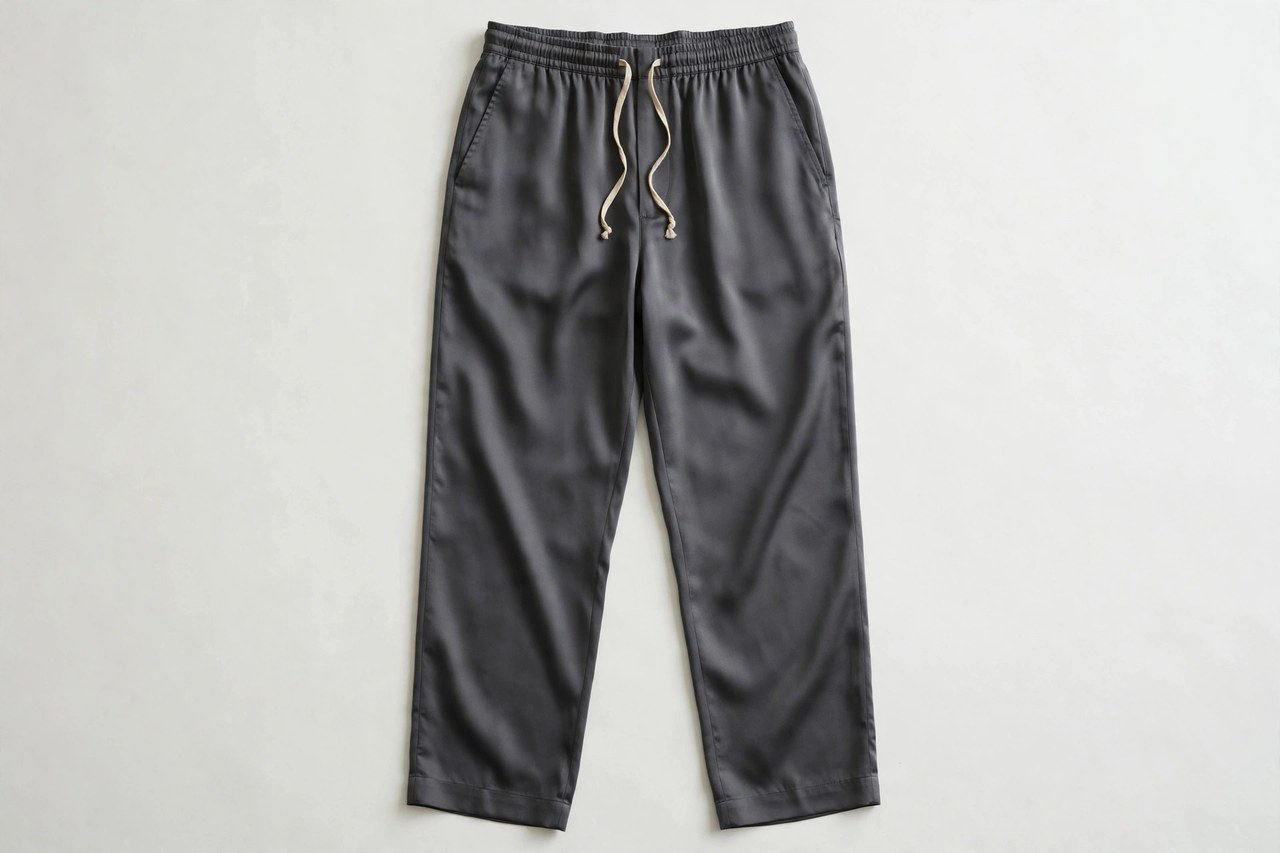
Men's silk lounge pants are relaxed full-length trousers in woven silk, made for wearing at home - an elastic or drawstring waist, a straight unrestrictive leg, and none of the structure of tailored pants. They are the tailored end of loungewear: the same easy pattern as a pajama pant, executed in a fabric that drapes cleanly enough to answer the door, take coffee on the terrace and spend a slow morning in without a costume change. This guide is built around the questions buyers actually ask: which style, which size, which fabric, and what will it look like after a year of real use - answered in order, with the trade-offs stated plainly.
Fabric Weight and Lounge Pant Finishing
A lounge pant is a simple pattern, so fabric and finish decide everything. Pajama-weight silk around 19-22 momme gives the drape and opacity a full-length garment needs; sandwashed finishes trade sheen for a matte, peach-skin hand and forgive wrinkles better. Construction points: a drawstring anchored so it cannot retreat into the channel, flat-felled or bound inseams (you sit on these seams for hours), a hem that is actually hemmed rather than serged raw, and pockets - better lounge pants include side pockets deep enough for a phone. Cuffs and ankle elastics belong to jogger patterns; a classic lounge pant ends in a clean open hem.
For any leg garment the rise is the first specification, because it decides sitting comfort before fabric gets a vote: measure from front waistband through to back and compare it with a pair that already works. Then audit the stress points - bar-tacked belt loops and pocket corners, double-stitched inseams, hems finished evenly - and the pocketing, which should be deep, smooth and strong enough to carry what the garment's pockets invite you to carry.
Fit and Sizing
Size by waist with the drawstring's range in mind, and choose the inseam deliberately - lounge pants are sold long, and silk pooling over the foot is a trip hazard on stairs and a dirt collector on floors. The right length kisses the top of the foot barefoot. The leg should be generous without ballooning: this is a garment whose elegance is its drape, and excess cloth kills drape as surely as tightness does. Between sizes, take the larger and let the drawstring govern.
Measure where the waistband will actually sit, plus inseam to your preferred break, and thigh and seat for closer cuts. Then sit, squat and climb a step in the fitting room - a leg garment that only works standing still does not work. Waistbands relax roughly half an inch in wear and inseams shrink most in early washes, so buy the fit you want after those changes rather than the fit in the mirror.
Wearing and Care
Wash silk lounge pants as silk demands: cool hand wash or a true delicates cycle in a mesh bag, silk-safe detergent, no wringing, dried flat or on a padded hanger out of sunlight. Press cool on the reverse side. Store folded rather than hung by the waistband, which stretches the channel. Silk loungewear kept this way holds its drape for years - and the fabric's natural temperature balance is why it is worn in the first place, cool in summer rooms and surprisingly warm under a robe in winter.
Wash leg garments inside out and cool; heat is the agent that fades dye, tires elastic and shortens inseams. Dry low or on the line, hang or fold promptly, and crease deliberately or not at all. Walk the stress points each season - hem edges, pocket corners, seat and inner thigh - and mend the small fray while it is still small: leg garments fail gradually, then suddenly, and the two-minute October repair prevents the November replacement.
Common Questions
What is the difference between silk lounge pants and silk pajama pants?
Cut and intent, less than cloth. Pajama pants are sized and styled as sleepwear, usually sold as part of a set with a matching top. Lounge pants are the same relaxed pattern sold as a standalone garment for waking hours at home - often a touch more finished (real pockets, anchored drawstring, cleaner hems) and meant to be seen by the household and the doorbell. Many men use one garment for both; the distinction is in the styling, not the sewing.
Can silk lounge pants be worn outside the house?
They read as intentional resort and travel wear in the right setting - a hotel terrace, a beach-house morning, a long-haul flight under a knit top - and as pajamas everywhere else. The fabric's drape is doing the persuading, so the pairing matters: a fitted knit or a camp shirt keeps the register; a T-shirt and trainers announce bedtime. When in doubt, the house is the venue.
How do I stop silk lounge pants from wrinkling?
Choose sandwashed silk, which wrinkles softer and recovers faster than high-sheen charmeuse, hang the pants by the waistband on a padded hanger after wear so body heat and gravity do most of the work, and steam rather than iron when they need help. Rolled storage beats folding for travel. Silk will never be wrinkle-free like a synthetic - the soft crease is part of its character.
More in Men's Clothes Guide S
Loungewear and the Silk Weaves
Loungewear is casual, comfortable clothing suitable for wearing at home. Many people opt to sleep or lounge in just the pajama pants, and while relaxing, men often wear a lounge pant and a t-shirt. Fabrics often made from silk include charmeuse, habutai, chiffon, taffeta, crepe de chine, dupioni, noil, tussah and shantung, among others. A pant is an item of clothing worn from the waist to the ankles, covering both legs separately, and lounge pants are typically made of soft, comfortable fabrics, in knit or woven form.
Looking for Men's Clothing Stores?
This guide explains men's silk lounge pants. To browse where to buy, visit our men's clothing store directory, where you can find retailers that carry them.