Men's Knit Pants Guide
Men's knit pants are trousers made of knitted fabric - simply put, this type of pant is made of knitted fabrics. Pants are an item of clothing worn from the waist to the ankles, covering both legs separately, and what changes when the cloth is knitted rather than woven is the behavior: knitted fabric is more flexible than woven fabric, so a knit pant moves, sits and travels the way a woven trouser cannot - the entire reason the category exists, and the thing to judge it by.
Shop Men's Knit Pants Now
Shop Men's Knit Pants on Amazon Shop Men's Knit Pants on eBayThe Amazon and eBay links on this page are affiliate links. If you make a purchase through them, Apparel Search may earn a commission.
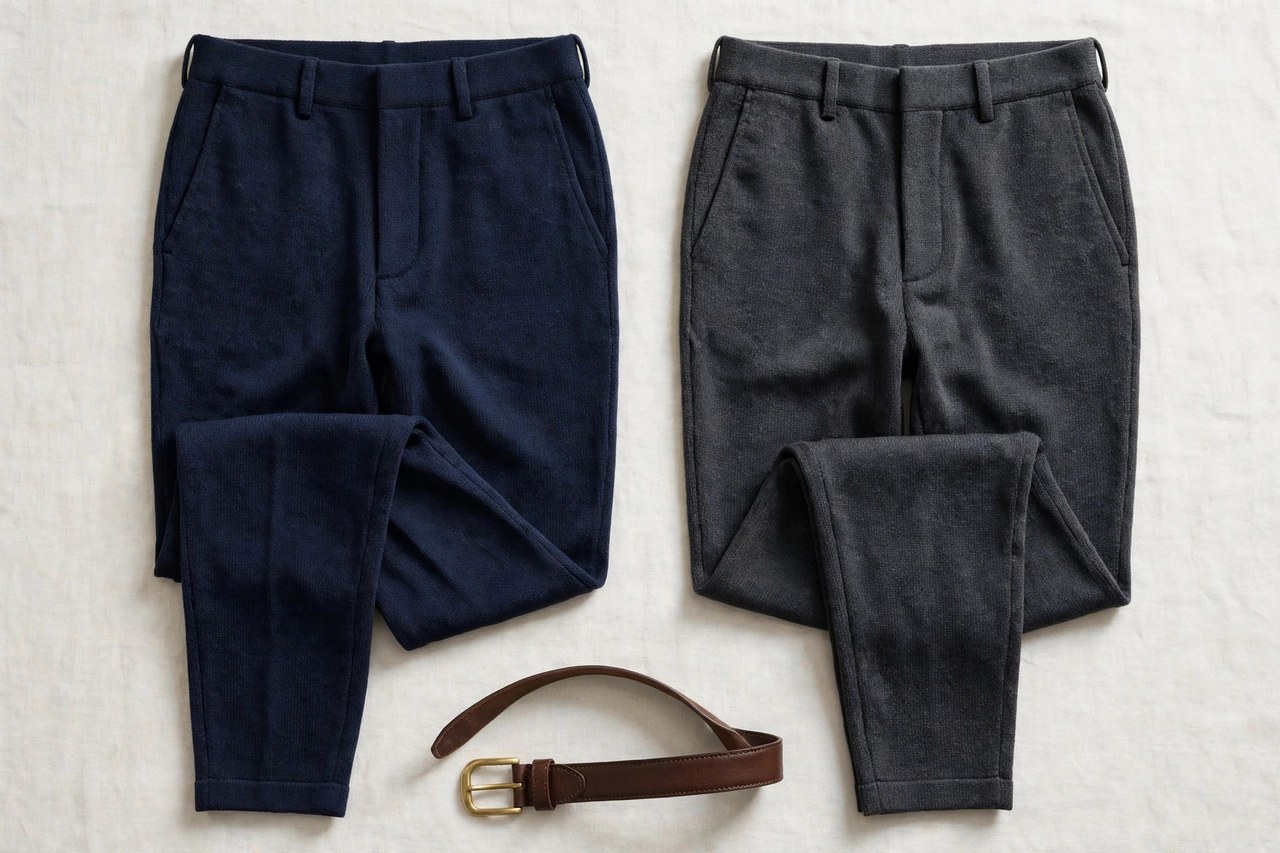
Men's knit pants are trousers made of knitted fabric - simply put, this type of pant is made of knitted fabrics. Pants are an item of clothing worn from the waist to the ankles, covering both legs separately, and what changes when the cloth is knitted rather than woven is the behavior: knitted fabric is more flexible than woven fabric, so a knit pant moves, sits and travels the way a woven trouser cannot - the entire reason the category exists, and the thing to judge it by. This guide is built around the questions buyers actually ask: which style, which size, which fabric, and what will it look like after a year of real use - answered in order, with the trade-offs stated plainly.
Double-Knits, Jerseys and Trouser Manners
Not all knit pants are the same garment wearing different labels, and the knit structure is the tell. At the dressed end, ponte and other double-knits interlock two layers into a firm, smooth cloth that holds a crease, resists bagging and passes - at conversational distance - for a woven trouser; this is the travel and office branch of the family. In the middle, interlock and heavier jersey knits make the casual five-pocket and drawstring styles that behave like a structured sweatpant. At the soft end, single jersey is lounge territory and belongs to its own guide. Fiber blends engineer the compromise: polyester knits hold shape and color and shrug off a suitcase; cotton knits breathe and feel familiar but bag sooner; viscose blends drape elegantly and wrinkle if you look at them; and elastane in small percentages supplies the recovery that makes any of them viable past noon. Judge the finishing like a trouser, not a legging: a proper waistband with belt loops or a clean elastic-and-drawstring hybrid, real pockets with pocketing that does not print through, bar-tacked stress points, and a hem that is sewn to hold a length rather than left to curl. A knit pant with woven-trouser manners is the goal; one that borrows only the silhouette will disappoint by the second wear.
Judge knitwear by gauge, ply and finishing rather than by softness in the shop, because every knit feels kind on day one. Gauge counts stitches per inch - finer gauges drape and layer, coarser gauges insulate and read casual. Ply counts the strands twisted into the yarn: more plies mean more warmth, roundness and price. Fully-fashioned shaping, knitted in rather than cut and sewn, marks better garments, and linked seams at the shoulders and neck lie flatter and last longer than overlocked ones.
Fit: Where Stretch Tells the Truth
Fit is where knit pants win or lose their argument, because stretch forgives the wrong size in the shop and reports it all day after. The waist should hold without the drawstring doing emergency work and without belt-loop strain; knit waistbands relax with body heat, so a fit that is merely adequate at the rail is loose by evening. Through the seat and thigh, the cloth should skim, never cling - knit shows every contour a woven trouser would skim over, so the honest test is a mirror from behind and a full sit: if the pockets flare and the seat shines with tension, go up a size and let the taper do the styling. Length behaves differently too: knit legs creep down slightly in wear and recover in the wash, so hem to the break you want in the afternoon, not the morning, and expect cuffed and tapered styles to be the most forgiving. The rise still rules sitting comfort exactly as it does in woven pants - knit stretch softens a wrong rise, it does not repeal it - so measure a pair that works and shop from the number.
Fit knitwear by the body, not the shoulders alone: a sweater should skim rather than cling, with ease for a shirt beneath at the chest, sleeves ending at the wrist bone, and body length covering the waistband without pooling. Knits relax with wear - a slightly firm new fit is often the right long-term fit - but ribbed cuffs and hems should recover when stretched, and a neckline should sit flat against the base of the neck, neither gaping nor strangling.
Wearing, Care and Travel
Care decides whether knit pants keep their one promise - arriving unwrinkled - or break it. Wash cool and inside out on a gentle cycle; heat is the enemy twice over, tiring elastane and setting the twist into legs cut slightly off grain. Skip the fabric softener on elastane blends, since it coats the fibers and dulls their recovery, and dry low or flat on a line - a knit pant hung dripping by its waistband stretches its own length longer. Fold rather than hang for storage, for the same reason: a knit leg on a hanger is a slow stretch experiment. Travel is where the category repays you - roll rather than fold for the case, hang in a steamy bathroom on arrival, and the creases fall out as woven trousers' never do. Walk the stress points each season - seat, inner thigh, pocket corners - because knits thin gradually and then hole suddenly, and a small mend in time keeps the most comfortable trousers you own in the rotation they earned.
Knitwear care is gentle by default: wash cool by hand or on a wool cycle with knitwear detergent, never wring, roll in a towel to lift water, and dry flat on a mesh or towel, reshaped to its measurements. Fold for storage - hangers stretch shoulders into points - with cedar or lavender against moths, and rest a sweater a day between wears so its fibers recover their loft. Depill with a comb or electric shaver; pilling is loose fiber migrating, not the garment failing.
Common Questions
What are men's knit pants, exactly?
Trousers sewn from knitted rather than woven fabric - simply put, this type of pant is made of knitted fabrics, and knitted fabric is more flexible than woven fabric. That single difference drives the category: the loops of a knit give the leg natural stretch and wrinkle recovery, so knit pants sit through a workday, survive a flight folded in a case, and move like athletic wear while - in the firmer double-knits like ponte - presenting like an ordinary trouser. The trade is structure: knits cling more and bag sooner than wovens, which is why fit and fiber blend matter more here than in any other pant category.
Can knit pants look dressy enough for the office?
The right ones can. Choose a firm double-knit - ponte is the classic - in a dark, matte color, with a flat front, a real waistband with a proper closure, belt loops, and a tapered or straight leg hemmed to a clean break. At conversational distance that construction reads as a woven trouser, while the knit quietly does its comfort work. What gives the game away is softness in the wrong places: shiny jersey, drawstrings left visible, bagged knees and legging-tight fits all read as leisurewear, whatever the product name claims.
Why do knit pants bag at the knees, and how do I prevent it?
Knit loops open under sustained bend and recover only as far as the fiber blend allows - cotton least, polyester and elastane blends most. Prevention starts at purchase: firmer double-knits bag far less than single jersey, and a skim-not-cling fit bends the cloth less at the knee. In service, rest the pants a day between wears so the loops relax back, wash cool to reset them, and dry flat rather than hanging the wet weight of the leg through the knee. Some softening across a day is the category's nature; a pair that bags within the first hour is the wrong knit or the wrong size.
More in Men's Clothes Guide K
Simply, Pants Made of Knitted Fabrics
Pants are an item of clothing worn from the waist to the ankles, covering both legs separately; knitted fabric is a textile that results from knitting, more flexible than woven fabric, usable for many different types of clothing including trousers — simply put, this type of pant is made of knitted fabrics. The category’s closest sibling is the men’s knit lounge pants guide in this same letter; the men’s pants, pleated pants and plain-front pants guides are linked below.
Looking for Men's Clothing Stores?
This guide explains men's knit pants. To browse where to buy, visit our men's clothing store directory, where you can find retailers that carry them.