Men's Knit Shirts Guide
Men's knit shirts are shirts - cloth garments for the upper body - made by knitting rather than weaving. Knitting is a method by which yarn is manipulated to create a textile or fabric, by hand or by machine, and t-shirts are most commonly made of knit fabric. There are two primary methods of producing fabric for tops, knitting and weaving - and the appealing difference, the one this whole category trades on, is that knitted fabric tends to have more stretch than woven fabric, so in the right silhouette a knit shirt can offer more comfort than its woven counterpart.
Shop Men's Knit Shirts Now
Shop Men's Knit Shirts on Amazon Shop Men's Knit Shirts on eBayThe Amazon and eBay links on this page are affiliate links. If you make a purchase through them, Apparel Search may earn a commission.
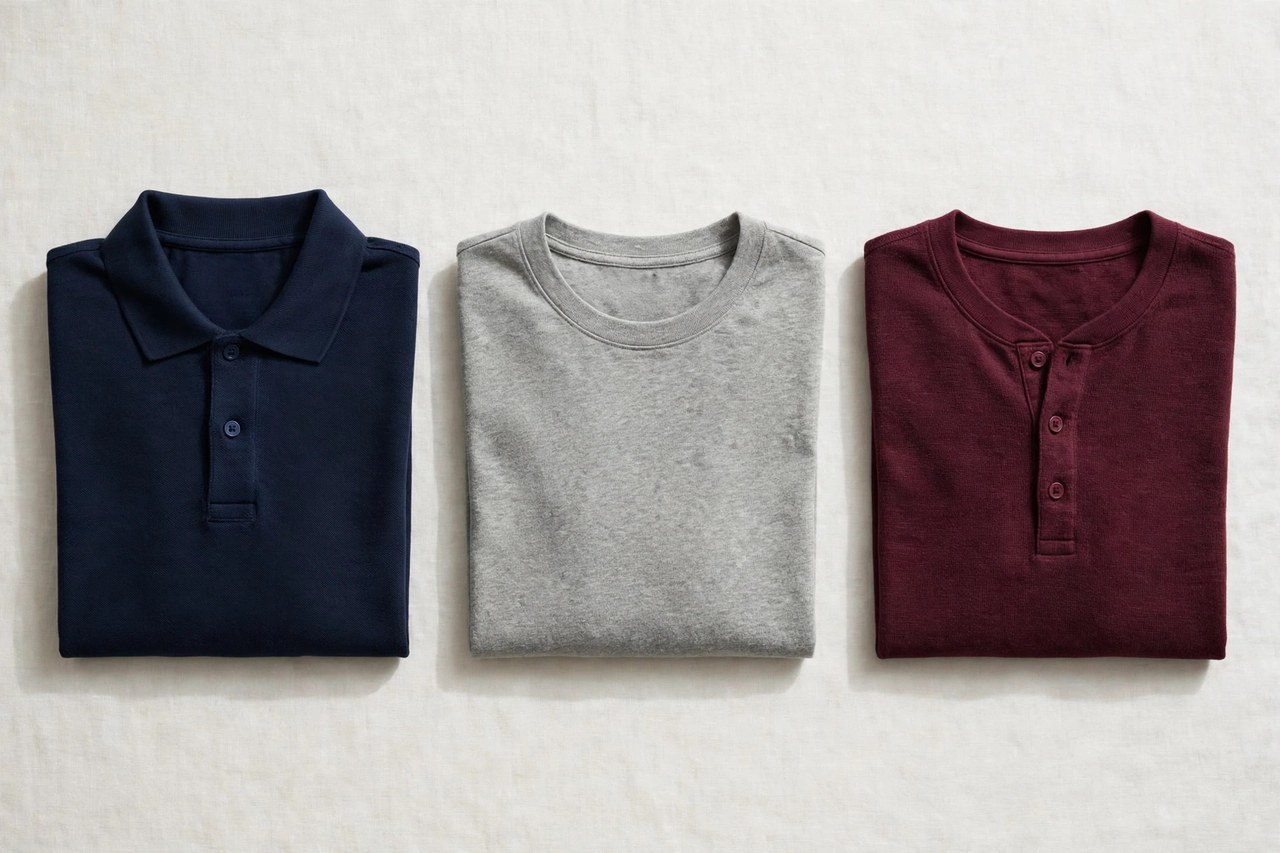
Men's knit shirts are shirts - cloth garments for the upper body - made by knitting rather than weaving. Knitting is a method by which yarn is manipulated to create a textile or fabric, by hand or by machine, and t-shirts are most commonly made of knit fabric. There are two primary methods of producing fabric for tops, knitting and weaving - and the appealing difference, the one this whole category trades on, is that knitted fabric tends to have more stretch than woven fabric, so in the right silhouette a knit shirt can offer more comfort than its woven counterpart. This guide covers the styles worth knowing, the fit points that decide comfort, the fabrics and construction that separate a good buy from a regret, and the simple care that makes the garment last.
Jersey, Pique, Interlock: The Shirt Knits
The knit structures map neatly onto the shirt styles you already know. Single jersey - light, smooth, with a tendency to curl at the edges - is the t-shirt cloth and the base of most henleys and long-sleeve tees. Pique, with its textured, waffled face, is the polo shirt's knit: it stands away from the skin, breathes in heat and holds a collar's shape. Interlock is jersey's firmer sibling, smooth on both faces, the choice for smarter knit shirts that must keep a line under a jacket. Rib knits serve as cuffs, collars and whole fitted bodies; slub jerseys carry deliberate irregularity for a lived-in surface. Fibers tune the same structures: cotton for softness and breathability, cotton-polyester for shape retention and slower fading, performance synthetics for moisture management in sport polos, and a few percent of elastane where a close fit must recover. Finishing is the inspection: collars that lie flat after washing (a polo collar with a proper knitted band, not a folded strip of self-fabric), side seams that hang straight rather than spiraling around the body - the sign of grain-true cutting - and stitching even enough that the stretch of the cloth is never fighting the seam.
Judge knitwear by gauge, ply and finishing rather than by softness in the shop, because every knit feels kind on day one. Gauge counts stitches per inch - finer gauges drape and layer, coarser gauges insulate and read casual. Ply counts the strands twisted into the yarn: more plies mean more warmth, roundness and price. Fully-fashioned shaping, knitted in rather than cut and sewn, marks better garments, and linked seams at the shoulders and neck lie flatter and last longer than overlocked ones.
Fit: Stretch Is for Movement
Fit a knit shirt by what the stretch is for: movement, not compression. The shoulder seam should still end at the shoulder bone exactly as on a woven shirt - knit does not move that landmark - and the chest should skim with enough ease to raise both arms without the hem leaving the waistband. A t-shirt's body ends around mid-fly untucked; a polo worn untucked should end no lower, and its sleeves should meet the mid-bicep without gripping it. Knits relax with wear and body heat, so a shirt that fits like a second skin at the rail fits like a sausage casing by evening - the category's most returned mistake. Conversely, an oversized knit does not drape like an oversized woven; it collapses, because the cloth has no structure to hold a shape it was not cut to. Length and shrinkage meet in the first wash: cotton jerseys give up length before width, so judge a new shirt's length after laundering if the label allows, and buy the chest you need rather than sizing up for length that tailoring cannot add. When in doubt between sizes in a knit, take the larger - the cloth forgives ease far better than strain.
Fit knitwear by the body, not the shoulders alone: a sweater should skim rather than cling, with ease for a shirt beneath at the chest, sleeves ending at the wrist bone, and body length covering the waistband without pooling. Knits relax with wear - a slightly firm new fit is often the right long-term fit - but ribbed cuffs and hems should recover when stretched, and a neckline should sit flat against the base of the neck, neither gaping nor strangling.
Wearing and Care
Knit shirts live in the laundry, so their care is their lifespan. Wash cool or warm, inside out for prints and darks, with buttons and any zips fastened so the load does not chew on itself; the largest single lever is the dryer - low heat or the line preserves fit, color and elastane, while hot drying is measured in lost length and tired ribbing. Fold knits for storage rather than hanging them: a jersey shirt on a hanger grows shoulders and length it was never knitted with, a lesson that applies double to heavier polos. Treat stains before the dryer can set them, reshape collars while damp - a polo collar trained flat after every wash stays flat - and rotate your most-worn tees so the ribbing at the neck recovers between wears. Pilling at the underarm and waistband is loose fiber migrating, worst on soft spun yarns, and lifts off with a fabric comb. Cared for this way, a good knit shirt keeps its fit for years; neglected, the same shirt announces it within a season.
Knitwear care is gentle by default: wash cool by hand or on a wool cycle with knitwear detergent, never wring, roll in a towel to lift water, and dry flat on a mesh or towel, reshaped to its measurements. Fold for storage - hangers stretch shoulders into points - with cedar or lavender against moths, and rest a sweater a day between wears so its fibers recover their loft. Depill with a comb or electric shaver; pilling is loose fiber migrating, not the garment failing.
Common Questions
What is the difference between a knit shirt and a woven shirt?
The fabric's construction: there are two primary methods of producing fabric for tops - knitting, which produces knitted fabric, and weaving, which produces woven fabric - and knitted fabric tends to have more stretch than woven fabric. A woven shirt (the classic button-front in poplin or oxford) holds a crisper shape and a press, but moves only where its cut allows. A knit shirt (a tee, polo or henley) gives with the body, needs no ironing to look intentional, and forgives a long day - at the price of structure, which is why the two families divide the wardrobe between them rather than competing for it.
Why does my t-shirt twist so the side seam spirals?
Because its fabric was knitted or cut slightly off grain, and washing lets the loops relax toward their natural skew. Quality jersey is knitted and cut grain-true and its seams hang straight wash after wash; budget cloth often is not, and no laundering technique fully corrects a spiraled cut. Check new shirts by holding them folded: seams that already drift in the shop will drift further at home. Washing cool, drying flat or low, and folding rather than hanging slows the process on a shirt you already own.
How should a polo shirt fit?
Like a knit shirt with manners: shoulder seams at the shoulder bone, a collar lying flat against the neck without gaping or choking, sleeves ending at mid-bicep with a finger's ease, and a body that skims the chest and closes - placket buttoned or not - without pulling across the stomach. Untucked, the hem should end around mid-fly, and the tennis tail, if it has one, belongs tucked. Because pique relaxes in wear, reject a polo that is already snug in the shop; the fit you want is easy at 9 a.m. so it is still tidy at five.
More in Men's Clothes Guide K
Knitting Versus Weaving
A shirt is a cloth garment for the upper body. Knitting is a method by which yarn is manipulated to create a textile or fabric, by hand or by machine; t-shirts, for example, are most commonly made of knit fabric. There are two primary methods of producing fabric for tops: knitting, which produces knitted fabric, and weaving, which produces woven fabric. One of the primary differences that appeals to many men is that knitted fabric tends to have more stretch than woven fabrics, so in certain situations knitted fabric can offer more comfort — though that is not always the case, since it depends on the garment silhouette, the sizing and the fabric construction. The men’s shirt guide is linked below.
Looking for Men's Clothing Stores?
This guide explains men's knit shirts. To browse where to buy, visit our men's clothing store directory, where you can find retailers that carry them.