Men's Chinos Guide
Born in colonial uniforms, raised by the US Army, adopted by every office on earth: chinos are the trousers a man's week is actually built on.
Shop Men's Chinos Now
Shop Men's Chinos on Amazon Shop Men's Chinos on eBayThe Amazon and eBay links on this page are affiliate links. If you make a purchase through them, Apparel Search may earn a commission.
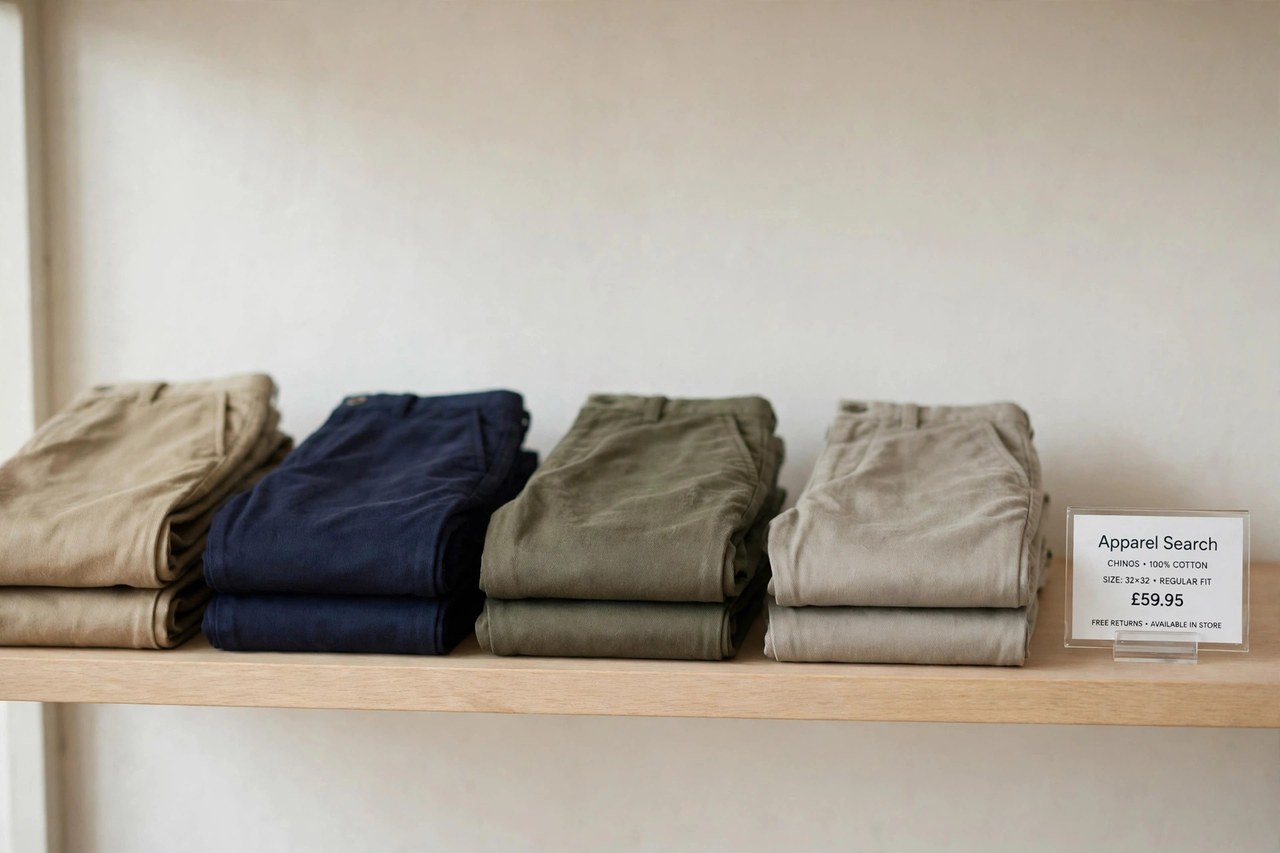
Chinos are cotton twill trousers with a military passport. British and American soldiers in the late nineteenth century wore lightweight cotton uniforms dyed the colour of dust — khaki, from the Urdu word for soil — and the Philippine-made cotton cloth of the Spanish-American War era gave the trousers their name: chino, Spanish for the Chinese cloth and workmanship behind the fabric. After the Second World War, surplus khakis walked onto college campuses and into offices, and the chino has never left the rotation since.
The reason is range. A chino sits exactly halfway between jeans and dress trousers: more polished than denim, more relaxed than wool, washable at home and comfortable in heat. It is the default trouser of smart-casual dressing, the backbone of the business-casual office, and — in the right fit and colour — a legitimate partner for a blazer and loafers at dinner.
Chino Cloth: Twill, Weight and Stretch
Chino cloth is a cotton twill — the same diagonal weave family as denim, but with a smoother, lighter face and usually a mercerised finish that takes dye evenly and resists the harsh fade of workwear. Weights run from summer-light 6-to-7-ounce cloth to a sturdy 9-or-10-ounce twill that behaves almost like a canvas trouser. Peached or brushed finishes add a soft hand for autumn; garment-dyed chinos arrive with colour slightly broken in, fading at seams and creases like a favourite pair of jeans.
Almost every modern chino carries 1-to-2 percent elastane, and it changes the garment for the better when it is kept that low: the knees recover, the waist forgives lunch, and the cloth still looks like cotton rather than activewear. High-stretch 'travel' chinos in synthetic blends are a separate species — useful, wrinkle-proof and faintly shiny — worth owning for flights but not a replacement for the cotton original in a dressed wardrobe.
Fits, Rises and Colours
The fit ladder mirrors jeans, and the same tape-measure honesty from our denim fits guide applies. Slim chinos taper gently and are the office default; straight chinos keep one width and suit bigger thighs and boots; athletic fits add seat and thigh room with a taper below; relaxed fits are weekend and workwear territory; wide and pleated cuts cycle through fashion and flatter tall frames. Fronts are flat on most modern pairs, with single pleats returning as the roomier, dressier option that also sits better at a true waist height.
Rise decides how the trouser wears with tucked shirts: mid rise is the all-purpose answer, high rise the choice for tucking and for longer torsos, low rise a fading fashion note that fights belts and blazers. Colour is where chinos earn their versatility — khaki and stone are the ancestors, but navy is the most office-capable, olive the most underrated, and grey, burgundy and rust extend the same trouser through autumn. One cut in three colours will carry more of a man's week than three cuts in khaki.
Styling, Hemming and Care
The chino's home ground is the middle of the formality scale: polos and Oxford shirts, knitwear and unstructured blazers, loafers, suede shoes, clean trainers and desert boots. With a pressed crease, a tucked shirt and a belt that matches the shoes, chinos pass in most business-casual rooms; untucked with the hems rolled once over trainers or boat shoes, they are a summer weekend uniform. The hemming rule follows the shoes — a small break for office wear, no break and a narrow hem for the cropped summer look.
Care is their quiet advantage over wool trousers: machine-wash cold, inside out to protect the colour, and hang dry to keep the fit and the finish. Ironing restores the office version, and a centre crease pressed back in lifts a pair a full formality notch. Expect good cotton chinos to soften and fade gradually into weekend duty after a year or two of office service — a graceful demotion built into the garment since its army days.
Common Questions
What is the difference between chinos and khakis?
In modern use, almost none: khaki names the colour — and the military uniform tradition — while chino names the cotton twill cloth and the trouser style. A pair of khaki-coloured chinos satisfies both words at once. Some makers use 'khakis' for a heavier, more casual cut and 'chinos' for the dressier one, but it is marketing, not a standard.
Can chinos be worn to the office?
Yes — they are the foundation of business-casual dressing. Choose a slim or straight fit in navy, grey or darker khaki, press in a crease, and pair them with a tucked shirt, a belt matched to your shoes and loafers or clean leather shoes. Reserve faded, rolled-hem pairs for casual days.
How should chinos fit?
Close but not painted: you should pinch about an inch of cloth at the thigh, sit without the waistband digging, and see a clean line to a hem with a slight break or none. Cotton relaxes about half a size through the day, so a snug-but-comfortable waist in the shop is the right starting point.
More Men's Outerwear & Wardrobe Basics Guides
All thirteen guides in this cluster, in alphabetical order — classic coats, jackets, tailoring, trousers and shoes:
More to Explore on Apparel Search
Looking for Men's Clothing Stores?
This guide helps you choose men's chinos in the fit and colour your week needs. To browse where to buy, visit our mens clothing store directory, where you can find retailers that carry them.