Men's Chesterfield Coat Guide
Single-breasted, knee-length and quietly formal: the Chesterfield is the overcoat a man wears over a suit when the occasion — and the weather — demand polish.
Shop Men's Chesterfield Coats Now
Shop Men's Chesterfield Coats on Amazon Shop Men's Chesterfield Coats on eBayThe Amazon and eBay links on this page are affiliate links. If you make a purchase through them, Apparel Search may earn a commission.
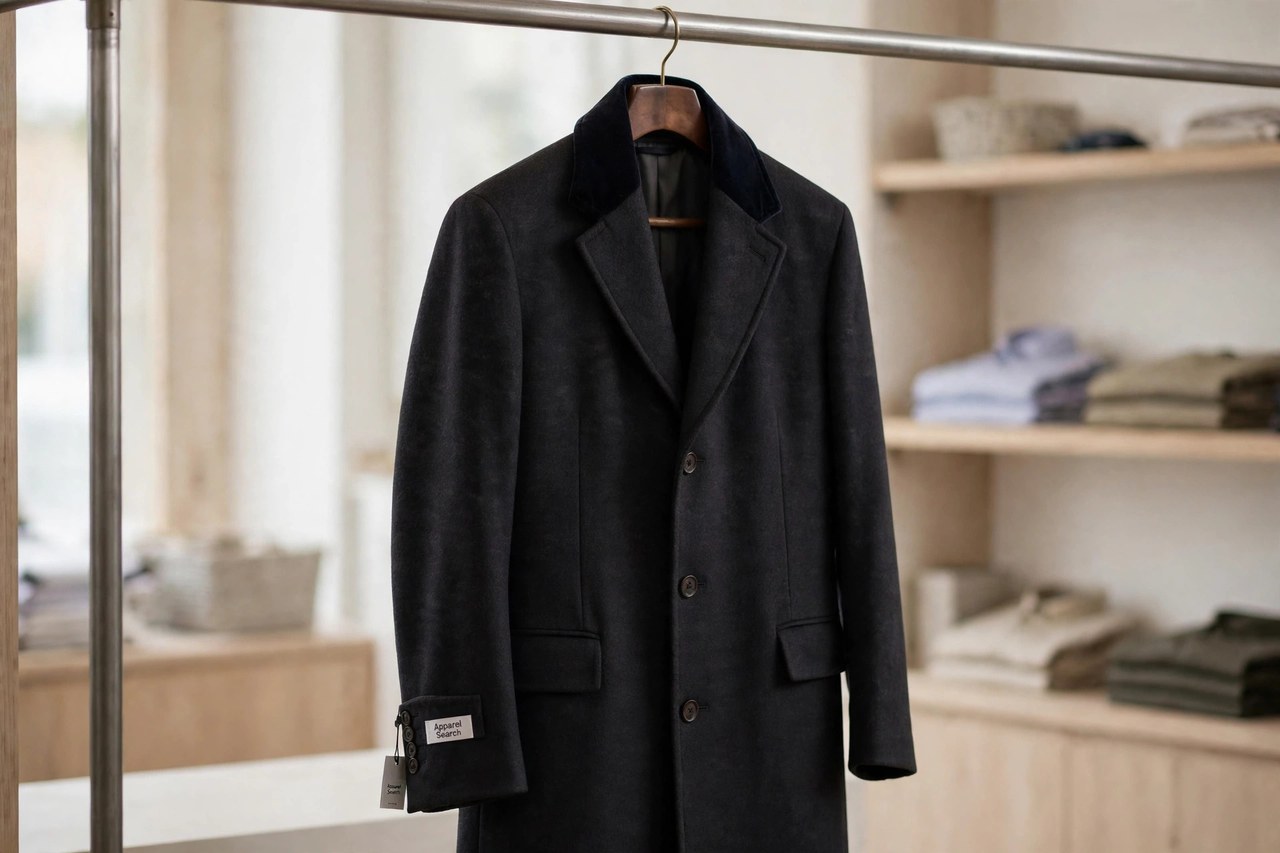
The Chesterfield is the dressiest of the classic men's overcoats: a single-breasted, knee-length coat with a notch lapel, a concealed fly front on many versions, and — its signature — a short collar of black or brown velvet. It is named for George Stanhope, 6th Earl of Chesterfield, the nineteenth-century dandy credited with popularising the looser, less waisted overcoat in the 1840s, and it has changed remarkably little since, which is precisely its value.
Where a trench coat is a rain tool and a peacoat is a naval work coat, the Chesterfield is a ceremony coat. It exists to go over a suit or tuxedo without disturbing either, to look correct at a winter wedding, a funeral, a boardroom arrival or an evening at the theatre, and to do it in charcoal, navy or black rather than in any colour that calls attention to itself.
Construction: Velvet Collar, Fly Front, Clean Lines
Look first at the collar. The velvet top collar — a short band of silk velvet over the upper collar — is the Chesterfield's calling card, originally a mark of mourning dress and now simply a mark of the style. Under it, the lapels are notched and roll gently; peak lapels appear on more formal, often double-breasted cousins, but the classic Chesterfield stays single-breasted with three or four buttons.
Many Chesterfields hide those buttons behind a fly front, a placket that keeps the front completely smooth — the right instinct for a coat meant to streamline rather than decorate. Details are deliberately scarce: flap or ticket pockets, a single centre vent for walking and sitting, a half or full lining in viscose or cupro, and a chest cut roomy enough for a jacket underneath. Raglan sleeves exist but set-in sleeves keep the shoulder line sharper over tailoring.
Fabrics and Weight
The traditional cloth is a heavy wool coating — melton, twill or a subtle herringbone — in the 600-to-800 gram range, warm enough for a city winter and smooth enough not to grab at a suit jacket beneath it. Wool-cashmere blends add softness and a slight sheen at a higher price and a little less abrasion resistance; pure cashmere Chesterfields are luxurious, light and best saved for occasions rather than daily commuting.
Colour discipline matters more than cloth novelty. Charcoal grey is the most versatile first Chesterfield, navy runs it close, and black is the formal-evening choice that can look harsh in daylight. Camel reads as a different, more relaxed coat — closer to a polo coat in spirit. Whatever the colour, the surface should be matte and even; this is not the garment for bold checks or fashion finishes.
Fit, Styling and Care
Fit a Chesterfield over the thickest jacket you will wear under it. The shoulders should sit on your own shoulders without extending past them, the chest should close without the fly front gaping, and sleeves should show about half an inch of the jacket and shirt cuff beneath. Length is classic at the knee or just above it: long enough to protect suit trousers, short enough to climb station stairs without effort.
It pairs with everything formal in the wardrobe — suits, blazers with flannels, and black tie, where it is the correct outer layer — and with dark denim and a roll-neck it can dress down one notch, but no further. Care is tailoring care: brush after wear, rest it a day between outings on a broad hanger, spot-clean rather than dry-clean often, and store it in a breathable bag in summer so the velvet collar stays nap-fresh.
Common Questions
What is the difference between a Chesterfield and a topcoat?
Weight and formality. A Chesterfield is a heavier, fully structured dress overcoat, traditionally with the velvet collar and worn over suits in cold weather. A topcoat is its lighter sibling — same general shape, lighter cloth, meant for the milder weeks at the edges of winter. Many men own the topcoat first and add a Chesterfield when formal winter occasions multiply.
Why does a Chesterfield have a velvet collar?
The velvet collar began as a sign of mourning in the nineteenth century and became the style's permanent signature. Today it is pure convention and polish: the dark velvet band frames the face, protects the collar cloth from wear, and is the quickest way to tell a Chesterfield from a plain single-breasted overcoat.
Can a Chesterfield be worn casually?
One notch down, yes — over dark jeans, a fine knit and Chelsea boots it looks deliberately dressed rather than overdressed. Further than that it fights the outfit: trainers, hoodies and cargo trousers belong under field jackets and parkas, not under the most formal coat in the classic wardrobe.
More Men's Outerwear & Wardrobe Basics Guides
All thirteen guides in this cluster, in alphabetical order — classic coats, jackets, tailoring, trousers and shoes:
More to Explore on Apparel Search
Looking for Men's Clothing Stores?
This guide helps you choose a men's Chesterfield coat that fits properly over tailoring. To browse where to buy, visit our mens clothing store directory, where you can find retailers that carry them.